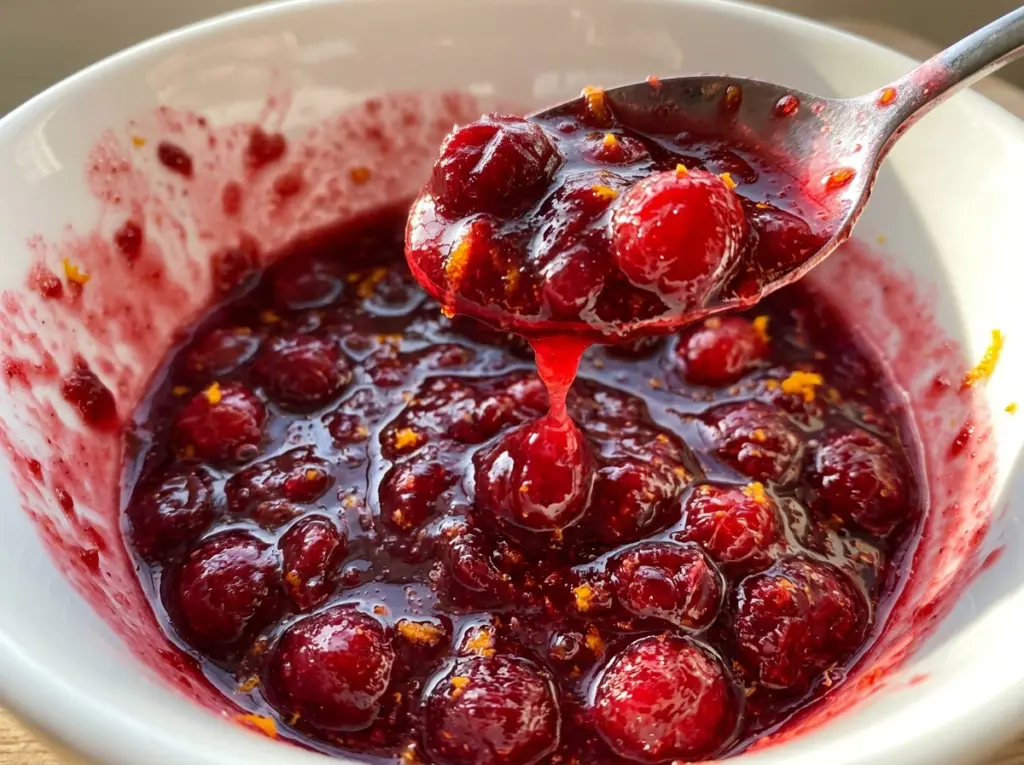
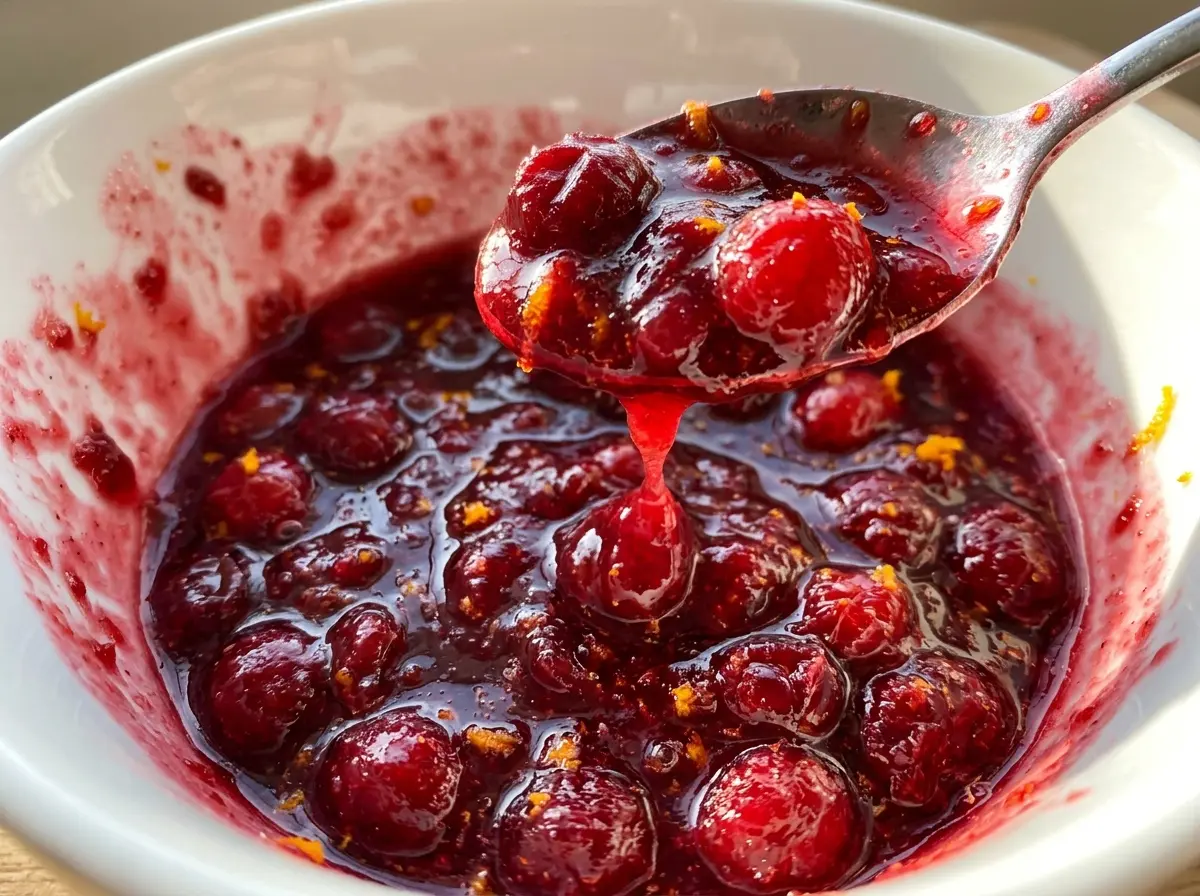
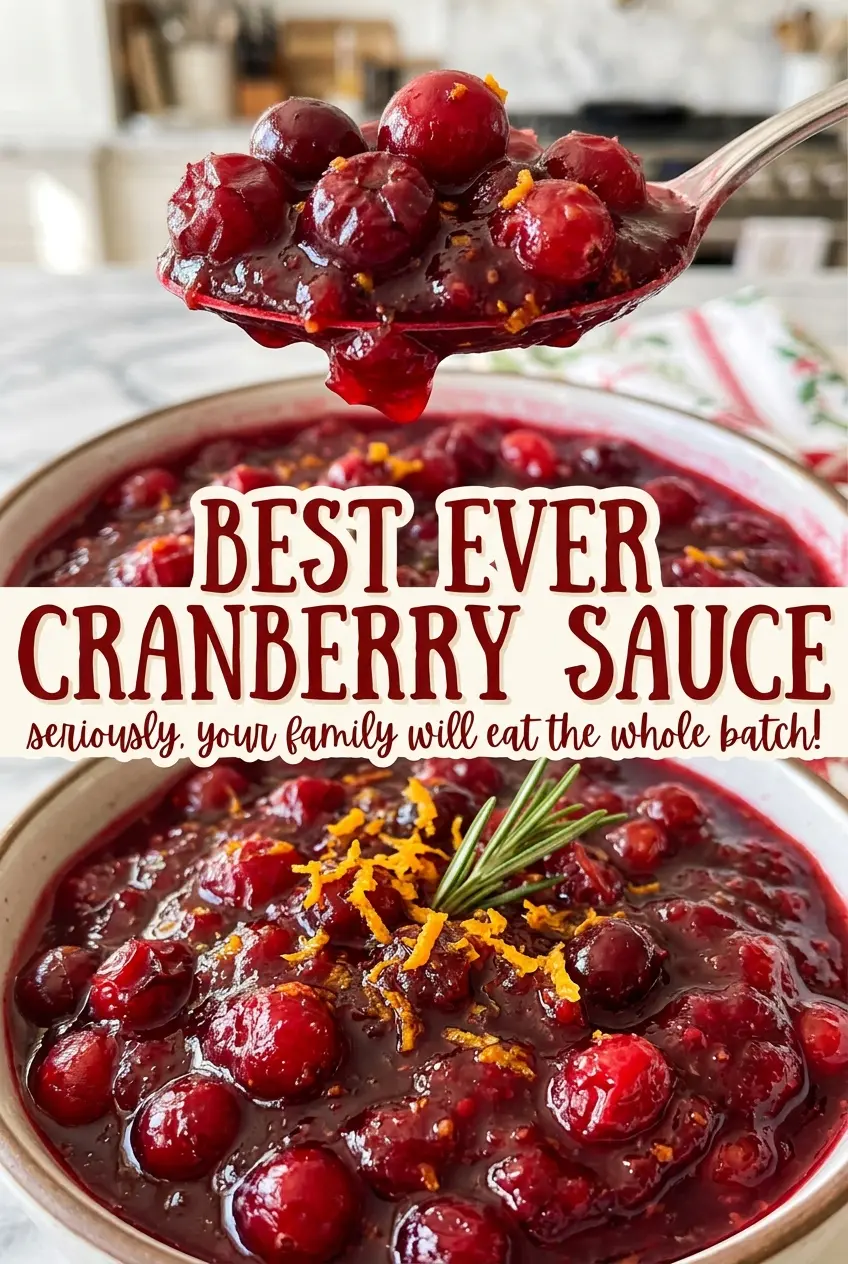
The cranberries start out swimming in a thin, bright-red syrup, and it’s easy to think something went wrong before the sauce has had time to cool. Give it a little patience. As the berries burst and soften, the liquid turns glossy and ruby-colored; then the sauce thickens further off the heat. That cooling pause is part of what makes this Best Ever Cranberry Sauce spoonable instead of runny.
I like the balance here: fresh cranberries bring a clean tartness, while orange juice and finely grated zest round it out without hiding the fruit. The sugar dissolves into the liquid before the berries go in, so there’s no grainy sweetness at the bottom of the pan. After a short simmer, you’ll have a bright, tangy sauce with plenty of cranberry character.
It’s a straightforward stovetop batch, but the texture changes enough as it cools that it’s worth resisting the urge to judge it while it’s hot. Let it rest, and the glossy sauce settles into a thick, soft mound of berries.
Kitchen Note
Pick through the cranberries before you rinse them, so any soft or shriveled berries are out of the pan. I do this over a plate or tray; firm berries are easier to spot before they’re wet and glossy.
Save Best Ever Cranberry Sauce for a bright, citrus-kissed side that thickens into a glossy spoonful as it cools.
Why Cranberry Sauce Thickens After It Leaves the Stove
Hot cranberry sauce can look much looser than you expect. That isn’t a sign to keep cooking it until it resembles jam in the pan. The berries release liquid as they soften, and the sauce continues to settle and thicken while it cools. Pulling it off the heat once most of the cranberries have burst keeps the fruit tender and gives the sauce room to finish setting without turning pasty.
That change is useful when you’re planning the rest of the meal. The sauce needs at least 30 minutes to cool, and a longer rest gives you a firmer texture than serving it straight from the pan. If it looks a little loose at first, judge it after that cooling period instead of adding more cooking time right away. You’re looking for a glossy sauce that holds together on a spoon, with some berries still visible.
There’s a nice balance between whole fruit and a smooth, even sauce here. Most berries burst during the simmer, but a few intact pieces give each spoonful texture. Let the simmer do the work; aggressive mashing isn’t needed for the finished consistency.
How the Cranberries, Orange, and Sugar Shape the Sauce
- Fresh cranberries — Their tartness is the backbone of the sauce, and their skins give the finished batch its soft, chunky texture. Pick out soft berries before rinsing. Frozen cranberries can stand in for fresh; add them straight from the freezer and use the same visual cue—most should burst and the sauce should thicken—rather than relying only on the clock.
- Granulated sugar — It balances the berries’ sharp acidity and dissolves cleanly into the simmering liquid. Regular granulated sugar is the right choice here; coarse crystals take longer to dissolve, while brown sugar would add a deeper molasses note that changes the clean orange-cranberry taste.
- Orange juice — Juice gives the cooking liquid a rounded citrus flavor that spreads through the whole batch. Plain orange juice works well, whether it’s freshly squeezed or from a carton. Avoid using orange juice concentrate undiluted, since it would make the liquid much sweeter and more intense.
- Finely grated orange zest — Zest adds fragrant orange oils that juice alone doesn’t bring. Grate only the colored outer peel; the white pith underneath can taste bitter. A fine grater disperses the zest through the sauce instead of leaving coarse strips.
- Kosher salt — A small amount sharpens the fruit and keeps the sweetness from tasting flat. Kosher salt’s larger flakes are easy to measure, but if you use a fine-grain salt, keep in mind that the same spoonful can taste saltier.
Building the Sauce Without Overcooking the Berries
Dissolve the Sugar in the Citrus Liquid
Use a 2-quart saucepan and stir together the sugar, water, orange juice, and kosher salt over medium-high heat. Keep stirring until the sugar dissolves and the liquid reaches a boil. The mixture should look clear rather than gritty along the bottom of the pan. Don’t add the cranberries before the sugar has dissolved, or undissolved crystals may cling to the fruit.
Simmer Until Most Berries Burst
Stir in the rinsed cranberries and finely grated orange zest, then reduce the heat to medium-low. Simmer for 10 to 12 minutes, stirring occasionally, until most of the berries have popped and the mixture looks thickened. You’ll hear little snaps as the skins break, and the berries will soften into the bright red liquid. If the sauce is still mostly thin syrup with firm berries at the end of the simmer, give it the full cooking window rather than turning the heat up sharply.
Let the Sauce Set as It Cools
Take the saucepan off the heat and leave the sauce to cool for at least 30 minutes. It will look looser while hot, then grow thicker and more cohesive as the temperature drops. Avoid stirring constantly during this rest; a few gentle stirs are enough if you want the fruit distributed evenly. The finished sauce should be glossy, with soft berries and enough body to stay on a spoon.
Simple Ways to Shift the Citrus and Texture
A cranberry-forward batch
Leave out the orange zest while keeping the orange juice in the liquid. The sauce still has a gentle citrus note, but the cranberry flavor comes through more clearly and the texture has no flecks of peel.
A softer, less citrusy flavor
Replace the orange juice with the same amount of water and omit the zest. You’ll keep the familiar tart cranberry sauce, but lose the orange aroma and the rounder citrus sweetness.
A smoother finish
For a more uniform texture, press the cooked berries through a fine-mesh strainer after simmering, working in small batches with the back of a spoon. This removes the skins and seeds, leaving a smoother sauce; expect less of the chunky, whole-berry character.
Storage and Reheating
- Refrigerator: Keep the cooled sauce covered and refrigerated for 3 to 4 days. It will become firmer when cold; stir gently before serving.
- Freezer: Freeze it in an airtight, freezer-safe container for up to 2 months for best quality. Leave a little room at the top for expansion, then thaw it in the refrigerator.
- Reheating: Warm gently in a saucepan over low heat, stirring occasionally, or serve it chilled. Avoid a hard boil, which can break down the berries further and make the sauce overly thick.
Questions That Come Up While Making Cranberry Sauce
Best Ever Cranberry Sauce
Ingredients
Equipment
Method
- In a 2-quart saucepan, stir together the granulated sugar, water, orange juice, and kosher salt over medium-high heat until the sugar dissolves and the mixture comes to a boil.
- Stir in the cranberries and orange zest.
- Reduce the heat to medium-low and simmer for 10 to 12 minutes, stirring occasionally, until most of the cranberries have burst and the sauce has thickened.
- Remove the saucepan from the heat.
- Let the sauce cool for at least 30 minutes; it will thicken further as it cools.