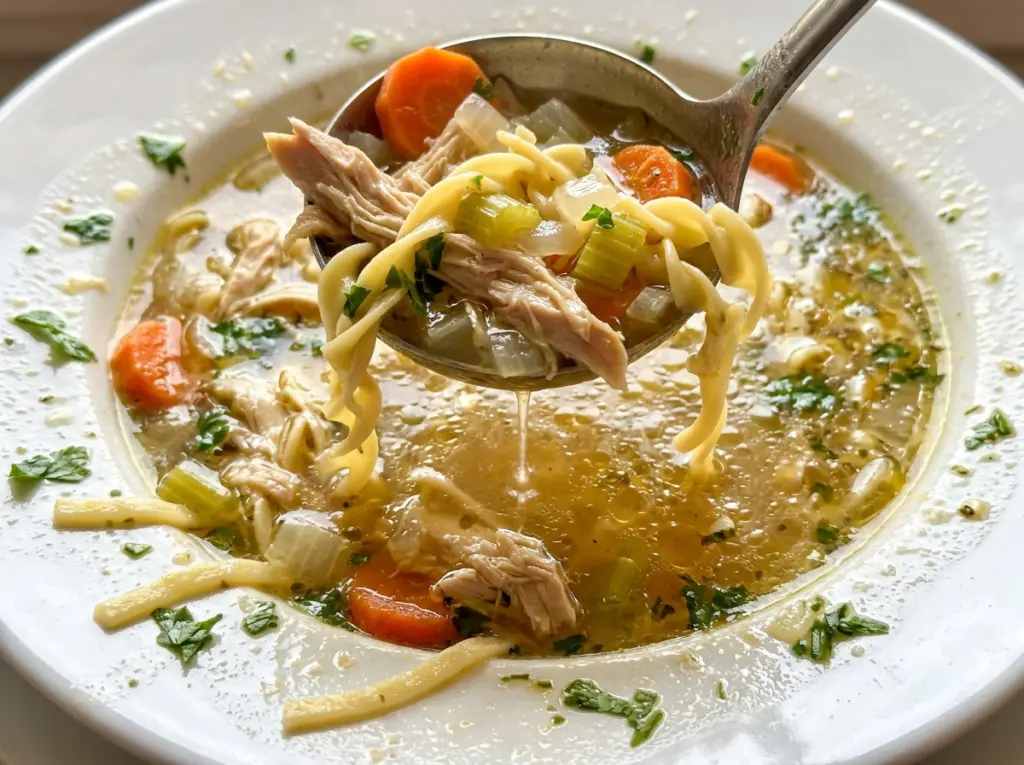
The chicken should sizzle as soon as it hits the hot oil, and the browned spots left in the pot are the start of a much better broth. I brown the thighs before adding the vegetables, then let everything simmer together until the meat is tender enough to pull from the bones. That’s what gives this Flu-Fighting Chicken Noodle Soup its full, savory taste without a complicated stock-making project.
Bone-in, skin-on thighs bring more flavor to the pot than a quick-cooking boneless cut, and they hold up well during the covered simmer. I remove the skin and bones before shredding the meat, then cook the wide egg noodles in the broth so they pick up some of that chicken flavor.
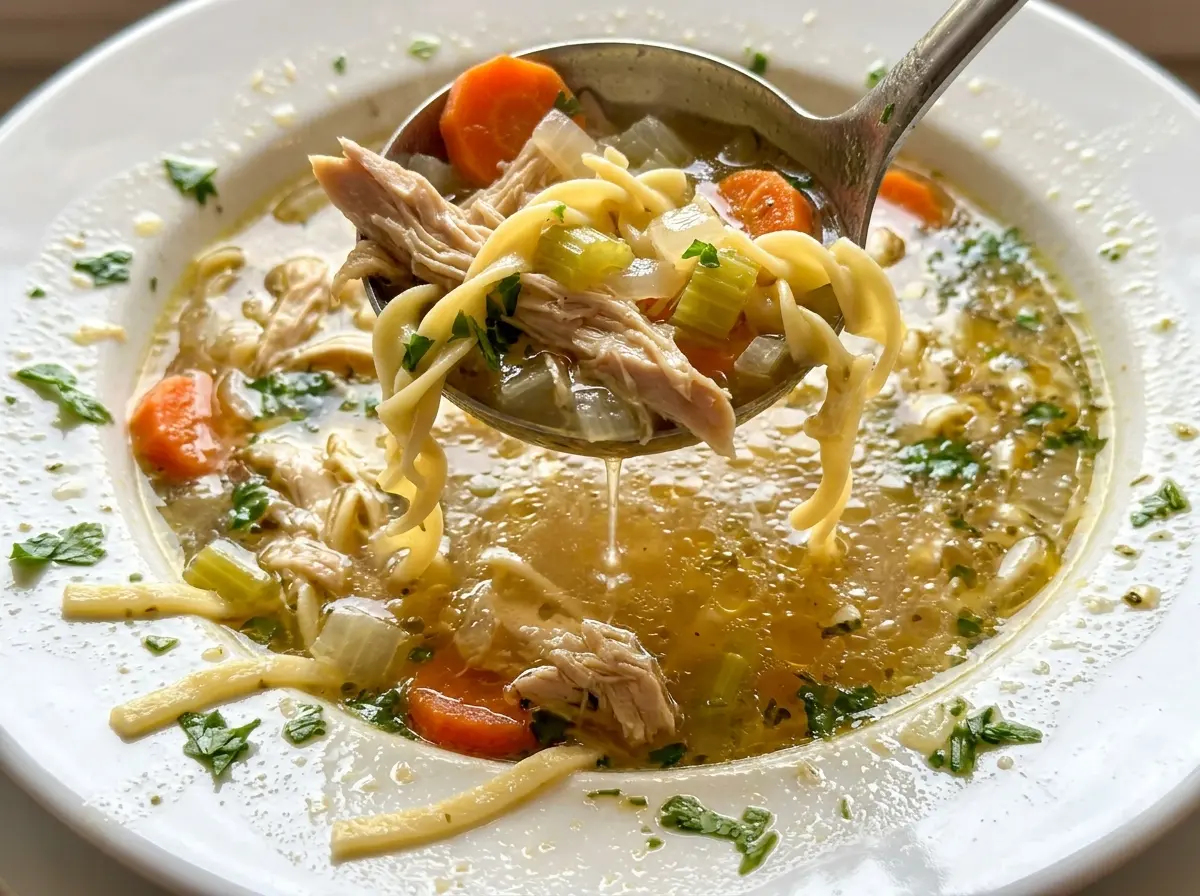
The name promises comfort, not a cure for the flu. What you get is a cozy bowl with tender chicken, soft vegetables, and noodles in a warm, savory broth.
Kitchen Note
When you move the browned chicken to its plate, keep every drop of juice there. Pour those juices back into the pot with the thighs; they carry the browned flavor into the broth instead of leaving it behind.
Save this Flu-Fighting Chicken Noodle Soup for a cozy pot of tender chicken, wide noodles, and savory broth.
Why Browning the Thighs First Gives This Broth More Body
Chicken simmered straight in broth will cook through, but it won’t build the same savory base. Browning the thighs in the Dutch oven creates browned bits on the bottom, and the skin renders some fat into the oil. Once the onion, carrots, and celery go into that same pot, they soften in those flavorful drippings instead of starting from scratch in plain broth.
Keep the heat at medium-high for browning, and give each side the full 3 to 4 minutes. The chicken doesn’t need to cook through at this point; it will finish during the covered simmer. If you flip it too soon, it may cling to the pot, so let the surface brown before turning it. After the broth goes in, lower the heat to a gentle simmer rather than letting it boil hard. A steady, quiet simmer cooks the thighs without tossing the vegetables around or reducing the broth too quickly.
This order also lets one pot do the work. You brown the chicken, soften the vegetables, and cook the noodles in the broth, with no separate stockpot needed.
What the Thighs, Broth, and Wide Noodles Contribute

- Bone-in, skin-on chicken thighs — The bones and skin add a rounder, more chicken-forward taste to the broth, and the dark meat stays tender through the simmer. If you use boneless, skinless thighs, brown them the same way and rely on the 165°F internal temperature rather than assuming they need the full simmer time; the broth will be leaner.
- Low-sodium chicken broth — It lets the chicken and vegetables come through without starting with a broth that may already taste salty. Regular chicken broth can stand in at the same volume, but the finished soup will be saltier alongside the recipe’s kosher salt.
- Wide egg noodles — Their broad shape gives you a substantial bite and holds up nicely in a bowl of broth. If wide egg noodles aren’t available, another sturdy pasta can work in the same weight; follow its package timing and stop when tender.
- Fresh parsley and dried thyme — Parsley stirred in at the end keeps the finish fresh and green, so chop it shortly before using. Dried thyme has time to season the broth during the simmer; fresh thyme can replace it, but its flavor is less concentrated, so use three times as much.
- Onion, carrots, celery, and garlic — These form the savory, gently sweet base. Cut the carrots into even 1/4-inch rounds so they soften alongside the sliced celery, and add the minced garlic only after the other vegetables have begun to soften; garlic can scorch if it sits in the hot pot too long.
From the First Sizzle to Tender Noodles
Brown the Thighs Without Rushing Them
Heat the olive oil in a 6-quart Dutch oven over medium-high heat. Season the chicken thighs with kosher salt and black pepper, then lay them in the hot oil and brown for 3 to 4 minutes per side. Look for golden-brown patches rather than pale, steamed-looking skin. Transfer the thighs to a plate when both sides are browned.
Soften the Vegetables in the Same Pot
Add the diced onion, sliced carrots, and sliced celery, then cook over medium heat for 5 to 6 minutes, stirring occasionally. The vegetables should begin to soften, but they don’t need to be fully tender yet. Stir in the minced garlic and cook for 30 seconds, just until fragrant. If the garlic starts darkening, move straight to the broth so it doesn’t turn bitter.
Simmer the Chicken Until It’s Tender
Pour in the low-sodium chicken broth, then add the bay leaves and dried thyme. Return the thighs and any juices from the plate to the pot, bring the broth to a boil, and reduce the heat to maintain a gentle simmer. Cover and cook for 30 to 35 minutes, until the thickest part of each thigh reaches 165°F. A hard boil isn’t needed; look for small, steady bubbles beneath the lid.
Shred the Meat and Finish the Noodles
Transfer the cooked chicken to a plate, then remove and discard the skin and bones. Shred the meat with two forks while the broth comes back to a gentle boil. Add the wide egg noodles and cook for 6 to 8 minutes, until tender; check near the lower end of the range so they don’t go soft. Return the shredded chicken to the pot, stir in the chopped parsley, and serve.
Easy Changes for Different Noodles and Finishes
Make It Gluten-Free
Replace the egg noodles with 8 ounces of gluten-free wide noodles. Cook them separately according to the package directions, then stir them into the soup just before serving; gluten-free noodles vary in how quickly they soften, and a separate pot keeps the broth from turning starchy.
Finish with Fresh Dill
Use 1/4 cup chopped fresh dill in place of the parsley. Stir it in at the end, just as you would the parsley; dill gives the soup a more aromatic, slightly grassy finish without changing the chicken-and-noodle base.
Keep the Noodles Separate for Leftovers
For a batch you’ll eat over a few days, cook the noodles separately and add them to individual bowls before ladling in the soup. The broth stays clear, and the noodles don’t keep absorbing liquid while the pot sits.
Storage and Reheating
- Refrigerator: Store in an airtight container for 3 to 4 days. Noodles left in the soup will soften as they sit; keeping them separate preserves a firmer bite.
- Freezer: Freeze the chicken-and-broth base without noodles for up to 3 months. Thaw it in the refrigerator, bring it to a gentle simmer, and cook fresh noodles before serving.
- Reheating: Warm leftovers gently in a saucepan until steaming, stirring now and then. Avoid a rolling boil, which can break up the vegetables and make already-soft noodles mushier.
Questions That Come Up While Making This Chicken Soup
Flu-Fighting Chicken Noodle Soup
Ingredients
Equipment
Method
- Heat the olive oil in a 6-quart Dutch oven over medium-high heat.
- Season the chicken thighs with the salt and pepper.
- Brown the chicken in the hot oil for 3 to 4 minutes per side, then transfer it to a plate.
- Add the onion, carrots, and celery to the pot and cook over medium heat for 5 to 6 minutes, stirring occasionally, until beginning to soften.
- Add the garlic and cook for 30 seconds.
- Pour in the chicken broth and add the bay leaves and thyme.
- Return the chicken and any plate juices to the pot.
- Bring to a boil, then reduce the heat to maintain a gentle simmer and cover the pot.
- Cook for 30 to 35 minutes, until the thickest part of each thigh reaches 165°F.
- Transfer the chicken to a plate.
- Remove and discard the skin and bones.
- Shred the meat with two forks.
- Bring the broth to a gentle boil, add the egg noodles, and cook for 6 to 8 minutes, until tender.
- Return the shredded chicken to the pot.
- Stir in the parsley and serve.