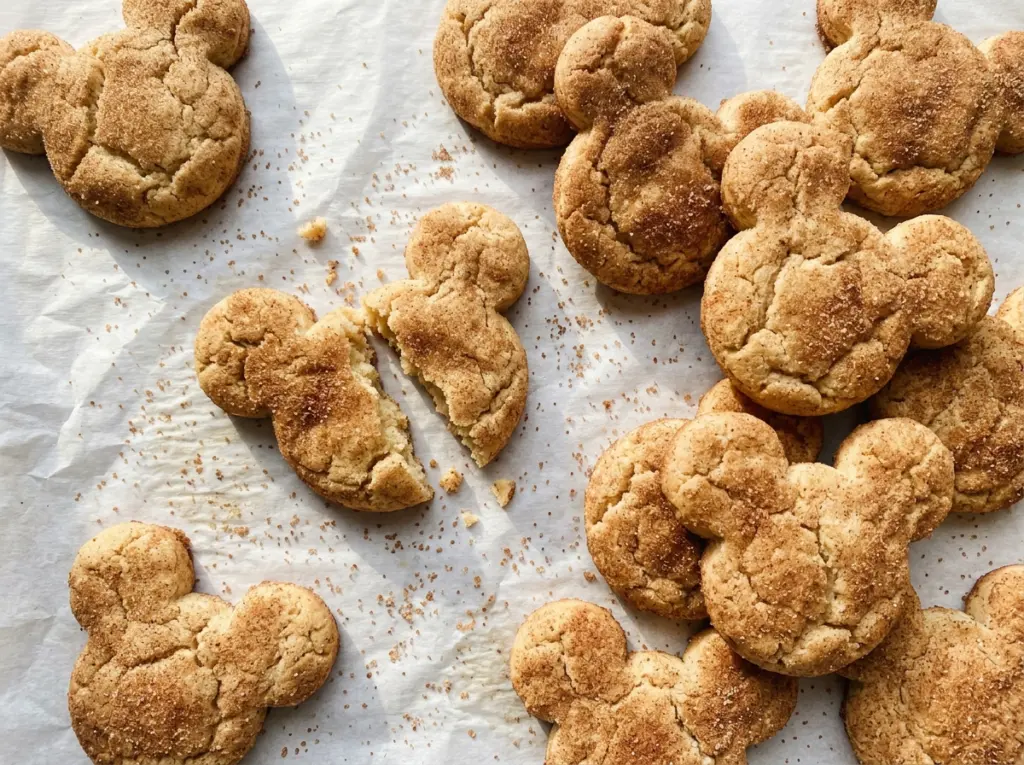
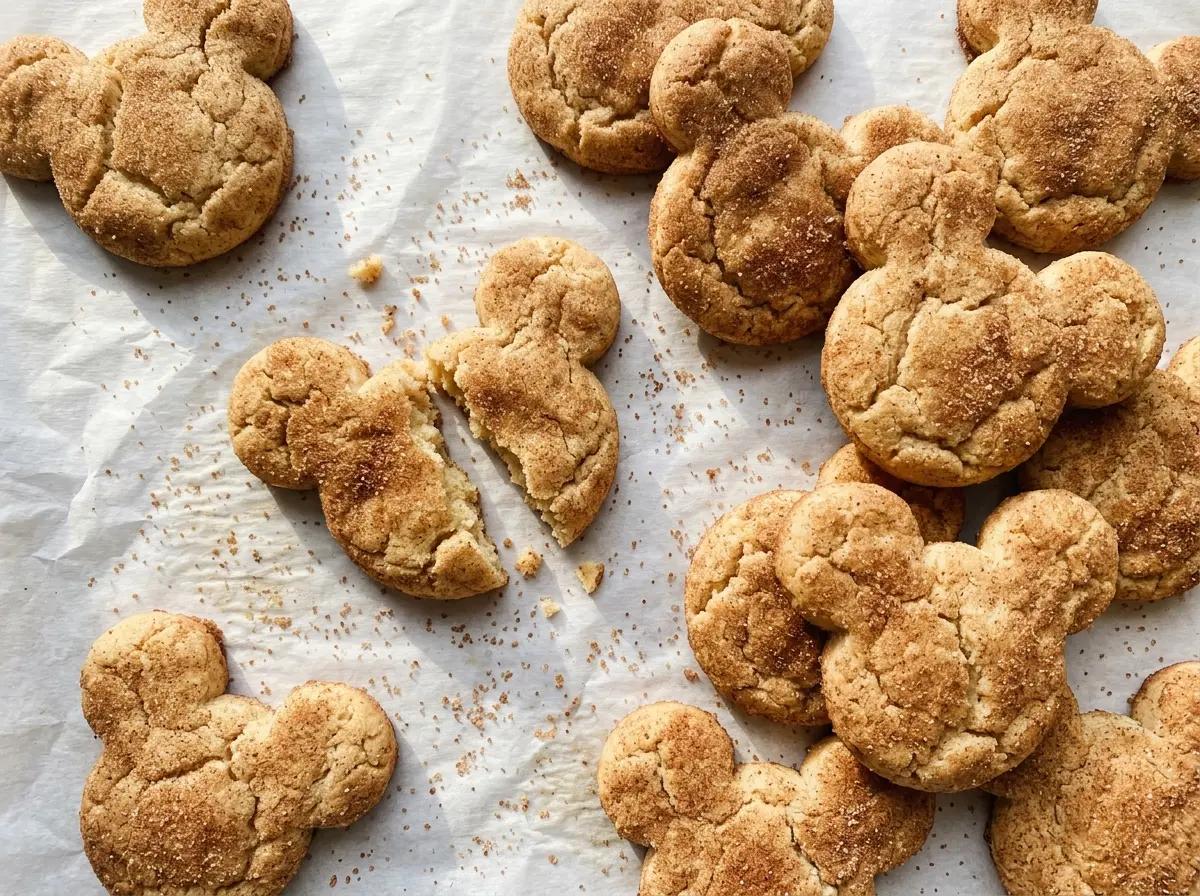
The cinnamon-sugar coating starts to smell warm and toasty before the cookies are even halfway through baking. That’s when I know to watch the edges, not wait for the centers to look completely firm. These Disney Snickerdoodle Cookies come out with crackled tops and soft centers, and they’re made from a straightforward dough that’s easy to portion and roll.
Cream of tartar gives a snickerdoodle its gentle tang and helps set it apart from a plain sugar cookie. Here, it works alongside baking soda, while the cinnamon-sugar coating brings the familiar sweet, spiced finish. I mix the dry ingredients in a separate bowl and add them on low just until the flour disappears; that keeps the dough tender instead of overworked. Each cookie gets the same two-tablespoon scoop, so the batch bakes evenly and the cinnamon coating reaches every side.
Kitchen Note
Add the eggs one at a time and let each blend into the butter mixture before adding the next. It gives you a smoother base for the flour, rather than a mixture that looks separated.
Save these Disney Snickerdoodle Cookies for a bake day when you want soft centers, crackled tops, and a cinnamon-sugar finish.
Why Cream of Tartar Makes These More Than Cinnamon-Sugar Cookies
A snickerdoodle isn’t just a sugar cookie rolled in cinnamon. Cream of tartar brings a mild tang that cuts through the sweetness, and paired with baking soda it helps give the dough its characteristic texture. Leave it out and you’ll still have a cinnamon-coated cookie, but it won’t have the same snickerdoodle taste or tender bite.
That’s also why I wouldn’t treat cream of tartar as a decorative extra or swap it casually for another leavener. Baking powder already contains an acid and a base, so replacing the cream of tartar and baking soda with it changes the balance of the dough. The coating provides plenty of cinnamon flavor, but it can’t replace the slight tang inside the cookie.
There’s a separate job for the two sugars in this batch. The larger portion is creamed with the butter, while the smaller portion is mixed with cinnamon for the outside. Keeping that coating separate gives each ball a full, even layer instead of scattering cinnamon through the dough and losing the distinct crackled finish.
What the Butter, Flour, and Cinnamon Bring to the Dough

- Unsalted butter — Butter gives the cookies their rich flavor and helps the dough cream up with the sugar. Softened butter should yield when pressed but still feel cool; melted butter changes the dough’s texture. A standard grocery-store butter works well here.
- Granulated sugar — Sugar in the dough helps create the cookie’s structure and crisp edges, while the sugar in the coating clings to the surface and adds a delicate crunch. Keep the coating sugar granulated so it doesn’t turn pasty with the cinnamon.
- Eggs — Eggs bind the dough and add moisture. Large eggs are important for keeping the dough at the intended consistency; smaller eggs can leave it drier and harder to bring together.
- All-purpose flour — This gives the cookies enough structure to hold their round shape while staying tender. For a consistent scoop, spoon flour into the measuring cup and level it rather than packing it down.
- Vanilla extract — Vanilla rounds out the butter and sugar without taking over the cinnamon. Use the vanilla you keep on hand; a pure extract has a fuller aroma, but imitation vanilla works in a baked cookie like this.
- Ground cinnamon — Cinnamon is the first thing you smell when the cookies bake, so a fresh, fragrant jar makes a noticeable difference. If the spice smells faint when you open the container, the coating will taste muted too.
Mixing and Baking the Dough Without Overworking It
Creaming the Butter and Sugar
Preheat the oven to 350°F and line a large baking sheet with parchment paper. Beat the softened butter with the larger portion of granulated sugar using a hand mixer on medium speed for about 2 minutes. The mixture should look lighter and fluffy, not just stirred together. If you stop while it’s still dense, the cookies won’t have the same lift.
Adding the Eggs and Vanilla
Beat in the eggs one at a time, then mix in the vanilla. The butter mixture should look smooth and cohesive before you move on. If it looks a little uneven right after an egg goes in, keep mixing until it comes together rather than adding flour early.
Bringing the Dry Ingredients Together
Whisk the flour, cream of tartar, baking soda, and kosher salt in a medium bowl so the leaveners are distributed through the flour. Add that mixture to the butter mixture and mix on low just until combined. Stop when there are no visible streaks of flour; continuing to beat after that point can make the cookies tougher.
Rolling and Coating Each Cookie
Stir the cinnamon and remaining sugar together in a small bowl. Scoop the dough into 2-tablespoon portions, roll each portion into a ball, then turn it in the coating until the outside is covered. Set the balls 2 inches apart on the lined baking sheet, baking in batches if needed so they have room to spread.
Baking for Crackled Tops
Bake at 350°F for 10 to 12 minutes, until the edges are set and the tops are crackled. The centers can still look soft when the cookies come out; they firm as they rest. Leave them on the baking sheet for 5 minutes, then transfer them to a wire rack to cool. Moving them right away risks breaking the warm cookies.
Easy Ways to Change the Cinnamon-Sugar Finish
Give the Coating a Cardamom Lift
Stir 1/4 teaspoon ground cardamom into the cinnamon-sugar coating. It adds a lightly floral, citrusy note behind the cinnamon without changing how the dough bakes.
Use a Little Brown Sugar for a Chewier Center
Replace 1/2 cup of the granulated sugar in the dough with packed light brown sugar, but leave the coating sugar unchanged. The brown sugar adds a mild molasses note and makes the centers a touch chewier.
Make Them Gluten-Free
Swap the all-purpose flour for the same amount of a cup-for-cup gluten-free baking blend that includes xanthan gum. The cookies may have a slightly more delicate crumb, so let them rest on the baking sheet before moving them to the rack.
Storage and Reheating
- Refrigerator: Store cooled cookies in an airtight container for up to 1 week. They’ll feel firmer when cold; let them come to room temperature for a softer bite.
- Freezer: Freeze cooled cookies in an airtight container, with parchment between layers, for up to 2 months. Thaw at room temperature while still covered to keep them from drying out.
- Reheating: Warm cookies in a 300°F oven for about 3 minutes. Avoid microwaving them for long stretches, which can make the centers tough once they cool.
Questions That Come Up While Making Snickerdoodles
Disney Snickerdoodle Cookies
Ingredients
Equipment
Method
- Preheat the oven to 350°F.
- Line a large baking sheet with parchment paper.
- In a large bowl, beat the softened butter and 1 1/2 cups sugar with a hand mixer on medium speed until light and fluffy, about 2 minutes.
- Beat in the eggs one at a time, then mix in the vanilla.
- In a medium bowl, whisk together the flour, cream of tartar, baking soda, and salt; add to the butter mixture and mix on low just until combined.
- In a small bowl, stir together the remaining 1/4 cup sugar and cinnamon.
- Scoop the dough into 2-tablespoon portions, roll each into a ball, and coat in the cinnamon-sugar.
- Place the dough balls 2 inches apart on the prepared baking sheet, working in batches as needed.
- Bake at 350°F for 10 to 12 minutes, until the edges are set and the tops are crackled.
- Let the cookies rest on the baking sheet for 5 minutes, then transfer to a wire rack to cool.