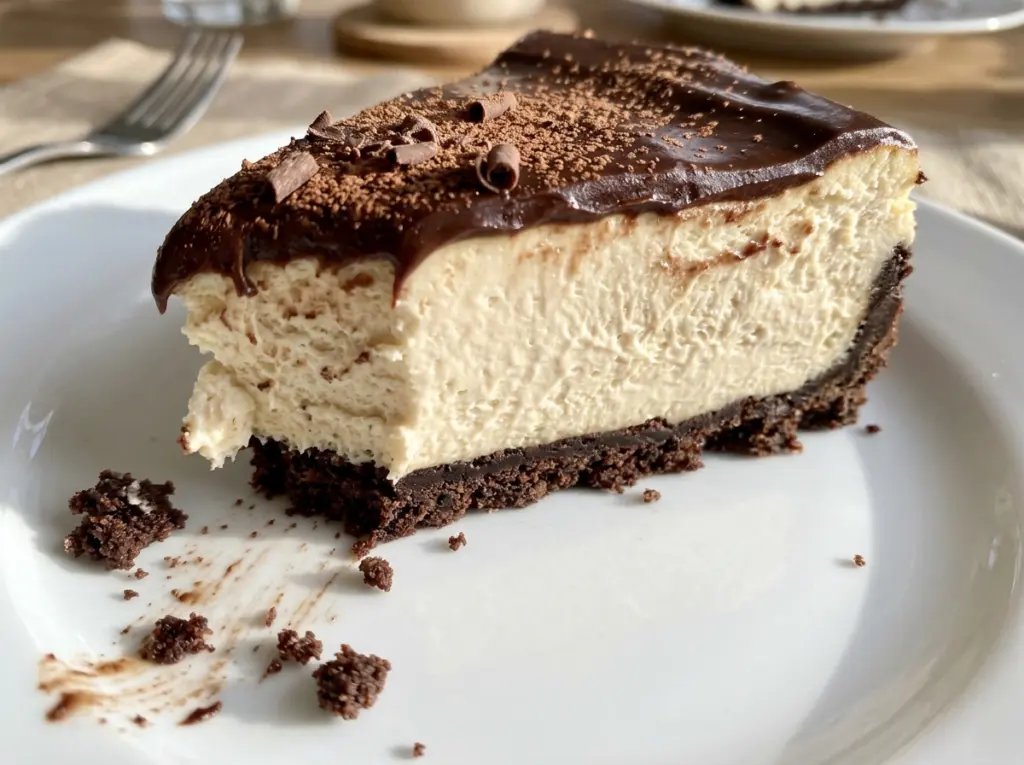
At a gentle nudge, the edges of the cheesecake hold steady while the center gives a small wobble. That’s the cue I watch for with Baileys Cheesecake; waiting until the middle looks completely firm can leave you with a dry, overbaked filling.
The filling has more liquid than a plain cheesecake, thanks to the Baileys and sour cream, so it’s smoother and looser before it goes into the oven. Cream cheese, eggs, and flour give it structure as it bakes. I keep the mixing gentle once the eggs go in, then let the oven’s residual heat ease the cheesecake through its final set.
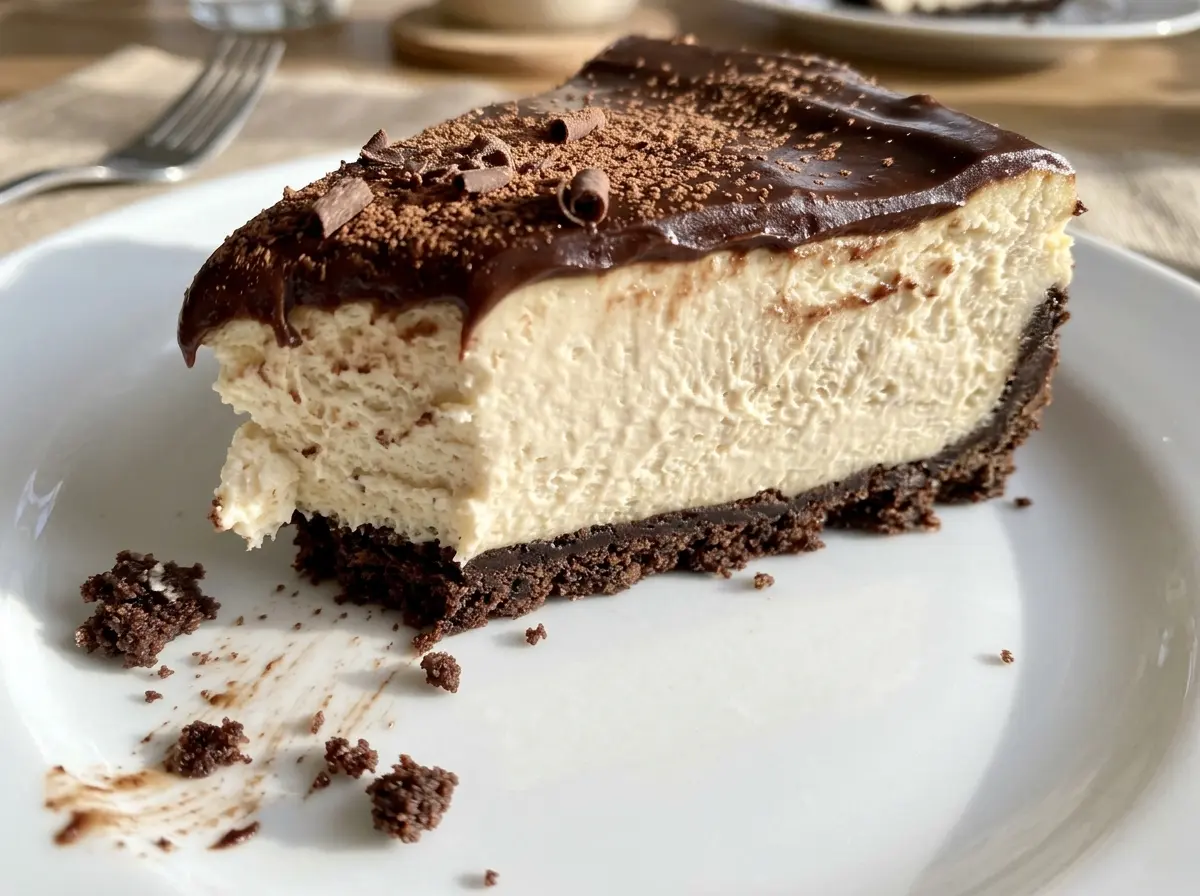
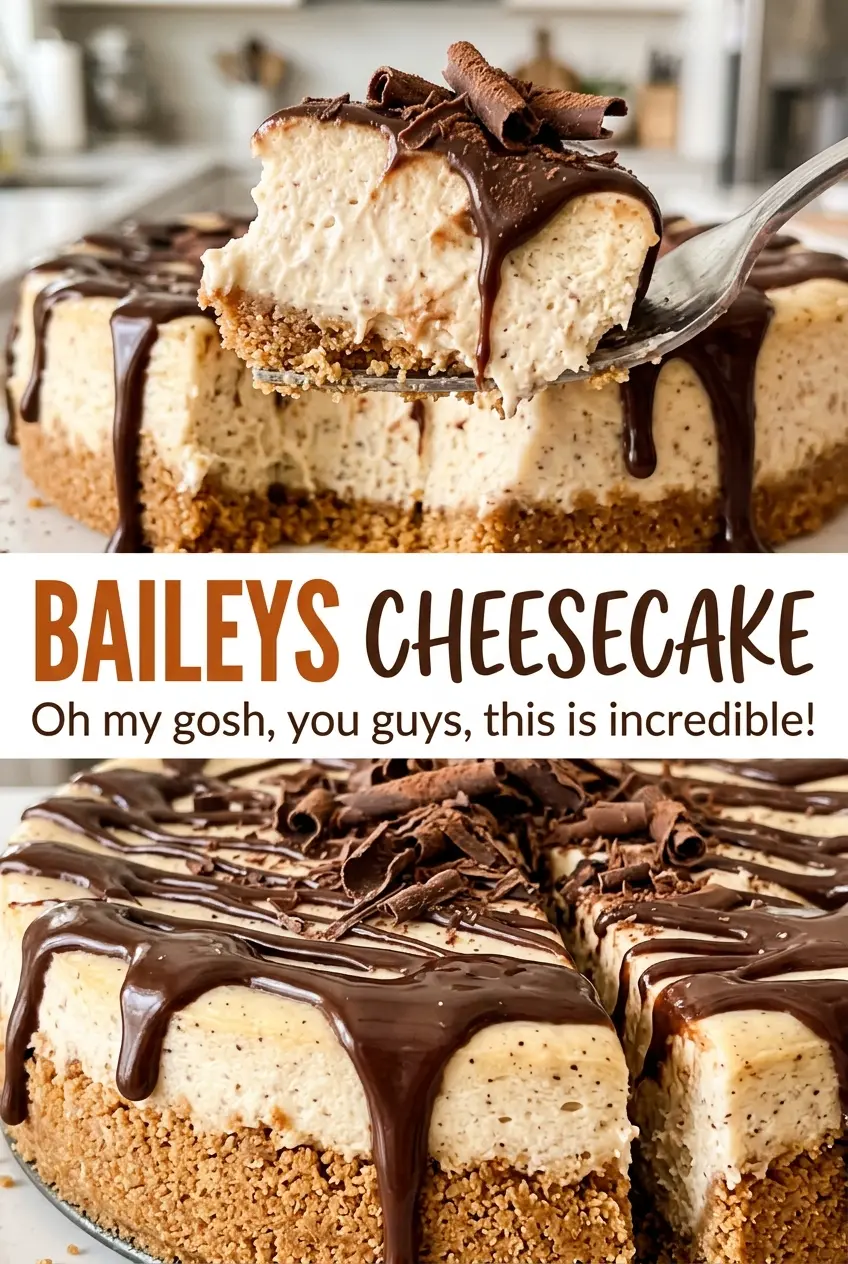
After a long chill, each slice is creamy and cool, with a chocolate sandwich cookie crust underneath and a mellow Irish cream flavor running through the filling.
Kitchen Note
Finely crushed cookies make a more even crust than chunky crumbs. Press the mixture firmly across the pan bottom so it holds together when you slice the chilled cheesecake.
Save this Baileys Cheesecake for a special dessert: creamy Irish cream filling, a chocolate cookie base, and slices that are ready after a proper chill.
Why the Baileys Filling Looks Loose Before It Bakes
Don’t expect this batter to have the thick, heavy texture of a plain cream cheese filling. Baileys and sour cream loosen the mixture, and once they’re blended in, it should be smooth enough to pour over the crust. That texture is part of the plan, not a sign that something went wrong.
The filling firms in the oven as the eggs cook and the flour helps support the set. Adding extra flour to make the raw batter look thicker would change the balance and can make the baked center heavier. Beating the batter longer won’t fix it, either; once everything is smooth, it’s ready for the pan.
Keep the finished cheesecake in mind when judging the batter: this is a chilled dessert, not a cake that needs to feel firm straight out of the oven. It becomes easier to slice as it cools and rests in the refrigerator, while keeping the creamy texture that makes the Baileys noticeable without turning the filling dense.
What Each Ingredient Brings to This Baileys Cheesecake
- Chocolate sandwich cookies — They give the crust its cocoa flavor and a fine crumb that packs into a sturdy base. Crush them thoroughly; larger pieces make the crust uneven. Use fresh, crisp cookies so the crumbs combine cleanly with the butter.
- Unsalted butter — Melted butter coats the crumbs and helps them hold together after baking and chilling. Unsalted butter keeps the crust from tasting unexpectedly salty, and it’s fine to use a standard grocery-store brand.
- Cream cheese — This is the body of the filling, so plain block-style cream cheese gives the most dependable texture. Let it soften before mixing; cold cream cheese is more likely to leave small lumps that are hard to beat out later.
- Baileys Irish Cream — It supplies the defining Irish cream flavor as well as liquid for the filling. Choose a bottle you enjoy drinking, since its flavor comes through in the finished cheesecake. Another Irish cream liqueur can be used in the same quantity, though the exact flavor will vary by brand.
- Sour cream — It adds tang and keeps the filling from tasting as rich as cream cheese alone. Plain Greek yogurt can stand in at the same amount; expect a slightly tangier result. Bring it to room temperature before mixing.
- Eggs — Eggs help the filling set as it bakes. Room-temperature eggs blend more evenly into the cream cheese mixture than cold ones, so take them out ahead of time.
- All-purpose flour and vanilla — The flour supports the soft filling, while vanilla rounds out the Baileys and cream cheese. Measure the flour carefully rather than packing it into the measuring cup, and use pure or imitation vanilla extract according to what you keep on hand.
Build the Crust and Filling Without Overmixing
Set and Cool the Cookie Crust
Heat the oven to 325°F and lightly grease the bottom and sides of a 9-inch springform pan. Stir the finely crushed cookies with the melted butter until the crumbs look evenly moistened, then press them firmly over the bottom of the pan. Bake the crust for 10 minutes. Set it aside to cool while you mix the filling.
Blend the Cream Cheese Base
Beat the softened cream cheese with the sugar and flour using an electric mixer on medium speed. Scrape down the bowl as needed so no thick patches of cream cheese stay stuck to the sides. Keep mixing until the base looks smooth, with no visible lumps. Starting with a smooth base makes it easier to incorporate the other ingredients evenly.
Add the Eggs and Irish Cream
Lower the mixer speed before adding the eggs, and add them one at a time. Mix only until each egg disappears into the batter; prolonged beating can work extra air into the filling. Mix in the Baileys, sour cream, and vanilla just until the batter is smooth. Pour it over the cooled crust.
Bake, Rest, and Chill
Bake at 325°F for 65 to 80 minutes. Look for set edges and a center that still jiggles slightly when you gently nudge the pan; a completely firm center has gone too far. Turn off the oven, prop the door open, and leave the cheesecake inside for 1 hour. Take it out, run a thin knife around the edge, cool it completely on a rack, then cover and refrigerate for at least 6 hours before releasing the springform ring.
Two Practical Ways to Adapt Baileys Cheesecake
Make It Gluten-Free
Use gluten-free chocolate sandwich cookies for the crust and a gluten-free 1:1 all-purpose flour blend in the filling, keeping the same quantities as the ingredients they replace. Choose a blend intended to replace wheat flour in baking; the chocolate cookie crust and creamy filling will still work, though the crust’s flavor depends on the cookies you choose.
Leave Out the Alcohol
Replace the Baileys with the same amount of nonalcoholic Irish cream-flavored coffee creamer. The filling will keep its creamy texture, but it’ll have a sweeter, gentler flavor without the liqueur’s depth. Check that the creamer is meant to be used as a liquid coffee addition, not a whipped topping.
Storage and Reheating
- Refrigerator: Cover and refrigerate leftovers for up to 4 days. The cookie crust gradually softens as it sits.
- Freezer: Cheesecake freezes well. Wrap individual slices or the whole chilled cheesecake tightly, freeze for up to 2 months, and thaw overnight in the refrigerator.
- Reheating: Don’t reheat cheesecake; it’s best served chilled. If you prefer a softer bite, let a slice sit out briefly before serving rather than warming it in the microwave.
Questions That Come Up When Making Baileys Cheesecake
Baileys Cheesecake
Ingredients
Equipment
Method
- Heat the oven to 325°F.
- Lightly grease the bottom and sides of a 9-inch springform pan.
- Stir the cookie crumbs and melted butter together.
- Press the mixture firmly over the bottom of the pan.
- Bake for 10 minutes, then cool while making the filling.
- Beat the cream cheese, sugar, and flour in a large bowl with an electric mixer on medium speed until smooth, scraping down the bowl as needed.
- Beat in the eggs one at a time on low speed, mixing just until each is incorporated.
- Mix in the Baileys, sour cream, and vanilla until smooth.
- Pour the filling over the crust and bake at 325°F for 65 to 80 minutes, until the edges are set and the center still jiggles slightly when the pan is gently nudged.
- Turn off the oven, prop the door open, and leave the cheesecake inside for 1 hour.
- Remove the pan from the oven, run a thin knife around the edge, and cool the cheesecake completely on a rack.
- Cover and refrigerate for at least 6 hours before releasing the springform ring and serving.