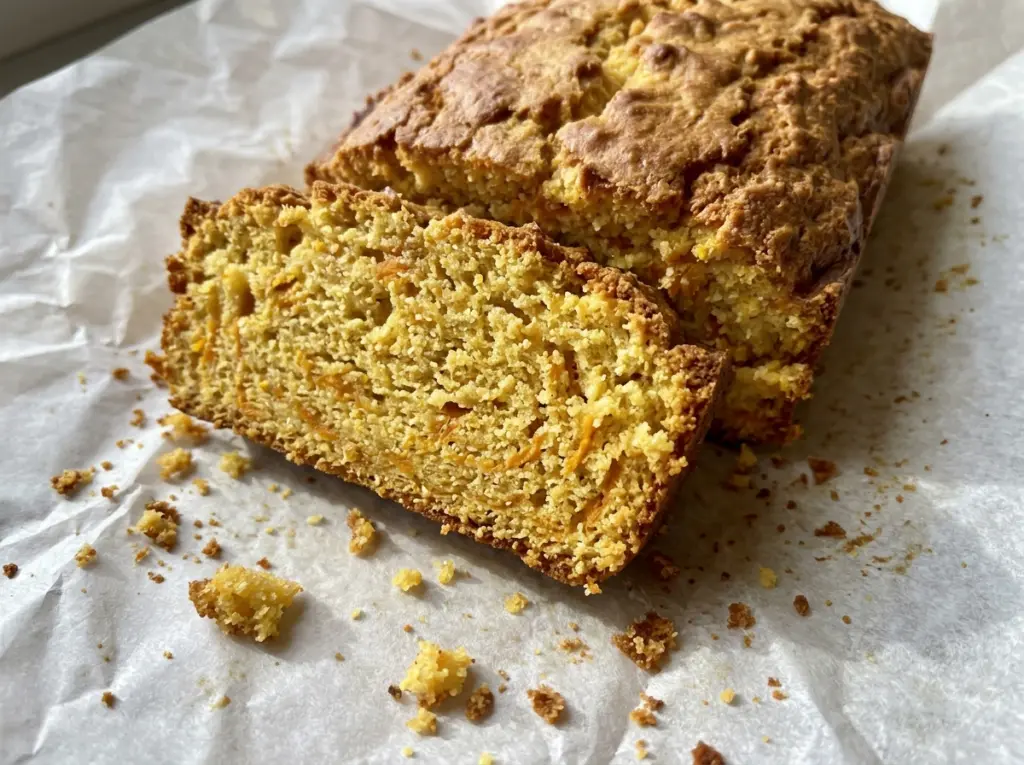
The knife slides through the sweet potato, and the kitchen starts to smell faintly caramelized before the cornbread batter is even mixed. That roasted potato is what gives this pan its soft, golden crumb and gentle sweetness without turning it into cake. I like that the flavor stays firmly in cornbread territory: cornmeal is still right up front, with the sweet potato rounding out each bite.
One detail makes a bigger difference than it might seem: mash the potato until smooth, then measure the amount the batter needs. Sweet potatoes vary in size and moisture, so using every bit of a large one can leave the middle heavier than you want. The buttermilk and cooled butter bring the dry ingredients together into a tender batter, while a quick stir keeps the crumb from getting tough. Give the top time to turn golden, and the center should hold together with a few moist crumbs on the toothpick.
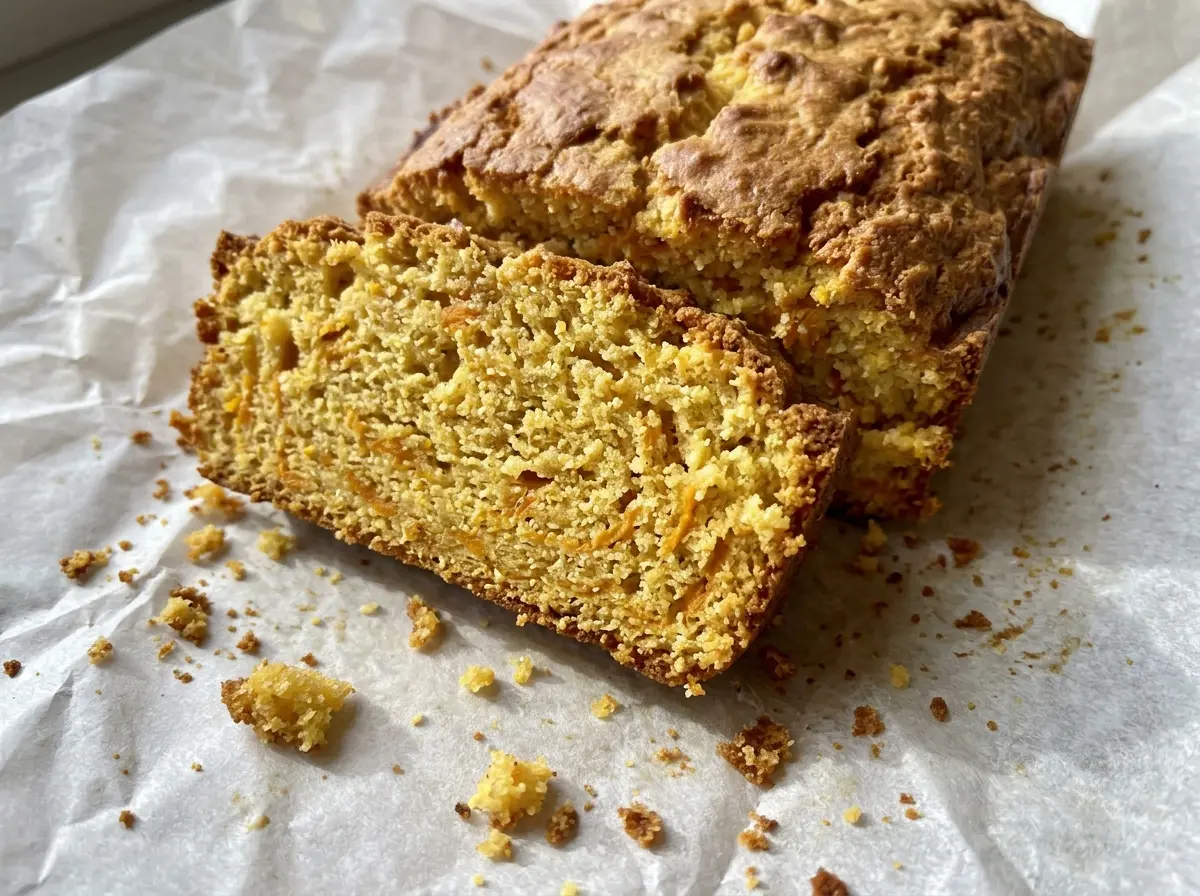
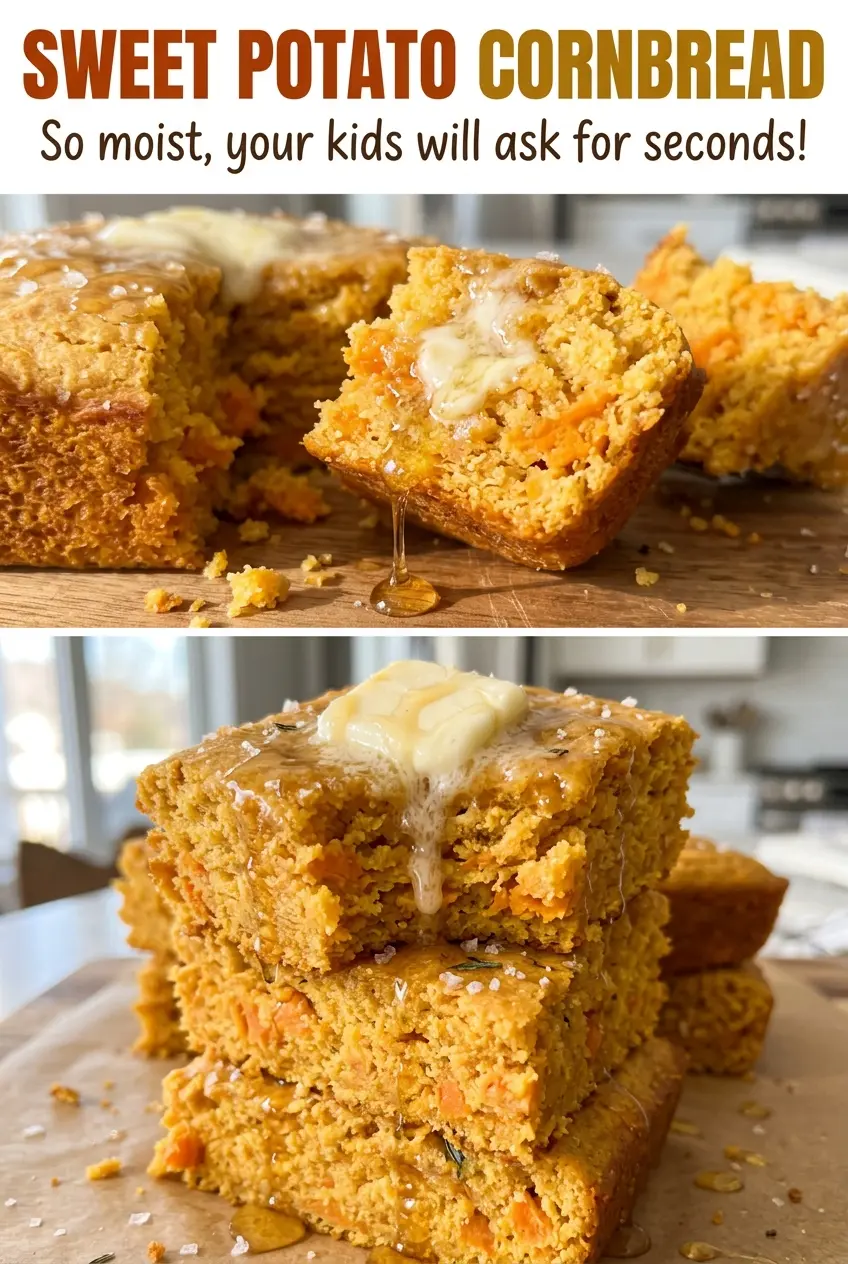
Cut into warm squares after a short rest in the pan, this sweet potato cornbread is soft in the middle, lightly crisp around the edges, and good enough to serve without dressing it up.
Kitchen Note
Once the dry pockets are gone, put the spoon down. Extra stirring develops the flour and can leave the crumb tougher than it needs to be.
Save this sweet potato cornbread for its tender center, golden top, and roasted-sweet-potato flavor.
Why Measuring the Mashed Sweet Potato Matters More Than Its Size
A large sweet potato sounds like a dependable measure, but the weight of the whole potato doesn’t tell you exactly how much cooked flesh you’ll end up with. The variety, shape, and amount of moisture all play a part. This cornbread needs a measured cup of smooth mash, not simply whatever comes out of the potato after roasting.
Too much sweet potato adds extra moisture and weight, which can make the center feel dense or damp even when the top is nicely browned. Too little, and you lose some of the softness and mellow sweetness that distinguish this from plain cornbread. Mash first, then measure; save any extra for another use instead of tipping it into the bowl. That small pause gives the batter a more predictable balance of cornmeal, flour, and moisture, and makes the texture easier to judge when it comes out of the oven.
What the Sweet Potato, Buttermilk, and Cornmeal Each Bring
- Sweet potato — Roasting concentrates its sweetness and gives the crumb moisture without making the batter taste like dessert. Choose a firm potato with no soft spots. Mash the cooked flesh smooth so it blends evenly; if you have extra after measuring, don’t add it all to the batter.
- Yellow cornmeal — This is what keeps each bite recognizably cornbread, with a distinct corn flavor and a little texture. A standard yellow cornmeal makes a familiar, even crumb; stone-ground cornmeal brings more grainy texture if that’s what you enjoy.
- Buttermilk — Its tang balances the sweet potato and sugar, and it helps the baking soda work in the batter. If you don’t have buttermilk, plain yogurt thinned with milk until pourable is a practical substitute; use the same total volume. The acidity and thickness won’t be exactly identical, so the crumb may change slightly.
- All-purpose flour — Flour softens the texture of the cornmeal and gives the squares enough structure to cut cleanly. Use a fresh bag if yours has been open long enough to pick up pantry odors. A cup-for-cup gluten-free baking blend is the most useful swap when you need a gluten-free version.
- Unsalted butter and eggs — The melted butter adds richness, while the eggs help the cornbread set and hold together. Let the butter cool before mixing it with the eggs so it doesn’t heat them. Unsalted butter also lets the measured salt in the batter stay in control.
- Baking powder and baking soda — These leaveners help the batter rise rather than bake up heavy. Baking soda also works with the acidity in the buttermilk; keep both leaveners in the batter for the intended lift and balance.
Roast, Mash, and Bake the Batter Without Drying It Out
Roast the Potato Until a Knife Slides Through
Heat the oven to 400°F. Set the scrubbed sweet potato on a foil-lined baking sheet and roast it for 45–60 minutes, until a knife pierces all the way through easily. The exact time depends on the potato’s size and shape, so use the knife test rather than relying on the clock alone. A firm center will be harder to mash smoothly and can leave lumps in the finished cornbread.
Mash Smoothly and Measure the Flesh
Let the potato cool until it’s easy to handle, then peel it and mash the flesh until smooth. Measure one cup for the batter; a large potato may give you a little more or less. Smooth mash combines more evenly than chunky pieces, so take a moment to break up any firm bits before measuring. Coat a 9-inch square baking pan with cooking spray while you have the potato ready.
Whisk the Dry and Wet Mixtures Separately
In a large bowl, whisk together the cornmeal, flour, sugar, baking powder, baking soda, and salt. In a medium bowl, whisk the eggs, buttermilk, measured sweet potato, and melted, cooled butter until the mixture looks even. Separating the bowls helps distribute the leaveners through the dry ingredients before the moisture reaches them. If the potato mixture has a few small streaks, whisk until it looks smooth before combining the bowls.
Stir Just Until the Batter Comes Together
Pour the wet mixture into the dry ingredients and stir only until no dry pockets remain. The batter doesn’t need to look perfectly polished, and a few small lumps are less of a problem than prolonged mixing. Spread it in the prepared pan so the surface is level enough to bake evenly. Put the pan in the 400°F oven and bake for 25–30 minutes.
Use the Crust and Toothpick as Doneness Cues
Look for a golden top, then insert a toothpick into the center. A few moist crumbs should cling to it; a wet smear of batter means the middle needs more time. Pull the pan once those cues line up instead of waiting for the toothpick to come out completely dry, which can leave the cornbread drier. Cool it in the pan for 10 minutes before cutting into squares.
Three Useful Ways to Adapt Sweet Potato Cornbread
Make It Gluten-Free
Replace the all-purpose flour with a cup-for-cup gluten-free baking blend in the same quantity. The cornmeal already gives the cornbread its characteristic texture, but the final crumb may be a little more delicate, so let the squares rest in the pan before cutting.
Use Stone-Ground Cornmeal for More Texture
Swap in stone-ground yellow cornmeal for the standard cornmeal, keeping the quantity the same. It gives the squares a coarser, more pronounced grain and a heartier bite. If you prefer a soft, fine crumb, stick with regular yellow cornmeal.
Use Plain Canned Sweet Potato Puree
For a shortcut, replace the roasted and mashed potato with the same measured amount of plain, unsweetened sweet potato puree. Don’t use sweetened canned yams, which bring extra sugar and a different texture. The puree may be a little wetter than freshly roasted potato, so the baked crumb can come out slightly softer.
Storage and Reheating
- Refrigerator: Store cooled squares in an airtight container for up to 4 days. The crumb firms up when chilled.
- Freezer: Freeze cooled squares in a tightly sealed freezer-safe container for up to 2 months. Thaw in the refrigerator or at room temperature before reheating.
- Reheating: Warm a square in the microwave in 10-second bursts until heated through, or wrap several squares in foil and warm them in a 300°F oven for 8–10 minutes. Leaving them uncovered in the oven can dry out the edges.
Questions That Come Up While Making Sweet Potato Cornbread
Sweet Potato Cornbread
Ingredients
Equipment
Method
- Heat the oven to 400°F.
- Place the sweet potato on a foil-lined baking sheet and roast for 45–60 minutes, until easily pierced all the way through with a knife.
- Let the sweet potato cool until easy to handle.
- Peel the sweet potato, then mash until smooth and measure 1 cup.
- Coat a 9-inch square baking pan with cooking spray.
- Whisk the cornmeal, flour, sugar, baking powder, baking soda, and salt in a large bowl.
- Whisk the eggs, buttermilk, 1 cup mashed sweet potato, and melted butter in a medium bowl until smooth.
- Pour the wet ingredients into the dry ingredients and stir just until no dry pockets remain.
- Spread the batter in the prepared pan.
- Bake at 400°F for 25–30 minutes, until the top is golden and a toothpick inserted in the center comes out with a few moist crumbs.
- Cool in the pan for 10 minutes before cutting.