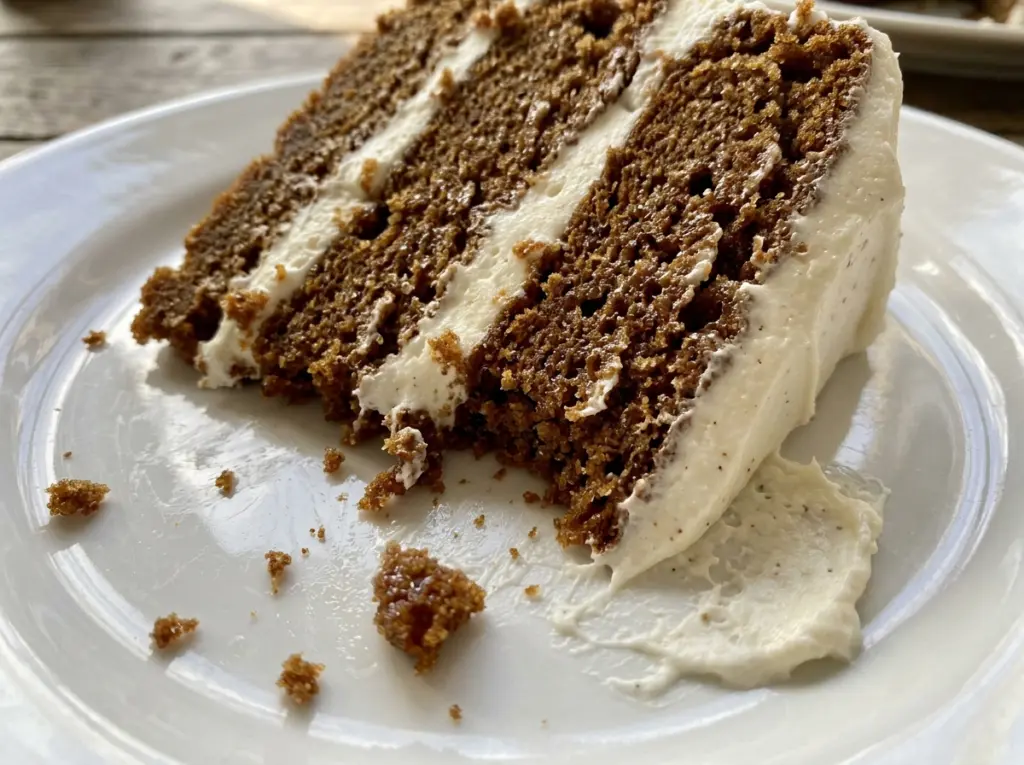
The batter turns a deep brown as soon as the molasses goes in, and the kitchen starts to smell like ginger and cinnamon before the cake even reaches the oven. I wanted a gingerbread layer cake that stayed moist without feeling heavy, so these layers pair dark brown sugar and unsulphured molasses with a soft, gently spiced crumb.
Buttermilk gives the batter a little tang and keeps the spices from tasting sharp. I add it in two portions between three additions of the dry ingredients, mixing on low just until the flour disappears. That keeps the batter even without working it longer than it needs.
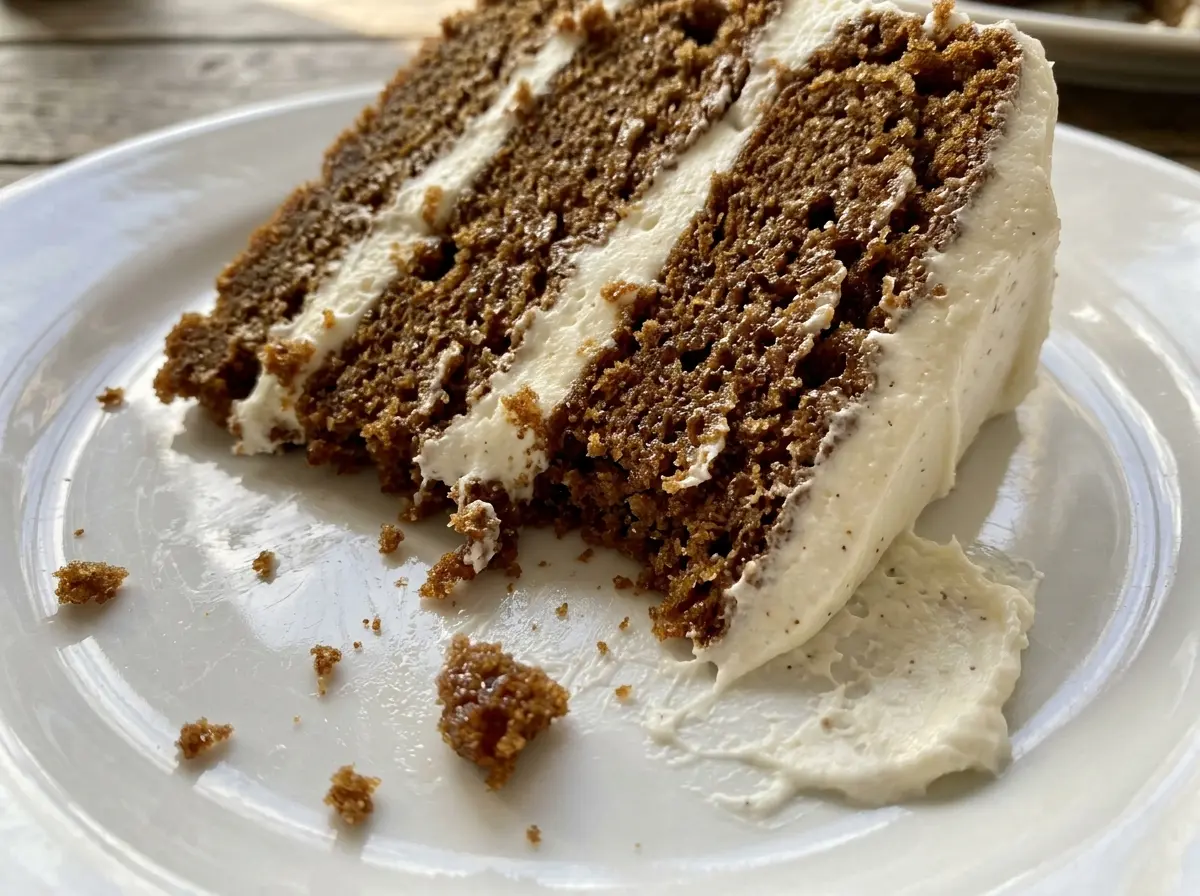
The frosting is lighter than a traditional thick cream cheese frosting because whipped cream gets folded into the cream cheese and mascarpone. Spread between the cool layers and over the top and sides, it makes a smooth, soft contrast to the dark gingerbread. Each slice has a tender crumb and a cool, creamy finish.
Kitchen Note
Let both layers cool completely before you frost them. Even a little warmth softens this whipped mascarpone frosting and makes it harder to spread neatly.
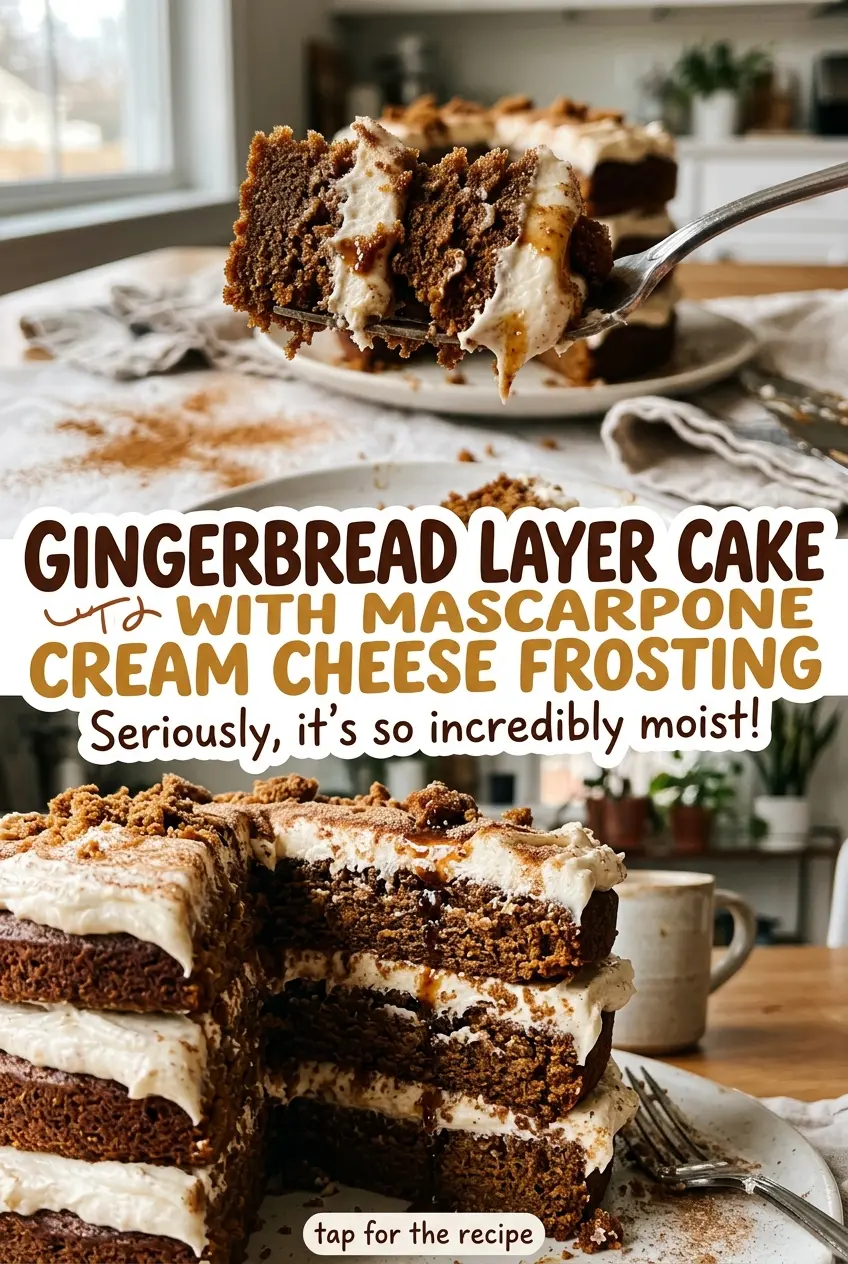
Save this gingerbread layer cake for its dark molasses crumb and cloudlike mascarpone cream cheese frosting.
Why This Dark Gingerbread Needs a Lighter Frosting
Gingerbread brings a deep, warming flavor to the plate, so a dense, sugary frosting can make each bite feel heavy. Here, whipped cream folded into cream cheese and mascarpone gives the frosting a softer texture. The cream cheese adds a slight tang, while mascarpone keeps the finish smooth and rich without turning it into a stiff, sugary layer.
That contrast also guides how I assemble the cake. A modest layer of frosting between the rounds gives you cream in every slice without pushing the cake layers apart. Then the rest goes over the top and sides. The cake needs to be completely cool before frosting, and a short rest in the refrigerator helps the finished layers hold together when sliced.
For the best balance in each serving:
- Keep the cake layers even in the pans so the finished stack sits level.
- Spread the filling gently to the edges rather than pressing down on the top layer.
- Chill the assembled cake before cutting so the frosting has time to firm up.
What Gives These Gingerbread Layers Their Moist Crumb and Balanced Spice
- Unsulphured molasses — It brings the cake’s dark color, characteristic gingerbread depth, and moisture. Use unsulphured molasses rather than blackstrap; blackstrap has a much more intense, bitter edge that can overwhelm the warm spices. A standard grocery-store brand is fine, but check the label so you know which kind you’re buying.
- Ground ginger, cinnamon, cloves, and nutmeg — Ginger leads, cinnamon rounds out the warmth, and the smaller amounts of cloves and nutmeg add depth. The spices don’t need to be a specialty brand, but older jars that have lost their aroma won’t give the batter the same fragrance.
- Buttermilk — Its thickness and acidity help make a tender cake and complement the molasses. I keep it rather than swapping in plain milk, which doesn’t bring the same tang or consistency.
- Dark brown sugar — Its molasses notes reinforce the cake without relying on extra spice. Pack it firmly when measuring so the amount stays consistent from batch to batch.
- Mascarpone and cream cheese — Together they make the frosting creamy and gently tangy; mascarpone softens the sharper taste of cream cheese. Choose fresh dairy, and bring the mascarpone to cool room temperature while keeping the heavy cream cold for whipping.
- All-purpose flour — Spoon it into the measuring cup and level the top instead of scooping directly from the bag. Scooping can pack in extra flour, which makes these layers heavier. There isn’t a straight substitution I recommend for this tested batter.
From Gingerbread Batter to Neat, Frosted Layers
Prepare the pans and spice mixture
Heat the oven to 350°F. Grease two 9-inch round cake pans with the reserved butter and line the bottoms with parchment rounds. Whisk the flour, baking soda, baking powder, ginger, cinnamon, cloves, nutmeg, and salt in a medium bowl until the spices are distributed through the flour. Mixing them together first helps avoid a pocket of clove or baking soda in one layer.
Cream the butter, sugar, eggs, and molasses
Beat the remaining softened butter with the packed dark brown sugar in a large bowl for 2 to 3 minutes, until light and fluffy. Add the room-temperature eggs one at a time, beating them in before adding the next. Mix in the molasses; the batter base will look dark and glossy. If the eggs are cold, they can make the butter mixture look less smooth, so bring them to room temperature first.
Alternate the dry ingredients and buttermilk
Add the flour mixture in three additions, alternating with the buttermilk in two additions, and begin and end with flour. Keep the mixer on low and stop as soon as the batter is combined. Scrape the bowl if flour is caught along the sides, then mix only until those streaks disappear. Overmixing after the flour goes in can leave the cake less tender.
Bake and cool the cake layers
Divide the batter evenly between the prepared pans and bake at 350°F for 30 to 35 minutes. The tops should spring back lightly, and a toothpick inserted in the center should come out with a few moist crumbs rather than wet batter. Cool the cakes in their pans for 10 minutes, run a knife around the edges, and turn them out. Remove the parchment and let the layers cool completely.
Whip, fold, and assemble
Beat the cold heavy cream in a medium bowl for 2 to 3 minutes, until stiff peaks form, then set it aside. In a large bowl, beat the softened cream cheese and cool room-temperature mascarpone on low for 1 to 2 minutes, until smooth; add the powdered sugar and vanilla and mix on low until combined. Fold in the whipped cream in three additions, stopping when no streaks remain. Set one cake layer on a serving plate, spread about 1 cup of frosting over it, add the second layer, then frost the top and sides with the rest.
Two Ways to Change the Look Without Changing the Cake
Leave the sides bare
For a naked-cake finish, spread the frosting between the layers and over the top, but leave the cake sides exposed. The gingerbread layers show clearly, and the cake has a less frosting-heavy look while using the same frosting and assembly.
Make small layered squares
Once the cake layers have cooled, cut them into smaller squares and stack matching pieces with frosting between them. You’ll get individual layered portions instead of wedges, though trimming the rounds this way leaves some cake scraps.
Storage and Reheating
- Refrigerator: Refrigerate leftover cake, covered, for up to 3 days. The cake may feel firmer straight from the refrigerator, while the frosting will be at its neatest for slicing.
- Freezer: I don’t recommend freezing the assembled cake; the whipped cream and mascarpone frosting may lose its smooth texture after thawing.
- Reheating: Don’t reheat this cake. Serve it chilled; warmth softens the frosting and can make the layers slide.
Questions That Come Up While Baking This Gingerbread Cake
Gingerbread Layer Cake with Mascarpone Cream Cheese Frosting
Ingredients
Equipment
Method
- Heat the oven to 350°F. Grease two 9-inch round cake pans with 1 tablespoon of the butter and line the bottoms with parchment rounds.
- Whisk the flour, baking soda, baking powder, ginger, cinnamon, cloves, nutmeg, and salt in a medium bowl.
- Beat the remaining butter with the brown sugar in a large bowl until light and fluffy, about 2 to 3 minutes.
- Beat in the eggs one at a time.
- Mix in the molasses.
- Add the flour mixture in three additions, alternating with the buttermilk in two additions and starting and ending with the flour; mix on low just until combined.
- Divide the batter evenly between the pans.
- Bake at 350°F for 30 to 35 minutes, until the tops spring back lightly and a toothpick inserted in the centers comes out with a few moist crumbs.
- Cool the cakes in the pans for 10 minutes.
- Run a knife around the edges, turn the cakes out, and remove the parchment.
- Cool the cakes completely.
- Beat the cold heavy cream in a medium bowl until stiff peaks form, about 2 to 3 minutes, then set aside.
- Beat the cream cheese and mascarpone in a large bowl on low speed until smooth, about 1 to 2 minutes.
- Add the powdered sugar and vanilla and beat on low until combined.
- Fold the whipped cream into the cheese mixture in three additions until no streaks remain.
- Place one cooled cake layer on a serving plate and spread about 1 cup of frosting over it.
- Top with the second layer and spread the remaining frosting over the top and sides.
- Refrigerate the cake for at least 30 minutes before slicing.
- Refrigerate any leftovers.