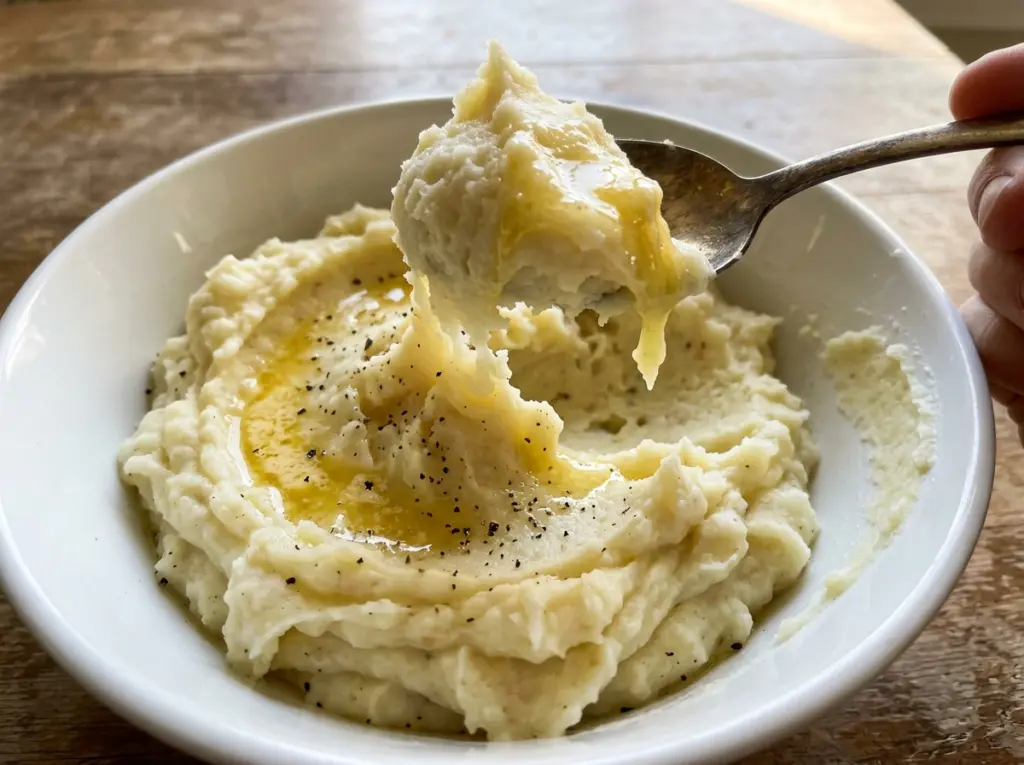
The potatoes tell you when they’re ready: a fork slips through the center without catching, and the chunks start to crumble at the edges. I learned not to rush past that cue when making Amish mashed potatoes, because firm pieces are harder to mash smooth once the dairy goes in. Starting with russets gives the finished casserole a soft, fluffy base, while the cream cheese and sour cream make each scoop richer than plain mashed potatoes.
I mash the hot potatoes with melted butter first, then add the softened cream cheese, sour cream, warm milk, and seasonings. That order gives the potatoes a head start toward a smooth texture before the dairy joins in. A covered bake in a 9×13-inch dish warms everything through, so the potatoes arrive at the table hot and ready to scoop.
Kitchen Note
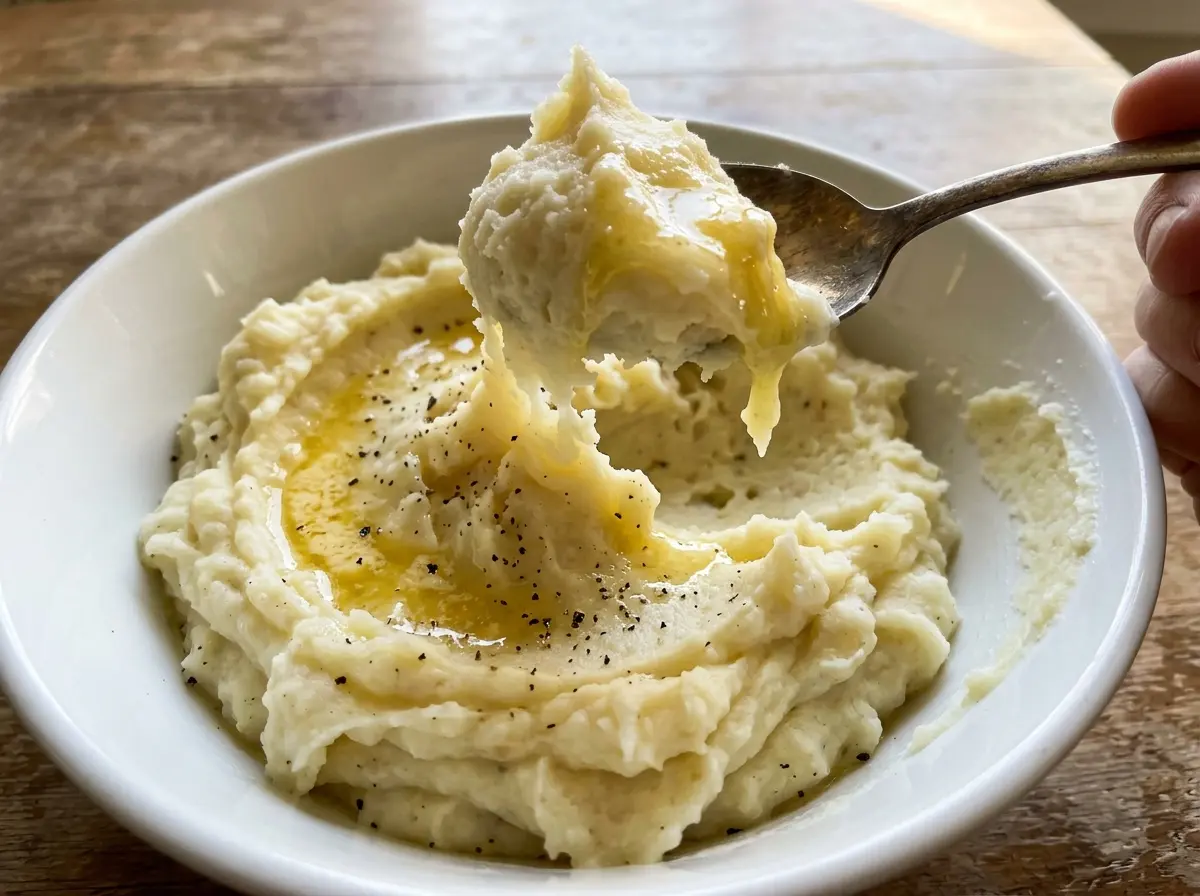
Give the baked potatoes their full five-minute rest before serving. That short pause lets the surface settle, so your first scoop holds together instead of slumping across the plate.
Save these Amish mashed potatoes for a cozy dinner or holiday table—the covered casserole bakes up creamy and hot.
Why the Potatoes Need Two Rounds of Mashing
It’s easy to treat mashed potatoes as one long mashing job, but this casserole has two distinct stages. First, the potatoes meet melted butter while they’re still hot. That helps you break down the chunks before the thicker dairy ingredients are added. Then the cream cheese, sour cream, and warm milk go in, and you mash or stir only until the mixture turns creamy.
Keep working the potatoes hard after they’re smooth and the texture can turn gluey. Russets are starchy, so a steady hand matters more than extra force. Stop when the large lumps are gone and the mixture looks creamy; it doesn’t need endless beating to become scoopable. The oven takes care of heating the finished potatoes evenly, while the foil keeps the top from drying out during the bake.
What the Russets and Dairy Bring to This Casserole
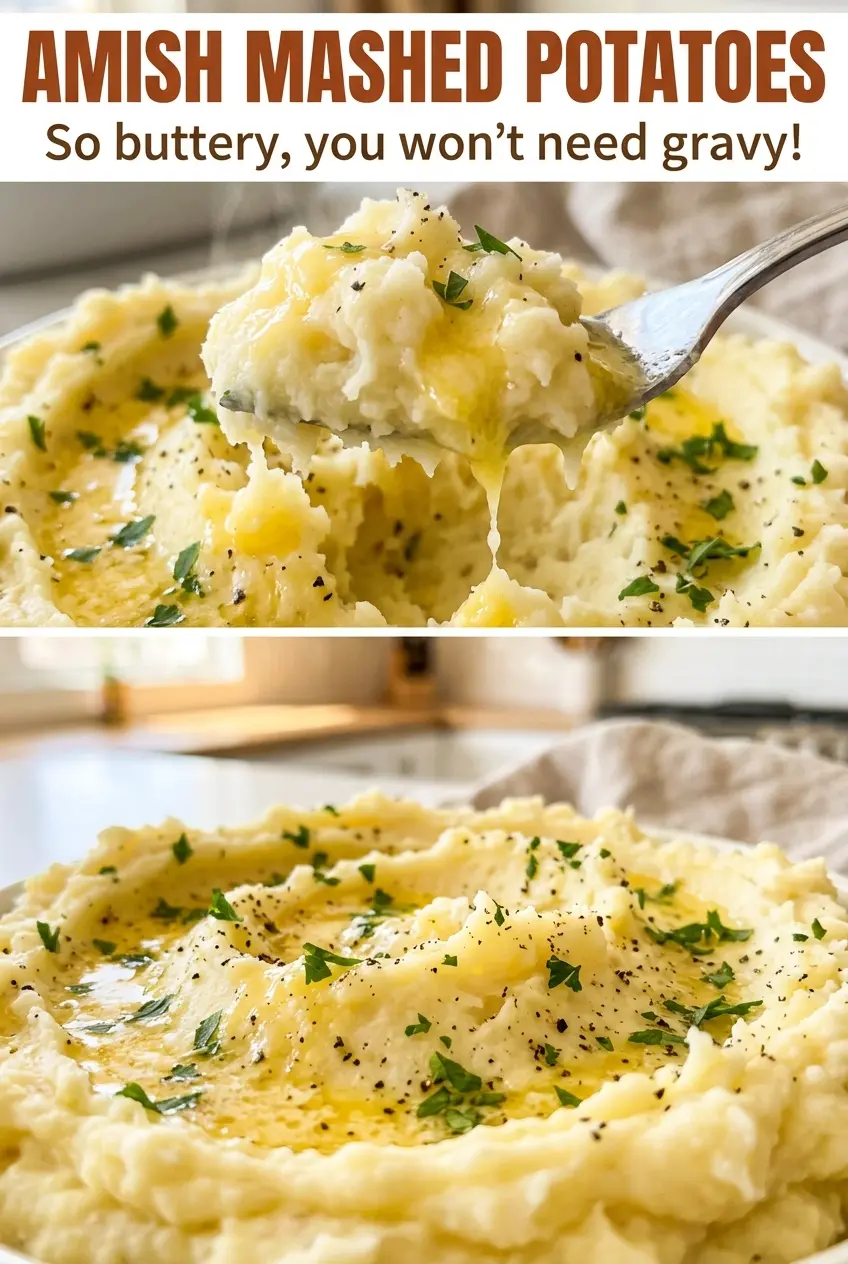
- Russet potatoes — Their fluffy, starchy texture makes a soft mash that holds up well in the casserole. Yukon Gold potatoes can replace them in the same weight; expect a denser, naturally creamier result rather than the lighter texture russets give.
- Cream cheese — Softening it and cutting it into pieces helps it blend into the hot potatoes without leaving cold lumps. It contributes body as well as richness, so there isn’t a perfect one-ingredient substitute among the other dairy here.
- Sour cream — This gives the potatoes a gentle tang that keeps the rich dairy from tasting flat. Plain full-fat Greek yogurt can replace it one-for-one; the potatoes will taste a little sharper and may feel slightly less rich.
- Whole milk — Warming the milk keeps it from cooling the potatoes as you stir it in. You can use warm 2% milk instead, though the finished mash will be a touch less rich.
- Unsalted butter — Unsalted butter lets the divided kosher salt do the seasoning work. Salted butter will work, but it makes the final salt level less predictable, so unsalted is the better choice when following the listed seasoning.
From Fork-Tender Potatoes to a Creamy Baked Finish
Simmer Until a Fork Slides Through
Put the peeled, 1-inch potato chunks in an 8-quart pot with cold water and 2 teaspoons of the kosher salt. Bring the pot to a boil over high heat, then lower the heat and simmer for 15–20 minutes. Test a larger chunk with a fork; it should pierce easily, without a firm center. If the fork still meets resistance, give the potatoes a little more time rather than trying to mash them undercooked.
Drain Well and Start with Butter
Drain the potatoes thoroughly, then return them to the pot. Excess water left clinging to the chunks can make the finished mash loose, so let the water run off before you begin. Mash with the melted butter until the potatoes are mostly smooth. A few small soft pieces at this point are fine; the next round of mashing will finish the texture.
Mix in the Dairy Just Until Creamy
Add the softened cream cheese pieces, sour cream, warm milk, remaining kosher salt, and black pepper. Mash or stir until creamy, stopping once the dairy is evenly incorporated. If you keep beating after the mixture is smooth, the potatoes can become stretchy instead of fluffy. Scrape along the bottom and sides of the pot so no pockets of cream cheese or seasoning are left behind.
Bake Covered Until Steaming
Coat a 9×13-inch baking dish with nonstick cooking spray and transfer the potatoes into it. Cover the dish tightly with foil and bake at 350°F for 25–30 minutes, until the potatoes are steaming hot throughout. A loose foil cover lets moisture escape, so press it snugly around the edges. Rest the dish for 5 minutes before serving.
Small Changes That Shift the Flavor and Texture
Make the Mash More Tangy
Shift a little of the warm milk toward sour cream. The potatoes will taste brighter and a bit less mellow, with a thicker texture; add the milk gradually so the mash stays creamy rather than loose.
Go for a Milder, Richer Bite
Use a little more cream cheese and a little less sour cream. The result is richer and less tangy, with a slightly denser feel; keep the overall dairy mixture creamy enough to stir through the potatoes.
Leave Them Slightly Rustic
Stop the first mash when the potatoes are mostly smooth, then stir the dairy in gently instead of continuing to mash. The finished casserole will have a few tender potato pieces among the creamy bites, rather than a uniform, smooth texture.
Storage and Reheating
- Refrigerator: Refrigerate leftovers in an airtight container within 2 hours and use within 3–4 days. The potatoes will firm up as they chill.
- Freezer: They freeze well, though the dairy-rich texture may be slightly less smooth after thawing. Store in an airtight freezer-safe container for up to 2 months, then thaw in the refrigerator.
- Reheating: Reheat covered in a 350°F oven until steaming hot throughout, or heat individual portions in the microwave, stirring midway. Reheat gently; high heat can make the dairy separate and the potatoes turn grainy.
Questions That Come Up When Making Amish Mashed Potatoes
Amish Mashed Potatoes
Ingredients
Equipment
Method
- Heat the oven to 350°F and coat a 9x13-inch baking dish with nonstick cooking spray.
- Put the potatoes, water, and 2 teaspoons of the salt in an 8-quart pot and bring to a boil over high heat.
- Reduce the heat and simmer for 15–20 minutes, until the potatoes are easily pierced with a fork.
- Drain the potatoes well, return them to the pot, and mash with the melted butter until mostly smooth.
- Add the cream cheese, sour cream, warm milk, remaining 1 teaspoon salt, and pepper, then mash or stir just until creamy.
- Transfer the potatoes to the prepared dish and cover tightly with foil.
- Bake for 25–30 minutes, until steaming hot throughout.
- Let the potatoes rest for 5 minutes before serving.