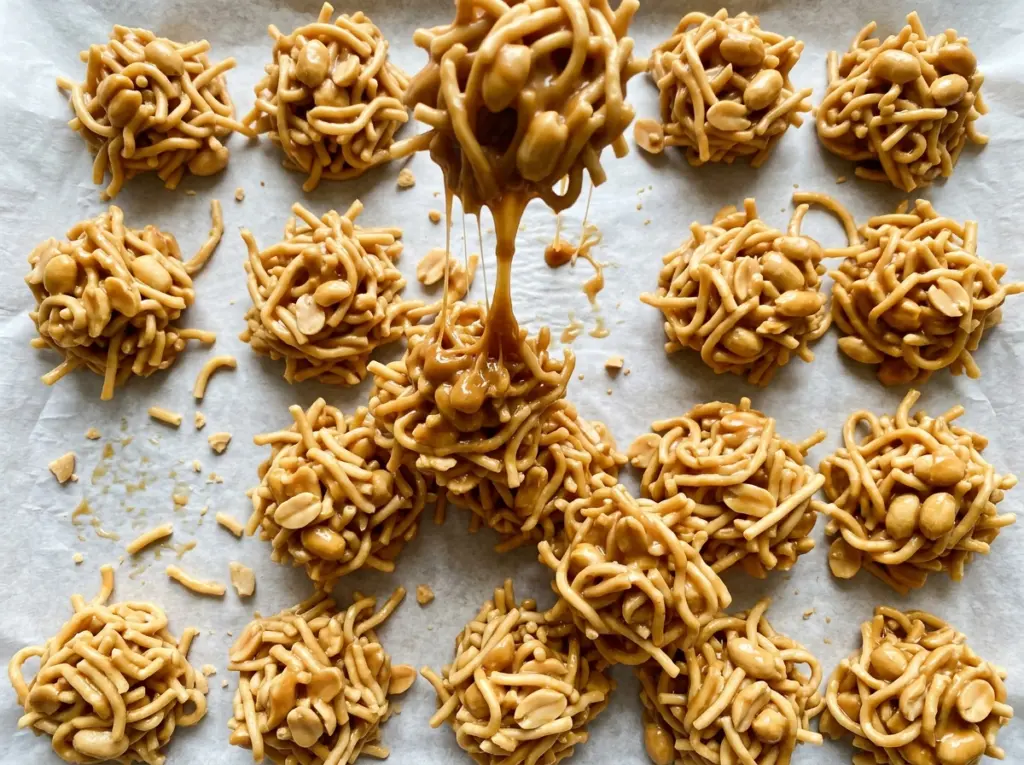
The butterscotch chips start out stubborn and glossy, then turn into a smooth coating after a few careful stirs. Once that coating catches on the crunchy noodles, the mixture is ready to become the craggy little clusters that make these butterscotch haystacks so fun to eat. One batch makes 18, and you don’t need to turn on the oven.
I keep the ingredient list short and let the textures do the work: creamy peanut butter softens the sweetness of the butterscotch, while crisp chow mein noodles give each bite its crunch. The only part that asks for a little patience is waiting for the clusters to firm in the refrigerator. When they do, the coating holds the noodles together without covering up their crisp, tangled edges.
Kitchen Note
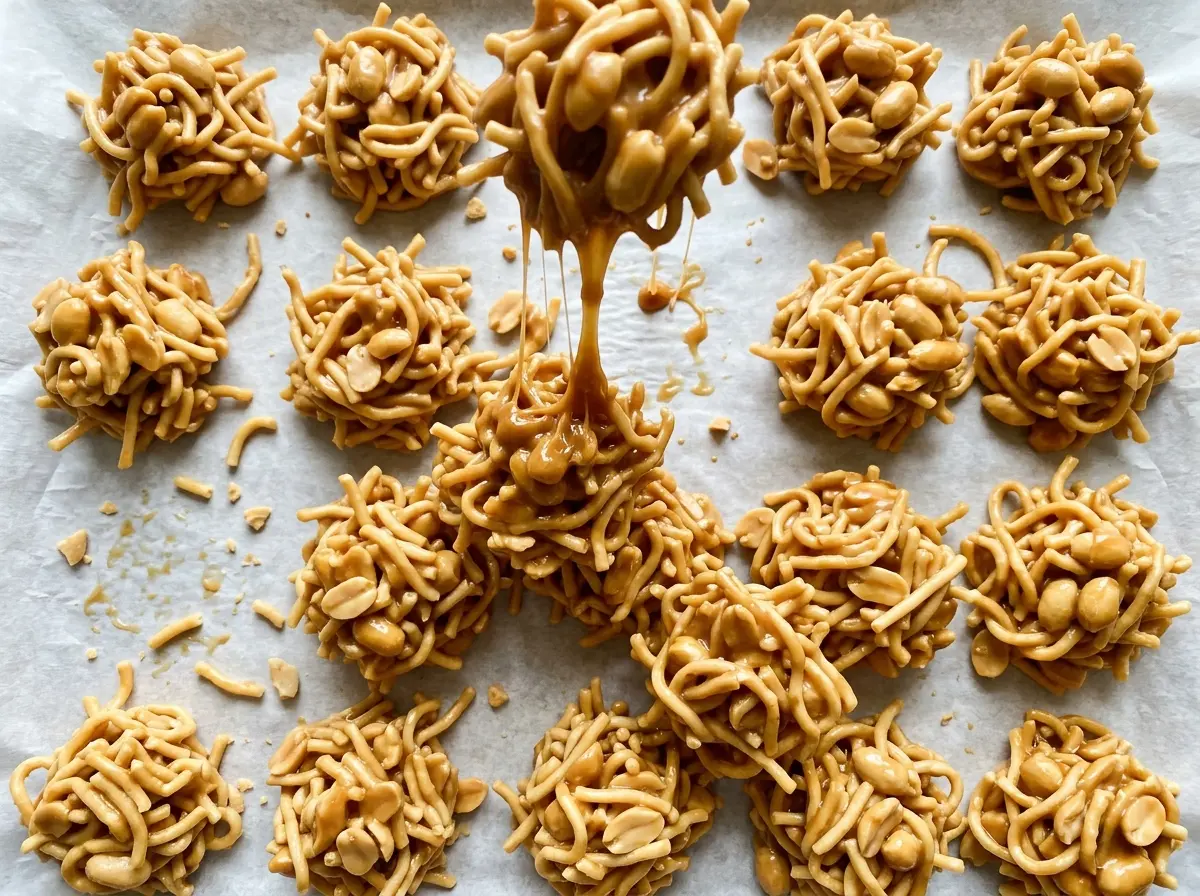
Leave a little breathing room between the heaping spoonfuls. The clusters need their own space as they firm, and crowded mounds are harder to lift without bumping their crisp noodle peaks.
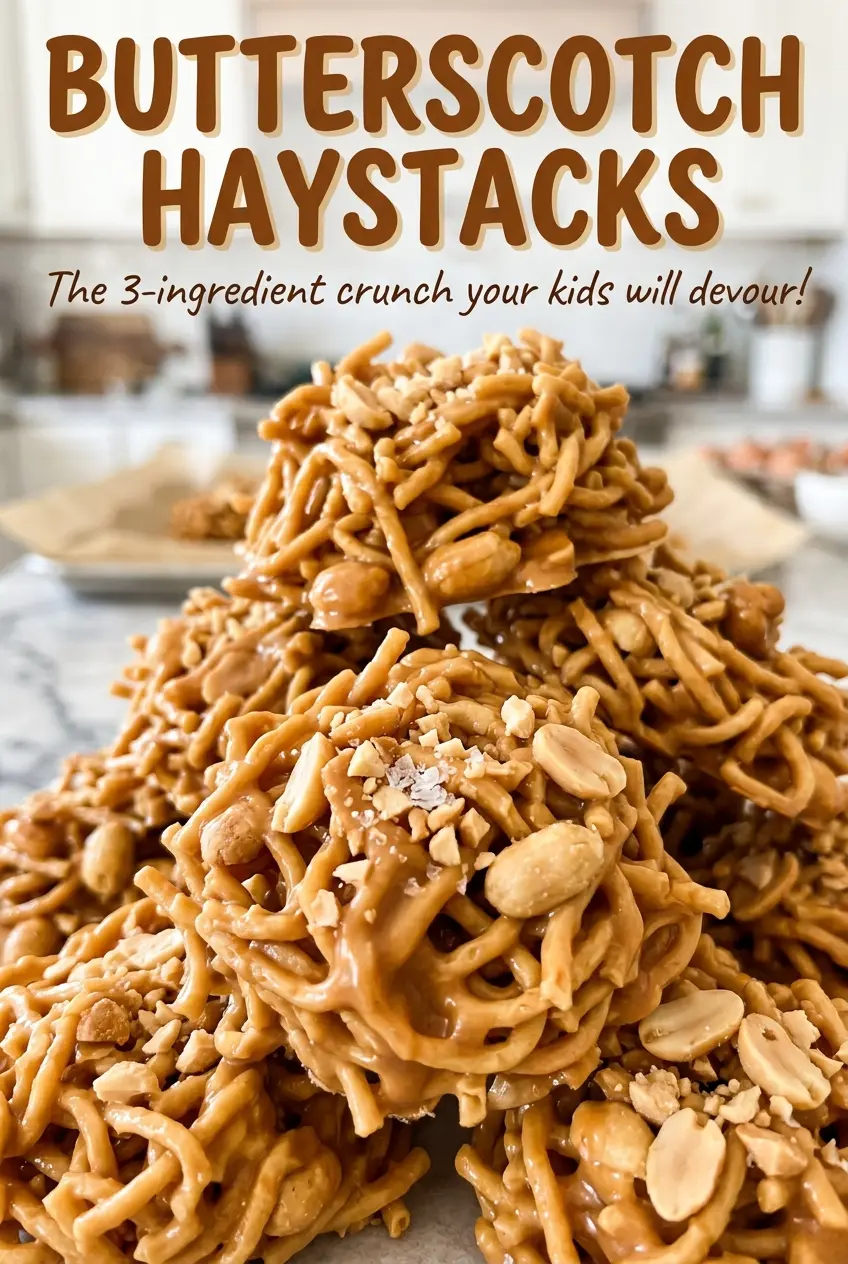
Save these butterscotch haystacks for a no-bake treat with crisp noodles and a smooth, peanut-buttery coating.
Why the Butterscotch Should Bind the Noodles, Not Bury Them
Haystacks work best when the noodles still look like noodles. The butterscotch mixture is a binder, not a thick shell, and the balance matters: too much coating makes the clusters heavy and overly sweet, while patchy coating leaves loose strands that don’t hold together. With these proportions, each forked tangle gets a thin layer of sweet coating and enough exposed noodle to keep its crunch.
That’s also why the noodles go in only after the chips and peanut butter are smooth. Stirring the noodles into a lumpy or overly thick mixture makes it harder to coat them evenly, and forceful mixing breaks up their delicate curls. Fold gently, turning the noodles through the bowl until the coating reaches across the batch. You want the mixture to look glossy and connected, but you should still see plenty of crisp noodle edges. That contrast is what gives each haystack its light, irregular shape instead of turning it into a solid candy lump.
What the Three Ingredients Bring to Each Cluster
- Butterscotch chips — These provide the signature caramel-like sweetness and set into the coating that holds the clusters together. Ordinary baking chips work well; there’s no need to buy a specialty brand. White baking chips will melt into a coating, but they won’t give the haystacks their butterscotch flavor, so they’re not a close replacement.
- Creamy peanut butter — It adds a little savory depth and makes the melted chips easier to fold around the noodles. A standard creamy peanut butter gives the smoothest coating. Crunchy peanut butter works in the same amount, but it adds another set of pieces and makes the finished clusters less uniform; natural peanut butter with separated oil can also make the mixture inconsistent.
- Chow mein noodles — Use the crisp, ready-to-eat noodles sold in a can, rather than soft fresh noodles meant for stir-frying. Their dry crunch is essential to the texture. Thin pretzel sticks, broken into shorter pieces, are a workable swap if you want a saltier, denser cluster, though the result won’t have the airy tangle of the original.
Building the Clusters Without Breaking the Noodles
Set Up the Baking Sheet
Line a baking sheet with parchment paper before you start melting anything. The mixture thickens as it cools, so having the landing spot ready means you can portion it while it’s still easy to handle. Leave room between the spoonfuls so their uneven edges stay separate. A large sheet gives you space to drop all 18 portions without crowding them.
Melt the Butterscotch and Peanut Butter Slowly
Put the butterscotch chips and creamy peanut butter in a large microwave-safe bowl. Microwave at 50% power in 30-second bursts, stirring after each one, until the mixture is smooth; the total time is about 1 1/2 to 2 minutes. The mixture may still look chunky when a burst ends, so stir before adding more heat. Stop when it’s glossy and uniform rather than continuing to microwave it just to watch it liquefy.
Fold Until the Noodles Are Coated
Add the chow mein noodles and fold them through the warm mixture gently. Turn from the bottom of the bowl so the butterscotch reaches the noodles without crushing their crisp curls. Keep going until the coating is spread evenly and there aren’t dry clumps hiding underneath. If you stir hard or quickly, the noodles break and the clusters lose their characteristic shape.
Portion and Chill Until Firm
Drop the mixture onto the prepared baking sheet by heaping tablespoons. Use the spoon to gather each mound into a cluster, but don’t press it flat; the jagged peaks are part of the appeal. Refrigerate the haystacks for 20 to 30 minutes, until firm. They’re ready to move when each mound holds together instead of slumping as you lift it.
Three Easy Ways to Change the Batch
Make Them Peanut-Free With Sunflower Seed Butter
Replace the creamy peanut butter with the same amount of smooth sunflower seed butter. It binds the chips and noodles in a similar way, though the finished clusters have a more earthy, less peanutty taste. Choose a smooth seed butter with a stirred, even texture for the easiest mixing.
Shape a Tray of Smaller Bites
Use a teaspoon instead of a heaping tablespoon for petite clusters. You’ll get more pieces with more crisp edges in each bite, and the smaller portions are handy for a dessert tray. Keep the clusters spaced apart and refrigerate until each one is firm.
Make a Half Batch
Halve each ingredient when you want fewer clusters. The smaller quantity will melt faster than the full batch, so pay attention to the texture and stir between microwave bursts rather than relying on the full-batch timing. Portion and chill the clusters the same way.
Storage and Reheating
- Refrigerator: Store the firm clusters in an airtight container for up to 1 week. They’ll stay crispest when kept covered and chilled.
- Freezer: Freeze in an airtight container for up to 1 month, with parchment between layers so the clusters don’t stick together. Thaw in the refrigerator; the noodles may lose a little crunch as they thaw.
- Reheating: These are best served chilled or at cool room temperature, so skip reheating. Warm clusters can soften and lose their shape.
Questions That Come Up While Making Butterscotch Haystacks
Butterscotch Haystacks
Ingredients
Equipment
Method
- Line a baking sheet with parchment paper.
- Put the butterscotch chips and creamy peanut butter in a large microwave-safe bowl. Microwave at 50% power in 30-second bursts, stirring after each, until smooth, about 1 1/2 to 2 minutes total.
- Gently fold in the chow mein noodles until evenly coated.
- Drop the mixture by heaping tablespoons onto the prepared baking sheet.
- Refrigerate for 20 to 30 minutes, until the haystacks are firm.