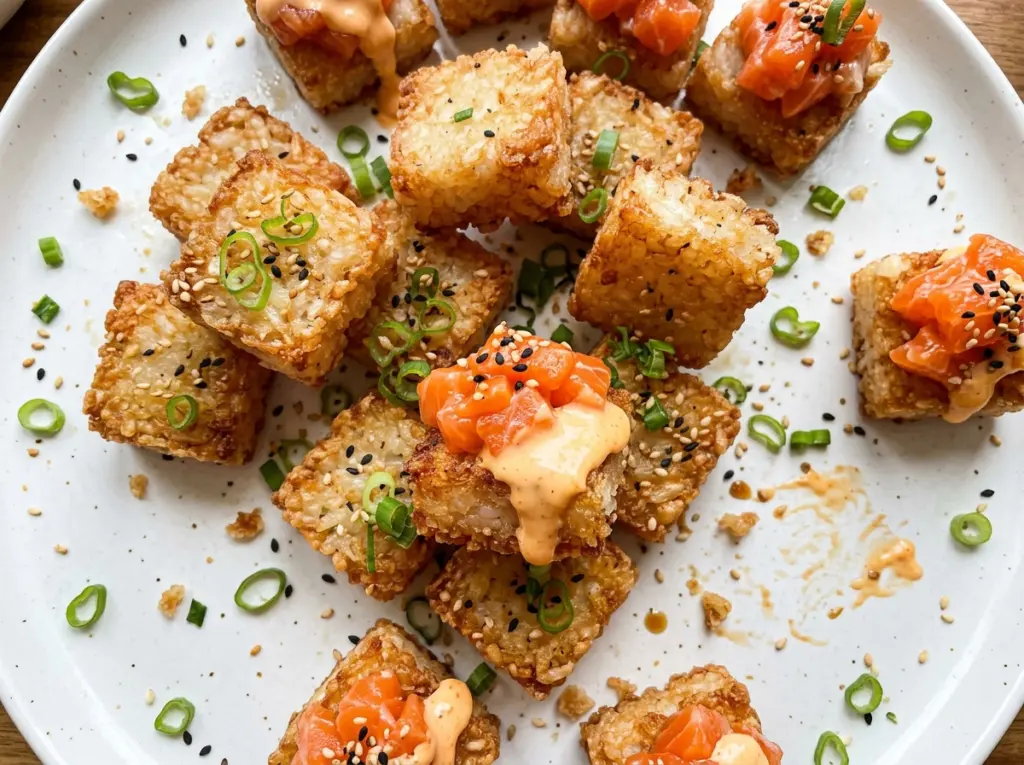
When a rice square hits hot oil, the edges should start sizzling right away and turn deep gold before the center dries out. That contrast is what makes Salmon Crispy Rice worth the extra chilling time: a crisp, sturdy base under cool, creamy salmon with a little heat from sriracha.
The rice needs to be sticky enough to hold together, but it shouldn’t be wet or loose. I rinse short-grain sushi rice, season it while it’s warm, then press it firmly into a pan and let it chill until set. That gives you squares you can lift and fry without chasing stray grains around the skillet. The finished bites are best served as soon as the salmon goes on, while the rice is still crisp.
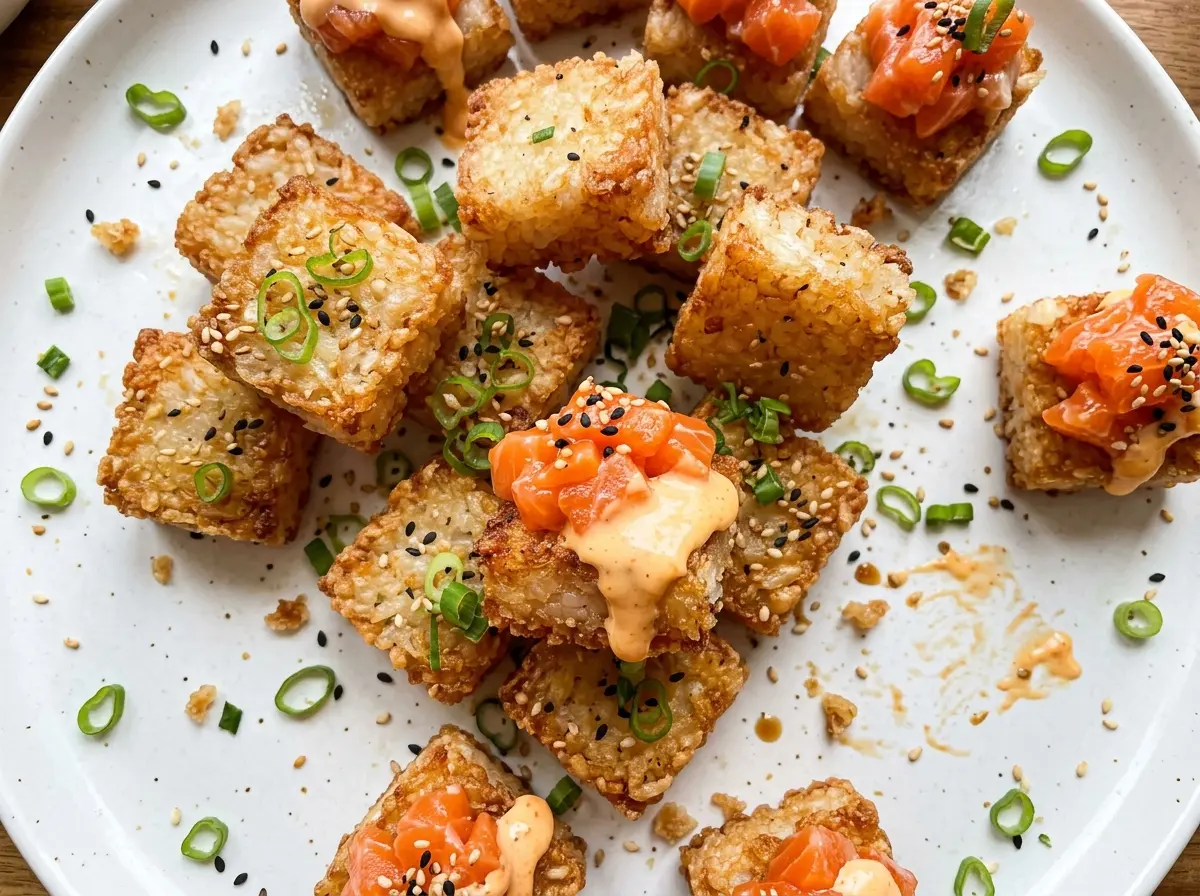
Kitchen Note
A rice grain is a handy oil test if you don’t have a thermometer: it should sizzle as soon as it hits the skillet. If it just sits there, give the oil more time to heat before frying the squares.
Save Salmon Crispy Rice for its golden, crunchy base and creamy sriracha salmon topping—make the rice ahead, then fry and assemble just before serving.
Why Crispy Rice Needs a Long Chill Before It Ever Hits the Oil
Warm rice is too soft to cut and move cleanly. Pressing it into a compact layer and chilling it gives the grains time to firm up, so the squares hold their shape when you lift them from the pan. The four-hour minimum isn’t idle time; it’s what turns seasoned rice into a base you can handle.
Spread the rice evenly in the pan and press it into the corners without leaving loose pockets. An uneven layer means uneven pieces: thin edges brown before thicker centers crisp. Once chilled, the rice should feel firm when you press it lightly and come away from the parchment in a cohesive slab. If it still feels soft, give it more time in the refrigerator rather than trying to fry it early. A cold, well-set square is much easier to turn, and it gives you that crisp outside while keeping the center tender.
What Makes the Rice Hold Its Shape—and the Salmon Stay Creamy

- Short-grain sushi rice — Its natural stickiness helps the pressed layer hold together after chilling and frying. Rinse it until the water runs mostly clear, then drain it well; excess water makes it harder to get a consistent cooked texture. Long-grain rice won’t give you the same compact, cohesive squares.
- Rice vinegar, sugar, and kosher salt — Stirring these together before folding them into the warm rice distributes the seasoning without leaving concentrated salty or sweet patches. Unseasoned rice vinegar keeps you in control of the balance; seasoned vinegar already contains added seasoning, so it won’t behave exactly the same way.
- Skinless salmon fillet — A boneless, skinless fillet flakes neatly into the creamy topping. Use a piece with an even thickness when possible so it cooks at a similar rate from end to end. The salmon’s own flavor is the center of the topping, so choose fish that smells fresh and clean.
- Mayonnaise, sriracha, and soy sauce — Mayonnaise makes a rich binder, sriracha brings the heat, and soy sauce adds savory depth. Stir the sauce together before folding in the fish so the salmon gets coated evenly. The soy sauce is a small but noticeable part of the seasoning, so taste the finished mixture before adding anything else.
- Scallions and toasted sesame seeds — Thinly sliced scallions bring a fresh, sharp note through the creamy salmon, while toasted sesame seeds add a nutty finish. Slice the scallions thinly so they distribute throughout the topping rather than coming off in large pieces.
- Neutral oil — Canola oil works well because it lets the rice and salmon remain the focus. A skillet with enough room to turn the pieces helps them brown evenly; fry in batches rather than crowding the pan.
From Seasoned Rice to Crisp, Topped Squares
Cook and season the rice
Rinse the rice in a fine-mesh sieve under cold water until the water runs mostly clear, then drain it well. Combine it with the water in a 2-quart saucepan and bring it to a boil over medium-high heat. Cover, reduce the heat to low, and cook for 15 minutes, then take the pan off the heat and let it stand, covered, for 10 minutes. Stir the vinegar, sugar, and salt until the sugar dissolves, then fold the mixture gently through the rice so the grains stay intact.
Press the rice and let it set
Line an 8×8-inch pan with parchment, then press the seasoned rice into an even layer. Pay attention to the corners and edges; gaps there can leave fragile pieces when you cut the slab. Let it cool for 15 minutes, cover it, and refrigerate for at least 4 hours, until firm. Don’t skip the covered chill, because the rice needs that time to become sturdy enough to lift and fry.
Bake and fold the salmon topping
Heat the oven to 400°F and place the salmon on a foil-lined baking sheet. Bake it for 10 to 14 minutes, until the thickest part reaches 145°F, then let it cool for about 10 minutes before flaking it. While it cools, stir the mayonnaise, sriracha, and soy sauce together in a medium bowl. Fold in the salmon and thinly sliced scallions gently, keeping some flakes intact for a more textured topping.
Fry until deep golden, then finish
Lift the cold rice from the pan using the parchment and cut it into 16 squares, each about 2 inches wide. Heat the oil in a 10-inch skillet over medium heat to 350°F, then fry the squares in batches for 2 to 3 minutes per side. Look for a deep golden surface and a crisp feel before turning; drain the fried pieces on paper towels. Spoon the salmon mixture on top, finish with toasted sesame seeds, and serve right away.
Small Changes That Give the Salmon Topping a Different Spin
Make it gluten-free with tamari
Replace the soy sauce with the same amount of gluten-free tamari. It keeps the savory, salty note in the salmon topping, though the exact saltiness varies by brand, so taste the mixture before serving.
Dial the sriracha up or down
For a milder topping, start with less sriracha than the listed tablespoon and add more to taste. If you want a sharper kick, increase it gradually; more sriracha brings more heat and a looser, more strongly seasoned sauce around the salmon.
Storage and Reheating
- Refrigerator: Store the rice and salmon topping in separate airtight containers and use within 3 days. Refrigerate leftovers within 2 hours; topped rice softens as it sits.
- Freezer: Freeze the unfried rice squares in a single layer, then transfer them to an airtight container with parchment between layers for up to 1 month. Thaw them in the refrigerator before frying; the salmon-mayonnaise topping is best kept out of the freezer.
- Reheating: Crisp the rice squares in a 350°F oven, then warm the salmon topping separately and heat leftovers to 165°F. Put the topping back on just before serving; reheating the assembled bites tends to soften the rice.
Questions That Come Up When Making Salmon Crispy Rice
Salmon Crispy Rice
Ingredients
Equipment
Method
- Rinse the rice in a fine-mesh sieve under cold water until the water runs mostly clear, then drain well.
- Combine the rice and water in a 2-quart saucepan and bring to a boil over medium-high heat.
- Cover, reduce the heat to low, and cook for 15 minutes.
- Remove the saucepan from the heat and let the rice stand, covered, for 10 minutes.
- Stir the vinegar, sugar, and salt in a small bowl until the sugar dissolves.
- Gently fold the vinegar mixture into the rice.
- Line an 8x8-inch pan with parchment paper and press the rice into an even layer.
- Cool for 15 minutes, cover, and refrigerate for at least 4 hours, until firm.
- Heat the oven to 400°F.
- Place the salmon on a foil-lined baking sheet.
- Bake for 10 to 14 minutes, until the thickest part reaches 145°F.
- Cool for about 10 minutes, then flake the salmon.
- Stir the mayonnaise, sriracha, and soy sauce together in a medium bowl.
- Fold in the salmon and scallions.
- Lift the chilled rice from the pan using the parchment.
- Cut it into 16 squares, each about 2 inches wide.
- Heat the oil in a 10-inch skillet over medium heat to 350°F; if you do not have a thermometer, test it with a rice grain, which should sizzle immediately.
- Fry the rice squares in batches for 2 to 3 minutes per side, until deep golden and crisp.
- Drain on paper towels.
- Spoon the salmon mixture onto the crispy rice and sprinkle with the sesame seeds.
- Serve immediately.