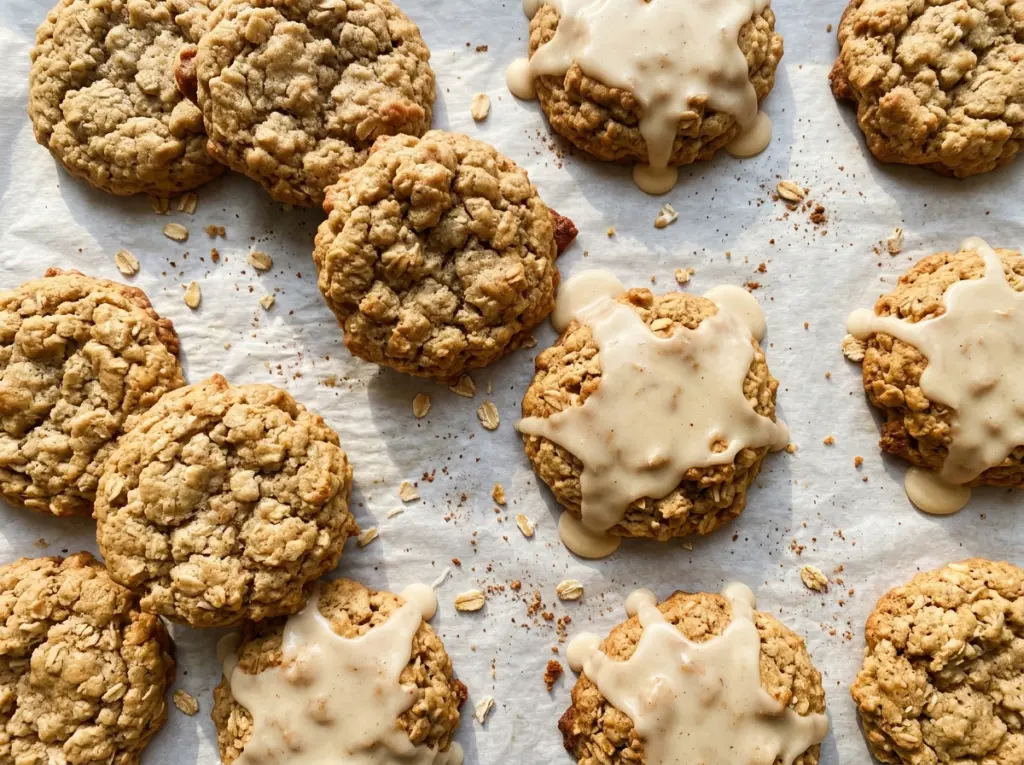
The edges of these cookies turn lightly brown before the centers look ready, and that’s exactly when I want them out of the oven. They’re generous, thick cookies, so the middle keeps setting on the hot baking sheet while the outside firms up. That little window is what gives Crumbl Iced Oatmeal Cookies their tender centers instead of a dry, crunchy bite all the way through.
Coarsely chopped rolled oats give each cookie a hearty texture without turning the dough gritty. I pulse them just until some flakes are still visible, then pair them with cinnamon, brown sugar, and a little molasses for the familiar warm oatmeal-cookie flavor. A thin coat of vanilla icing adds sweetness without burying the oats, and it sets into a smooth finish once the cookies have cooled.
Kitchen Note
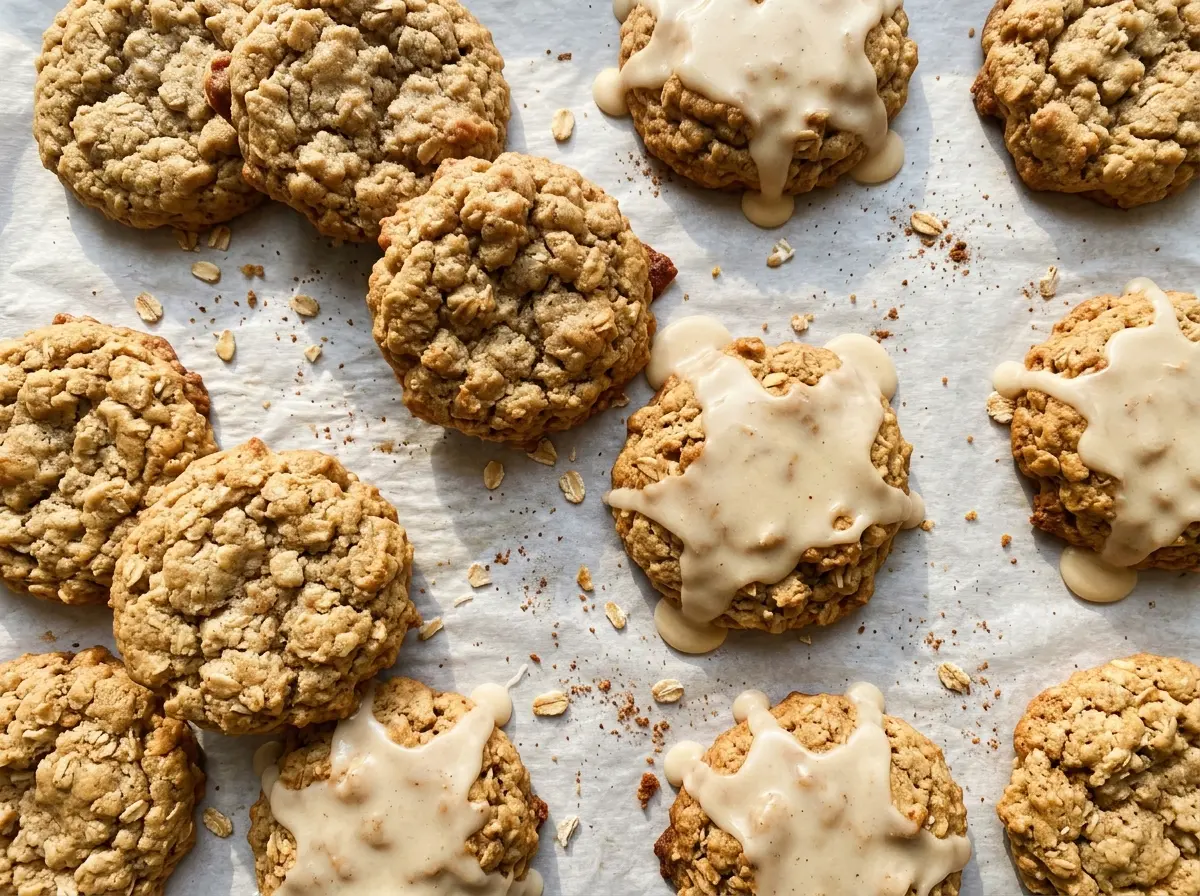
Give the cookies their full 10 minutes on the baking sheets before moving them. They’re large and still delicate while hot, and that short rest helps them firm up enough to transfer without breaking.
Save these Crumbl Iced Oatmeal Cookies for their cinnamon-oat chew and smooth vanilla icing.
Why These Big Oatmeal Cookies Need Room to Spread
Each portion is about a third of a cup, which makes these cookies noticeably larger than a standard drop cookie. That size is part of the payoff: there’s enough dough in each one for a substantial, soft middle under a set edge. It also means the cookies need space on the baking sheets. Leave about 3 inches between portions so their edges don’t run together as they spread.
Two large pans help you bake all 12 cookies at once, but oven heat isn’t always identical from one rack to another. Swapping the pans between racks and turning them front to back halfway through helps even out those differences. Keep an eye on the edges near the end of the bake rather than waiting for the centers to look firm; a fully set-looking center can mean the cookies have gone too far by the time they cool. The goal is a lightly browned edge with a center that still looks soft.
What the Oats, Molasses, and Icing Bring to Each Bite
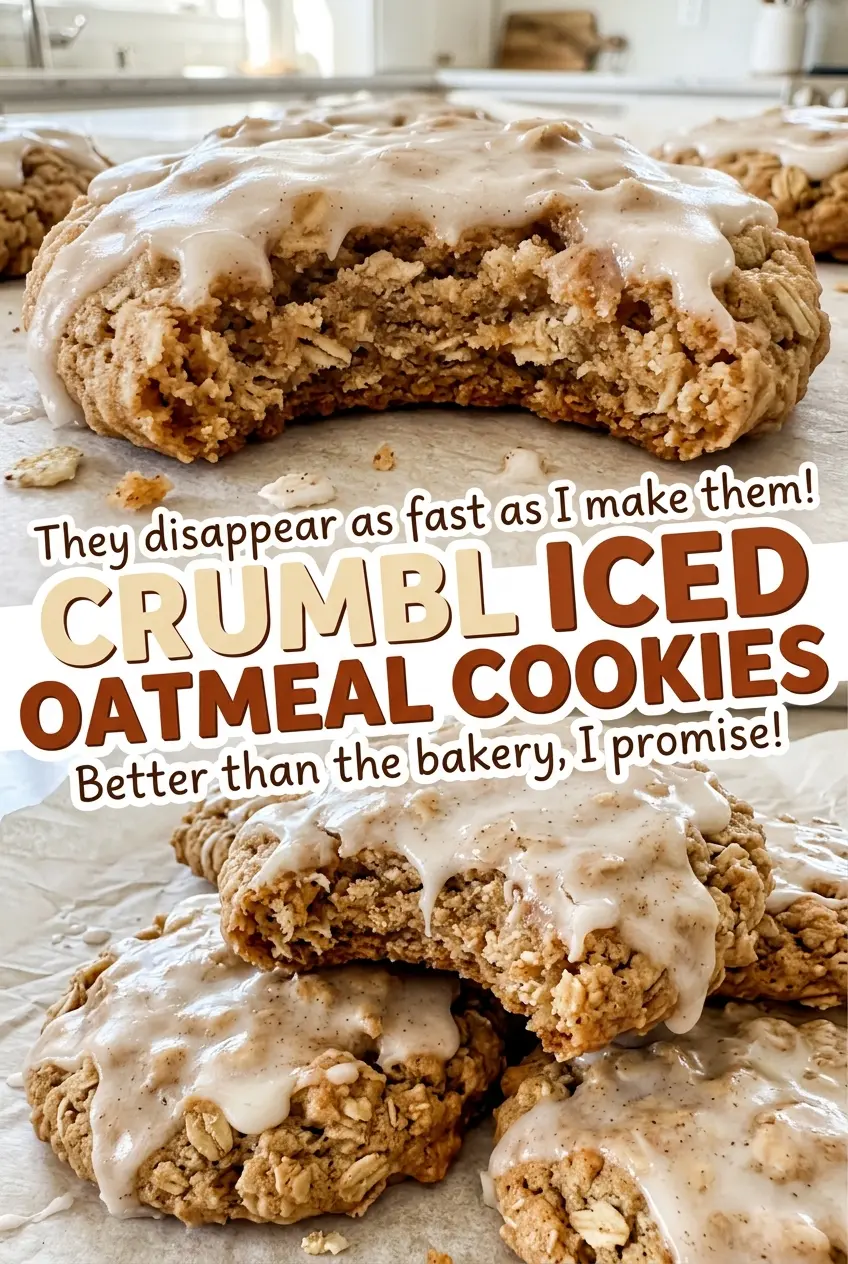
- Old-fashioned rolled oats — These give the cookies their hearty, nubby bite. Pulse them until they’re coarsely chopped, not powdered; the visible flakes are what keep the texture distinct. Old-fashioned oats are the right choice here, while quick oats make a finer, less substantial cookie.
- All-purpose flour and baking soda — The flour gives the large cookies enough structure to hold their shape, and the baking soda helps them spread and brown. For a gluten-free batch, use a measure-for-measure gluten-free baking blend that includes xanthan gum, along with certified gluten-free oats; expect a slightly different texture.
- Unsalted butter — Softened butter creams smoothly with the sugars and contributes to the cookies’ tender texture. Use butter that yields when pressed but isn’t greasy or melted. For a dairy-free version, baking sticks made for a one-for-one butter replacement work better than soft tub margarine.
- Brown sugar and molasses — Packed light brown sugar brings moisture and a gentle caramel note, while unsulphured molasses deepens the warm, spiced flavor. Dark brown sugar works in the same amount if that’s what you have; it makes the cookies taste a little more robust. Avoid blackstrap molasses, which can taste bitter here.
- Eggs and vanilla — The eggs bind the dough and help give the cookies their soft center. Add them one at a time so they mix in evenly. Vanilla extract rounds out both the dough and the icing, so use an extract you like the taste of rather than skipping it.
- Powdered sugar and whole milk — Powdered sugar makes a smooth icing that sets on the cooled cookies. Whole milk gives it a little richness, but 2% milk can stand in; add it gradually so the icing stays thick enough to spread rather than running off the edges.
From Coarsely Chopped Oats to Set Vanilla Icing
Prepare the pans and oat mixture
Heat the oven to 350°F and line two large baking sheets with parchment paper. Pulse the old-fashioned oats in a food processor until they’re coarsely chopped, stopping while some flakes are still visible. Whisk the oats with the flour, baking soda, cinnamon, and salt in a medium bowl. A few visible oat pieces are right; a bowl of oat powder isn’t the texture you’re after.
Cream the sugars, then finish the dough
Beat the softened butter with the packed light brown sugar and granulated sugar on medium-high for 2 to 3 minutes, until the mixture looks fluffy. Beat in the eggs one at a time, then mix in the molasses and vanilla. Add the dry ingredients and mix on low just until no dry flour remains; stop there instead of continuing to beat the dough. Cover it and refrigerate for 30 minutes.
Portion and bake the large cookies
Divide the chilled dough into 12 portions, about 1/3 cup each, and arrange six on each prepared sheet with about 3 inches between them. Bake for 12 to 15 minutes, swapping the pans between oven racks and rotating them front to back halfway through. Look for edges that are set and lightly browned while the centers still look soft. The centers will continue setting as the cookies rest.
Cool, ice, and let the finish set
Leave the cookies on the baking sheets for 10 minutes, then transfer them to a wire rack and cool completely. Whisk the powdered sugar, whole milk, and vanilla in a medium bowl until smooth and thick but spreadable. Spread a thin layer over each cooled cookie; icing a warm cookie can make the coating run instead of sitting neatly on top. Let the icing set for about 20 minutes before serving.
Simple Swaps for Different Oatmeal Cookies
A deeper brown-sugar note
Replace the light brown sugar with dark brown sugar in the same amount. The cookies keep their soft oatmeal texture, but the darker sugar gives them a fuller caramel and molasses taste.
A dairy-free batch
Use plant-based baking sticks in place of the butter and unsweetened plant milk in place of the whole milk, keeping each swap one for one. Choose sticks rather than tub-style spread so the dough has a more similar fat structure; the cookies may taste a little less buttery.
A gluten-free version
Replace the all-purpose flour with a one-for-one gluten-free baking blend that contains xanthan gum, and use certified gluten-free rolled oats. The cookies retain their cinnamon-oat character, though the crumb may be a bit more delicate than the wheat-flour version.
Storage and Reheating
- Refrigerator: Keep the iced cookies in an airtight container for up to 5 days. The icing firms in the cold, and the cookies are at their best after they return to room temperature.
- Freezer: Freeze fully cooled, uniced cookies in an airtight container for up to 2 months. Thaw at room temperature, then ice and let the coating set before serving.
- Reheating: These cookies don’t need reheating. Let refrigerated cookies sit out until they’re no longer cold; microwaving iced cookies can soften the coating and make it slide.
Questions That Come Up While Baking These Oatmeal Cookies
Crumbl Iced Oatmeal Cookies
Ingredients
Equipment
Method
- Heat the oven to 350°F.
- Line two large baking sheets with parchment paper.
- Pulse the oats in a food processor until coarsely chopped, with some flakes still visible.
- Whisk the oats, flour, baking soda, cinnamon, and salt together in a medium bowl.
- Beat the butter, brown sugar, and granulated sugar in a large bowl with an electric mixer on medium-high speed for 2 to 3 minutes, until fluffy.
- Beat in the eggs one at a time.
- Mix in the molasses and vanilla.
- Add the dry ingredients and mix on low just until no dry flour remains.
- Cover the dough and refrigerate for 30 minutes.
- Divide the dough into 12 portions, about 1/3 cup each.
- Arrange 6 portions on each baking sheet, leaving about 3 inches between them.
- Bake for 12 to 15 minutes, swapping the pans between oven racks and rotating them front to back halfway through, until the edges are set and lightly browned while the centers still look soft.
- Cool the cookies on the baking sheets for 10 minutes.
- Transfer the cookies to a wire rack and cool completely.
- Whisk the powdered sugar, milk, and vanilla in a medium bowl until smooth and thick but spreadable.
- Spread a thin layer of icing over each cooled cookie.
- Let the icing set for about 20 minutes before serving.