The first thing you notice when this stew starts simmering is the smell of thyme, allspice, and garlic settling into the broth. I used to rush the browning because the beef was going to braise for so long anyway. Taking time to brown it in batches makes a difference: the beef gets a deeper color, and the browned bits left in the pot become part of the gravy.
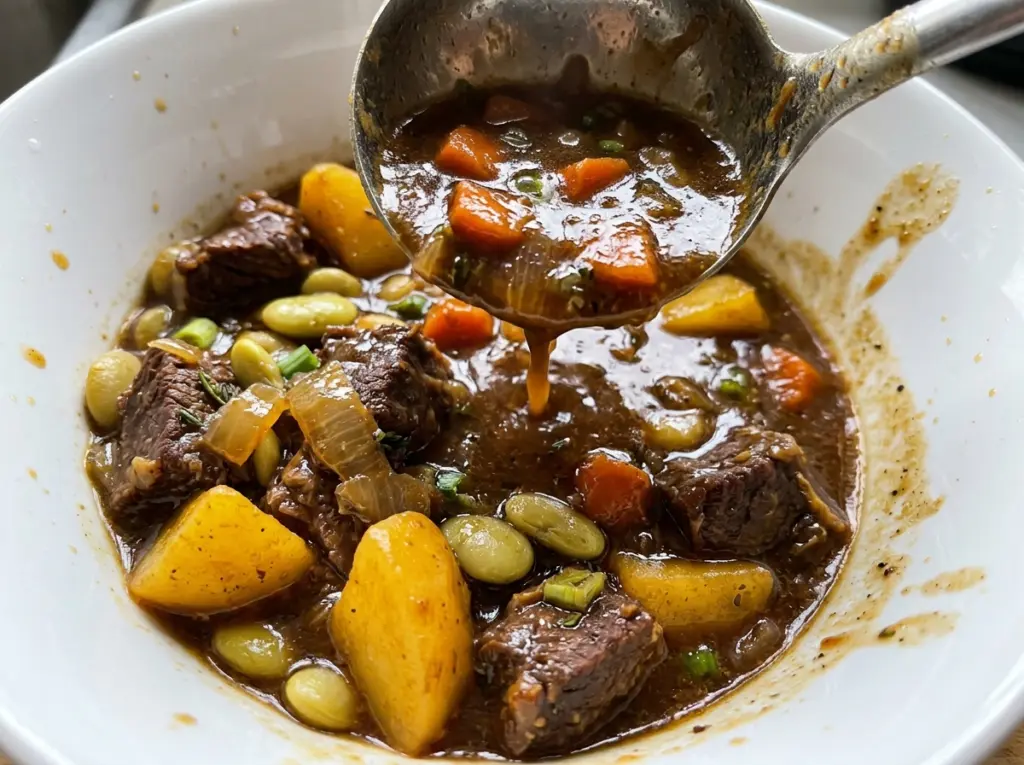
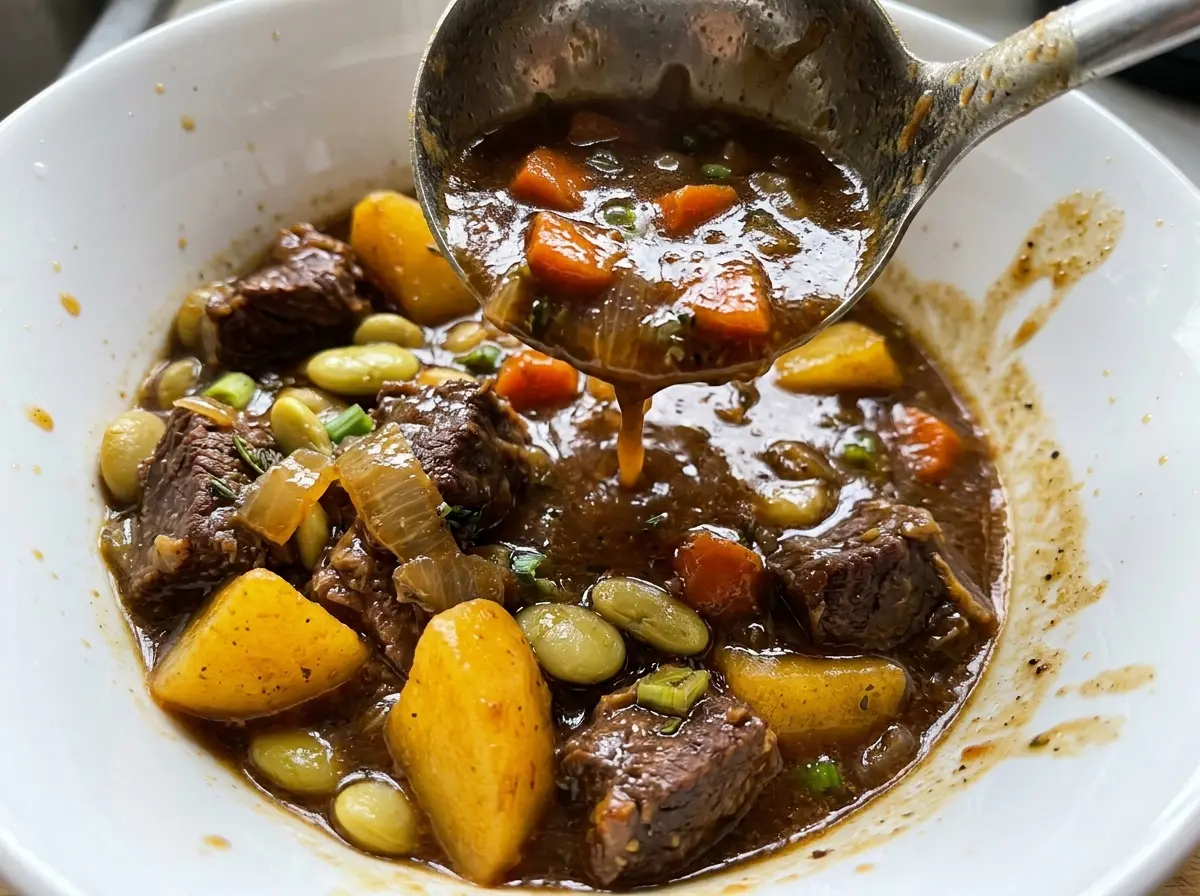
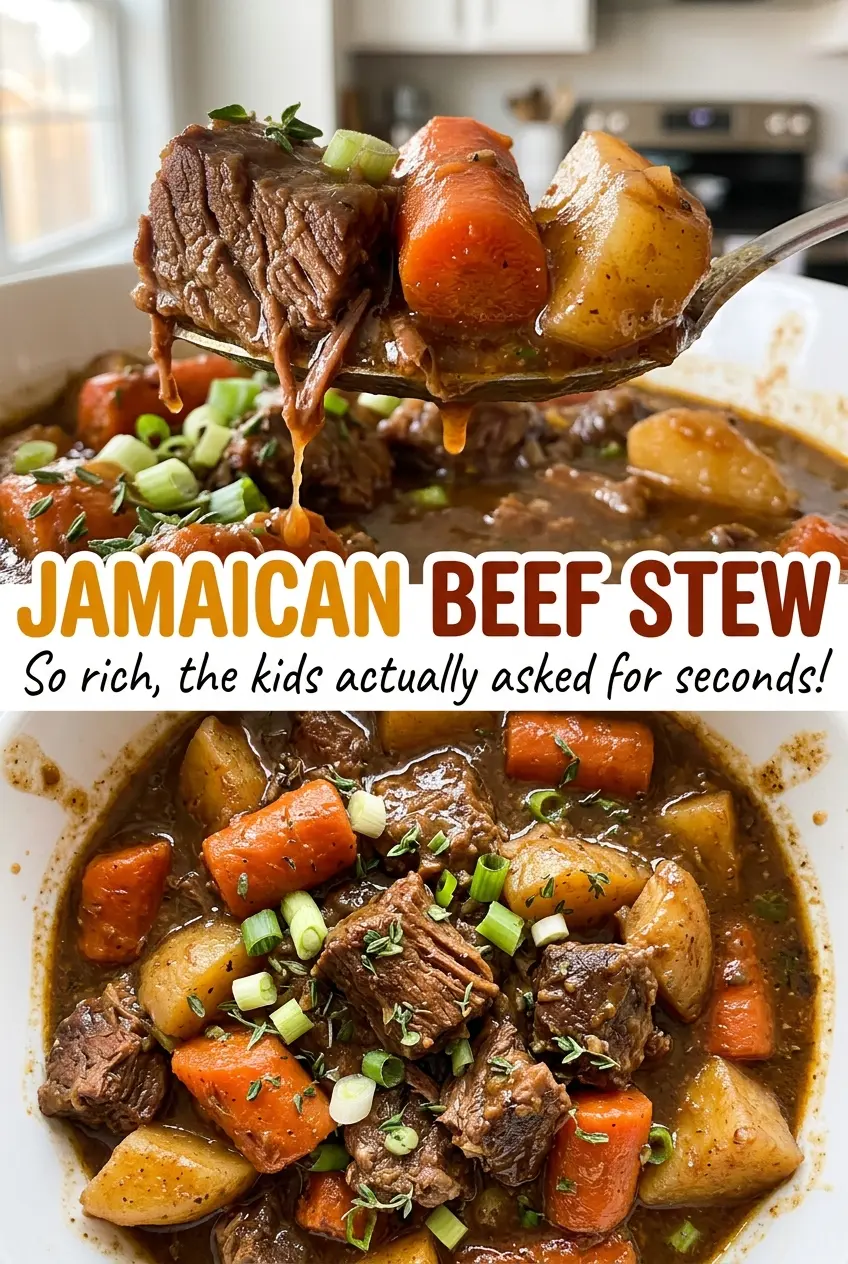
For Jamaican beef stew, I marinate boneless chuck with browning sauce, soy sauce, Worcestershire, scallions, garlic, thyme, and allspice before it goes near the pot. Then the beef simmers until tender before the carrots and Yukon Gold potatoes join it. That order lets the vegetables cook through without spending the entire braise softening into the gravy. The Scotch bonnet stays whole, so it brings its distinctive warmth without turning the stew into a dare. Spoon up tender beef, soft vegetables, and that dark, savory gravy.
Kitchen Note
Keep the Scotch bonnet whole and handle it gently when you stir. If it breaks open in the pot, more of its heat can move into the gravy than you intended.
Save Jamaican beef stew for a slow-simmered supper with tender chuck, vegetables, and richly seasoned gravy.
Why the Potatoes Wait Until the Beef Has Braised
Beef chuck needs a long, gentle simmer to turn tender, while cut potatoes and carrots need far less time. Putting everything in at the beginning asks the vegetables to keep cooking while the beef catches up. The potatoes can lose their edges and thicken the gravy in a way you may not want; the carrots can become overly soft.
Giving the beef its own head start lets the two parts of the stew finish together. Once the vegetables go in, they simmer in the seasoned broth and pick up the flavor already built from the marinade, browned beef, onion, and thyme. Yukon Gold potatoes are a good fit here because they tend to hold their shape through a covered simmer. At the end, the beef should give easily to a fork and the vegetables should be tender, not falling apart.
The Ingredients That Give This Stew Its Deep, Savory Gravy
- Boneless beef chuck — Chuck has enough connective tissue to become tender during a long braise, while still giving you substantial pieces of beef. Keep the cubes close to the same size so they cook at a similar pace. A leaner cut isn’t a direct swap; it may not develop the same tender, yielding texture.
- Browning sauce — This gives the stew its deep brown color and a distinct savory note. It isn’t interchangeable with soy sauce or Worcestershire, which bring different flavors. If you don’t have it, leaving it out is more honest than expecting another ingredient in the marinade to recreate it.
- Soy sauce and Worcestershire sauce — They season the beef while it marinates and add savory depth to the braising liquid. The Worcestershire brings a different tang from soy sauce, so adding extra soy in its place won’t fully match it. Low-sodium beef broth keeps the finished stew from becoming overly salty alongside these seasonings.
- Scallions, garlic, thyme, and allspice — These aromatics flavor the beef before it hits the pot and stay with the broth as it simmers. Fresh thyme sprigs are easy to lift out at the end; the allspice should be ground so its warm flavor disperses through the marinade.
- Scotch bonnet — A whole fresh pepper gives the stew its signature warmth without releasing as much heat as a cut or crushed pepper would. For a gentler pot, leave it out rather than swapping in another pepper; you’ll lose its particular aroma along with the heat.
- Yukon Gold potatoes and carrots — Yukon Golds have a creamy texture and hold together well in this stew. Cut both vegetables to the listed size so they can simmer until tender without disappearing into the gravy. If you leave out the potatoes, the stew will have less starch and a thinner body.
Marinating and Braising Jamaican Beef Stew Without Losing the Texture
Season the Beef Before Cooking
Toss the beef with the browning sauce, soy sauce, Worcestershire, garlic, scallions, thyme, allspice, salt, and pepper in a large bowl. Cover and refrigerate it for at least 2 hours or up to overnight. The marinade should cling to the beef, with the garlic and scallions tucked among the pieces. Keep the bowl refrigerated while the beef marinates.
Dry the Beef and Brown It in Batches
Lift the beef out of the marinade, scraping the scallions and garlic back into the bowl, then pat the pieces dry with paper towels. Heat the oil in a 5- to 6-quart Dutch oven over medium-high heat. Brown the beef in batches for 2 to 3 minutes per side, then transfer each batch to a plate. If the pieces are crowded, they can steam instead of developing browned surfaces, so leave room between them.
Build the Braising Liquid
Add the chopped onion to the pot and cook for 4 to 5 minutes, stirring, until softened. Stir in the reserved marinade and cook for 1 minute, then add the beef broth. Return the beef and any juices on the plate to the pot, and add the whole Scotch bonnet. Bring the liquid to a boil, cover the pot, and lower the heat; the stew should settle into a gentle simmer for 1 hour and 15 minutes.
Add the Vegetables and Finish the Gravy
Stir in the carrots and potatoes, cover, and simmer for 30 to 45 minutes, until the beef is fork-tender and the vegetables are tender. Keep the simmer gentle so the vegetables cook without breaking up in a rolling boil. Remove and discard the Scotch bonnet and thyme stems. If the gravy looks thin, simmer uncovered for 5 to 10 minutes, then let the stew rest for 10 minutes before serving.
Three Ways to Shift the Heat, Starch, or Batch Size
Make a Milder, Pepper-Free Pot
Leave out the Scotch bonnet for a gentler stew. The beef, aromatics, and allspice still give the gravy plenty of character, but you’ll miss the pepper’s fruity heat.
Make It Lower in Starch
Leave out the Yukon Gold potatoes for a less starchy stew, while keeping the carrots. The gravy will be less thick and the bowl less filling, so this changes the character of the dish rather than replacing the potatoes with another ingredient.
Cook a Half Batch
Halve every ingredient to make about 3 servings, but keep the beef and vegetable pieces the same size. Use the same cooking sequence and begin checking tenderness within the stated time ranges; the smaller amount in the pot may finish sooner.
Storage and Reheating
- Refrigerator: Store covered for 3 to 4 days. The potatoes may soften further as they sit.
- Freezer: Freeze in airtight portions for up to 3 months. The stew freezes well, though the potatoes may be softer or slightly grainy after thawing.
- Reheating: Reheat gently in a covered saucepan over medium-low heat, stirring carefully, until it reaches 165°F throughout. Avoid a hard boil, which can break up the vegetables.
Questions That Come Up While This Stew Simmer
Jamaican Beef Stew
Ingredients
Equipment
Method
- In a large bowl, toss the beef with the browning sauce, soy sauce, Worcestershire sauce, garlic, scallions, thyme, allspice, salt, and black pepper. Cover and refrigerate for at least 2 hours or up to overnight.
- Lift the beef from the marinade and scrape the scallions and garlic back into the bowl.
- Pat the beef dry with paper towels.
- Heat the oil in a 5- to 6-quart Dutch oven over medium-high heat, then brown the beef in batches for 2 to 3 minutes per side and transfer it to a plate.
- Add the onion to the pot and cook for 4 to 5 minutes, stirring, until softened.
- Add the reserved marinade and cook for 1 minute.
- Stir in the beef broth, return the beef and any plate juices to the pot, and add the whole Scotch bonnet.
- Bring to a boil, then cover and simmer over low heat for 1 hour and 15 minutes.
- Stir in the carrots and potatoes, cover, and simmer for 30 to 45 minutes, until the beef is fork-tender and the vegetables are tender.
- Remove and discard the Scotch bonnet and thyme stems.
- Simmer uncovered for 5 to 10 minutes if needed to thicken the gravy.
- Let the stew rest for 10 minutes before serving.