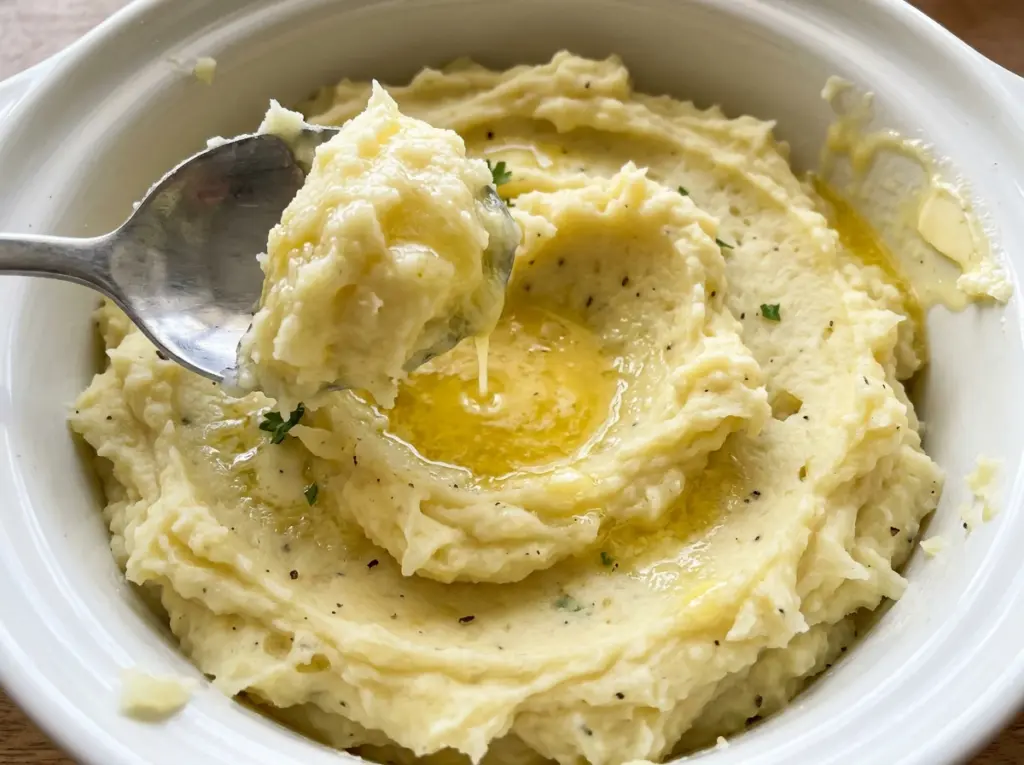
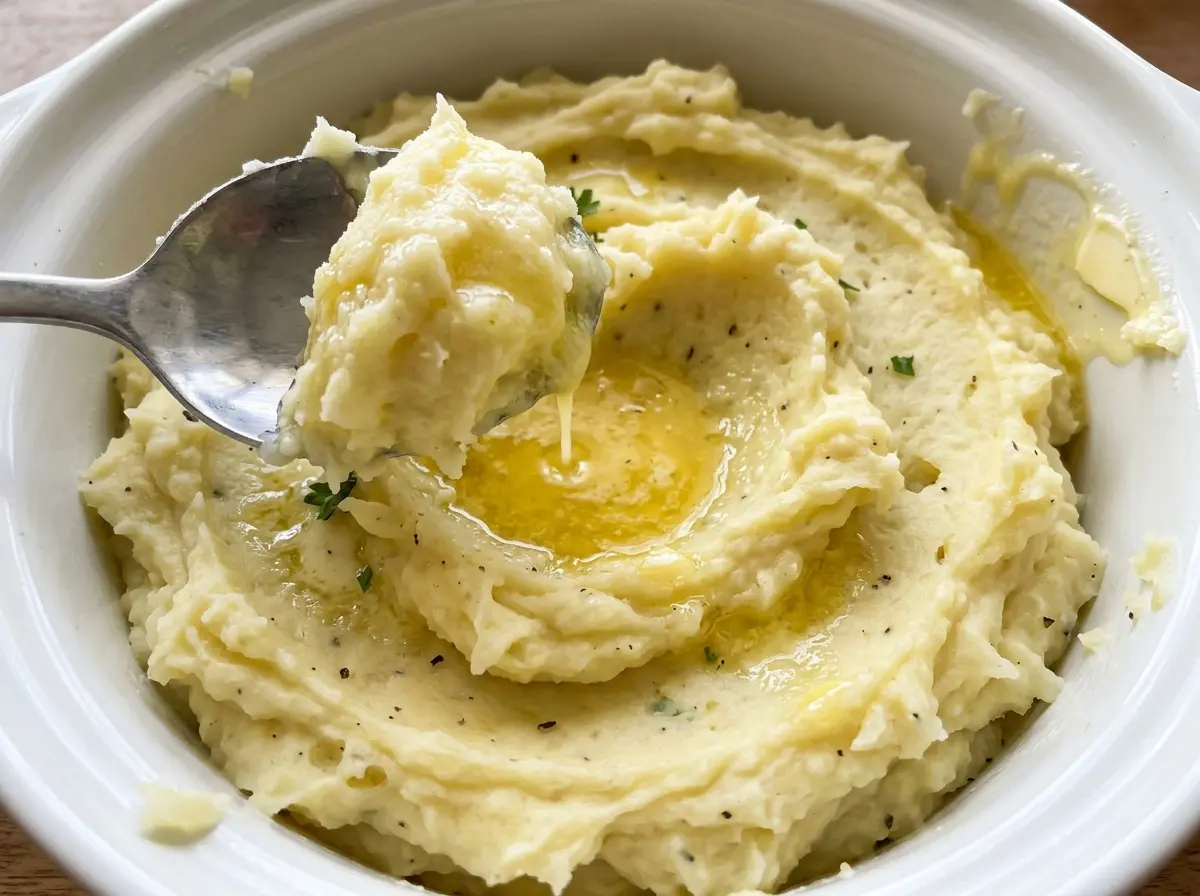
A fork can slip into the edge of a potato chunk while the center is still firm, which is why I wait until every piece is very tender before mashing. These Pioneer Woman mashed potatoes turn a big pot of russets into a creamy, buttery casserole that’s easy to serve at the table. The browned edges give each scoop a little contrast, while the middle stays soft and rich.
I like the balance of cream cheese, half-and-half, and heavy cream here. The cream cheese gives the mash body and a gentle tang, while the two creams loosen it without making it taste thin. Once the potatoes are mashed, they go into a baking dish with butter on top; the oven finishes the whole batch and warms it through.
Kitchen Note
Set the butter and cream cheese out to soften before you start peeling the potatoes. Soft dairy blends into the hot mash much more evenly, so you’re less likely to find cold lumps in the finished casserole.
Save these Pioneer Woman mashed potatoes for a big dinner: creamy in the middle, with lightly browned edges and enough for 10 servings.
Why Russets Make a Better Baked Mash Than Waxy Potatoes
Russets have a dry, starchy texture that breaks down into a fluffy mash. That matters in a casserole: the potatoes need to absorb the butter and dairy without turning dense before the dish has time to heat through. A waxier potato, such as red potatoes, tends to hold its shape more tightly and can leave the mash heavier and less smooth.
The other part of the texture is how much you work the potatoes. Mashing releases starch, and too much stirring turns that starch into a sticky, gluey paste. Mash just until the butter, cream cheese, and cream are incorporated and the potatoes look creamy. A few small soft pieces are preferable to a mash that’s been beaten until perfectly smooth. That restraint is especially useful with russets, which are fluffy when handled gently but can become pasty if you keep working them.
What the Russets and Cream Cheese Bring to the Dish

- Russet potatoes — Their high starch content is what makes this batch fluffy rather than waxy. Choose firm potatoes without soft spots or green patches; standard grocery-store russets work well. Yukon Golds are a workable swap, but they make a denser, more buttery mash.
- Cream cheese — It adds a little tang and helps give the mash a full, cohesive texture. Full-fat cream cheese gives the richest result; reduced-fat cream cheese works, but the potatoes won’t be quite as lush. Avoid whipped cream cheese, which can bring in air and make the texture less predictable.
- Half-and-half and heavy cream — Using both gives the mash richness without relying on heavy cream alone. If you don’t have half-and-half, use the same volume of whole milk in its place; the finished potatoes will be a little less rich, but still creamy. Keep the heavy cream for its higher fat content.
- Unsalted butter — It gives the potatoes their buttery flavor while letting the kosher salt and seasoned salt do the seasoning. A basic store-brand butter is fine here; there’s no need to use a specialty butter.
- Seasoned salt — This adds a more rounded, savory seasoning than plain salt alone. Different brands vary, so use the listed amount and avoid adding extra until you’ve tasted the finished mash.
From Tender Potato Chunks to a Golden-Edged Casserole
Prepare the Dish and Potatoes
Heat the oven to 350°F and grease a 9×13-inch baking dish. Peel the russets and cut them into 1-inch chunks so they cook at a similar pace. Put the potatoes in a 12-quart pot and cover them with 5 quarts of cold water, or enough to leave the water about 1 inch above the potatoes. Stir in the kosher salt before heating.
Simmer Until the Centers Are Soft
Bring the pot to a boil over high heat, then lower the heat to keep a steady simmer. Cook for 15 to 20 minutes, checking a few chunks with a fork rather than judging just by the pieces near the surface. The potatoes are ready when a fork slides into the centers easily and the chunks feel very tender. If they still resist, give them a little more time; firm centers are difficult to mash smoothly.
Mash in the Butter and Dairy
Drain the potatoes well in a colander, then return them to the pot. Mash with 1 1/2 sticks (12 tablespoons) of the softened butter and the softened cream cheese. Add the half-and-half, heavy cream, seasoned salt, and black pepper, and mash until creamy. Stop once the ingredients are incorporated; continuing to beat the potatoes can make them gluey.
Bake Until Hot with Lightly Browned Edges
Spread the potatoes evenly in the prepared baking dish and dot the top with the remaining 2 tablespoons of butter. Bake for 20 to 30 minutes, until the center is hot throughout and the edges are lightly browned. The top should look gently golden at the perimeter, not deeply crusted. If the edges brown ahead of the center, loosely cover the dish with foil and continue baking until it’s hot throughout.
Two Practical Ways to Adapt This Mashed Potato Casserole
Make the casserole dairy-free
Replace the butter with unsalted plant-based butter, the cream cheese with a plain dairy-free cream cheese, and both creams with unsweetened oat creamer. Use the same amounts as the dairy ingredients. The result will be less buttery and may have a mild oat flavor, so choose an unflavored creamer rather than a sweetened or vanilla one.
Use Yukon Gold potatoes for a denser mash
Swap the russets for the same weight of Yukon Gold potatoes if you prefer a naturally buttery, less fluffy texture. Keep the chunks about the same size and cook them until very tender before mashing. Their waxier flesh won’t absorb the dairy quite like russets, so expect a slightly heavier casserole.
Storage and Reheating
- Refrigerator: Store covered for up to 4 days. The potatoes will firm up as they chill.
- Freezer: Freeze in airtight portions for up to 2 months. The texture may be a little less smooth after thawing, but stirring well while reheating helps bring it back together.
- Reheating: Warm covered in a 350°F oven until hot throughout, or microwave individual portions, stirring partway through. Heat leftovers to 165°F; avoid reheating uncovered for too long, which can dry the surface.
Questions That Come Up When Making These Potatoes
Pioneer Woman Mashed Potatoes
Ingredients
Equipment
Method
- Heat the oven to 350°F.
- Grease a 9x13-inch baking dish.
- Put the potatoes in a 12-quart pot and cover with the cold water.
- Stir in the kosher salt.
- Bring to a boil over high heat.
- Reduce the heat to maintain a steady simmer and cook for 15 to 20 minutes, until the potatoes are very tender when pierced with a fork.
- Drain the potatoes well in a colander.
- Return the potatoes to the pot.
- Mash with 1 1/2 sticks (12 tablespoons) of the butter and the cream cheese.
- Mash in the half-and-half, heavy cream, seasoned salt, and black pepper until creamy, taking care not to overmix.
- Spread the potatoes in the prepared baking dish.
- Dot with the remaining 2 tablespoons butter.
- Bake for 20 to 30 minutes, until hot throughout and lightly browned around the edges.