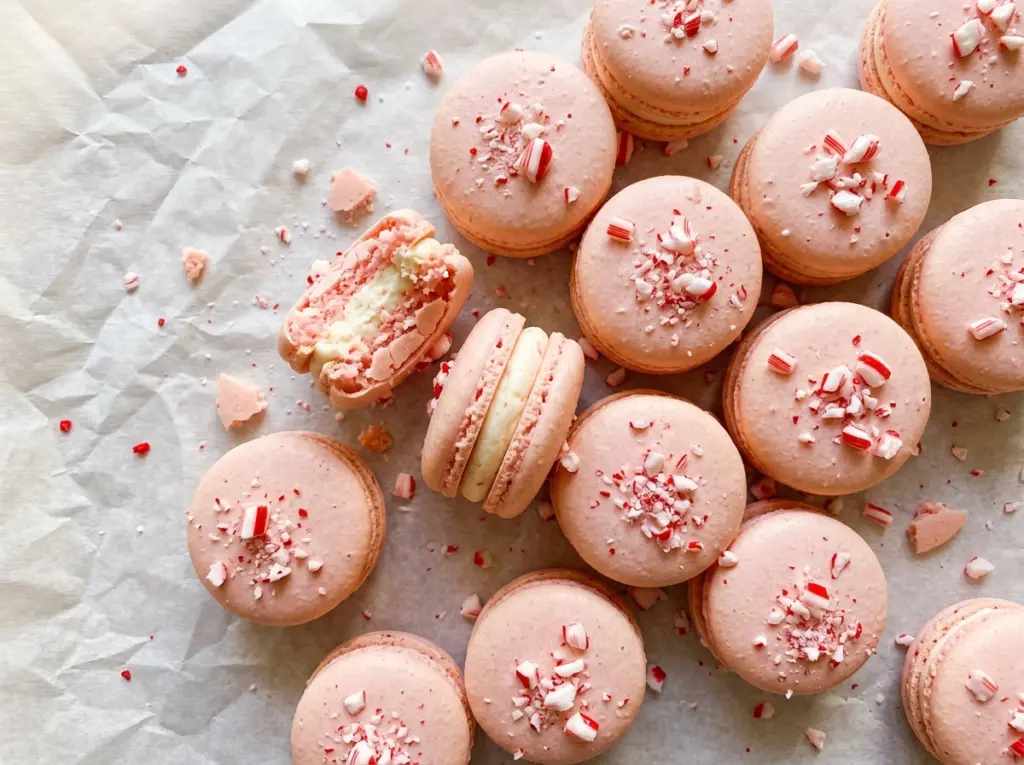
The first clue that macaron batter is ready isn’t a timer; it’s the way it falls from the spatula. Too thick, and the piped tops keep their peaks. Too loose, and those neat little rounds spread before they have a chance to set. I watch for a thick ribbon that settles back into the bowl in a figure eight, then pipe the peppermint macarons while the batter still holds its shape.
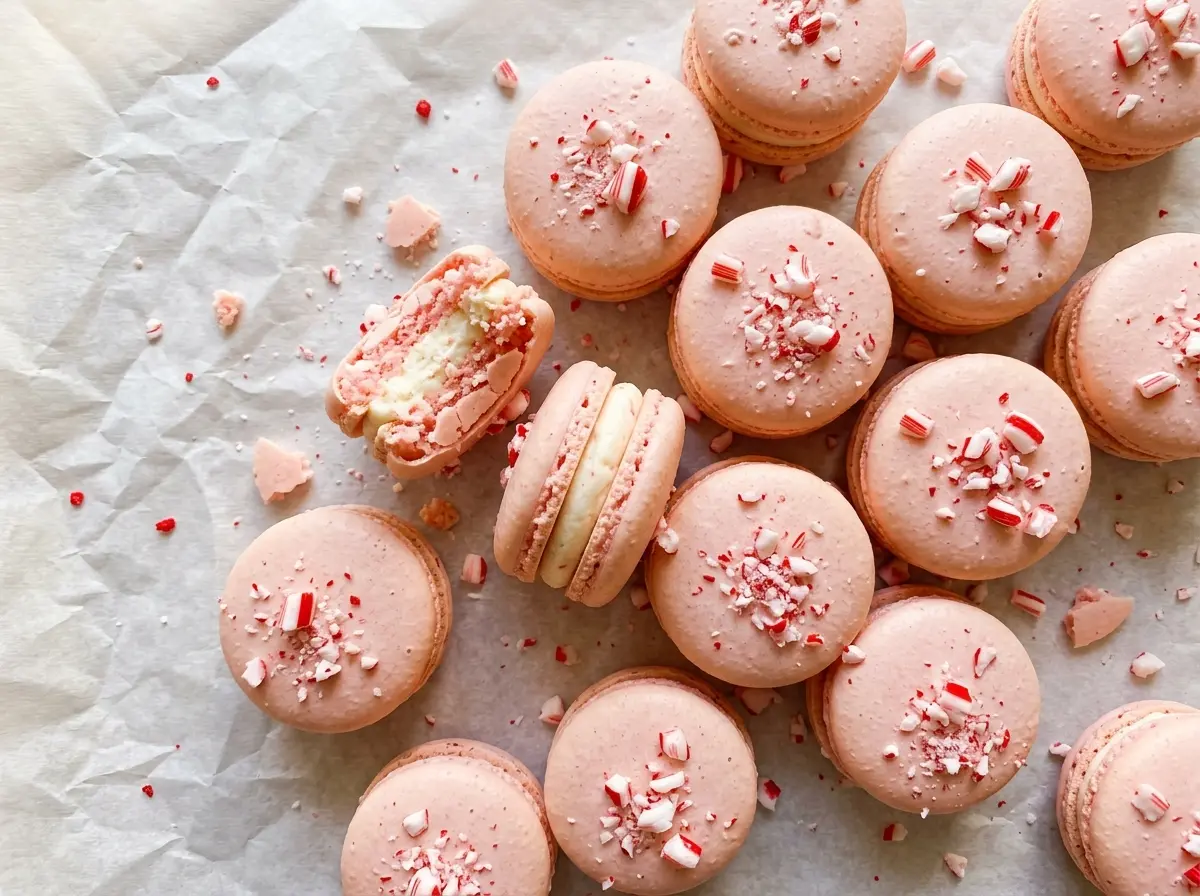
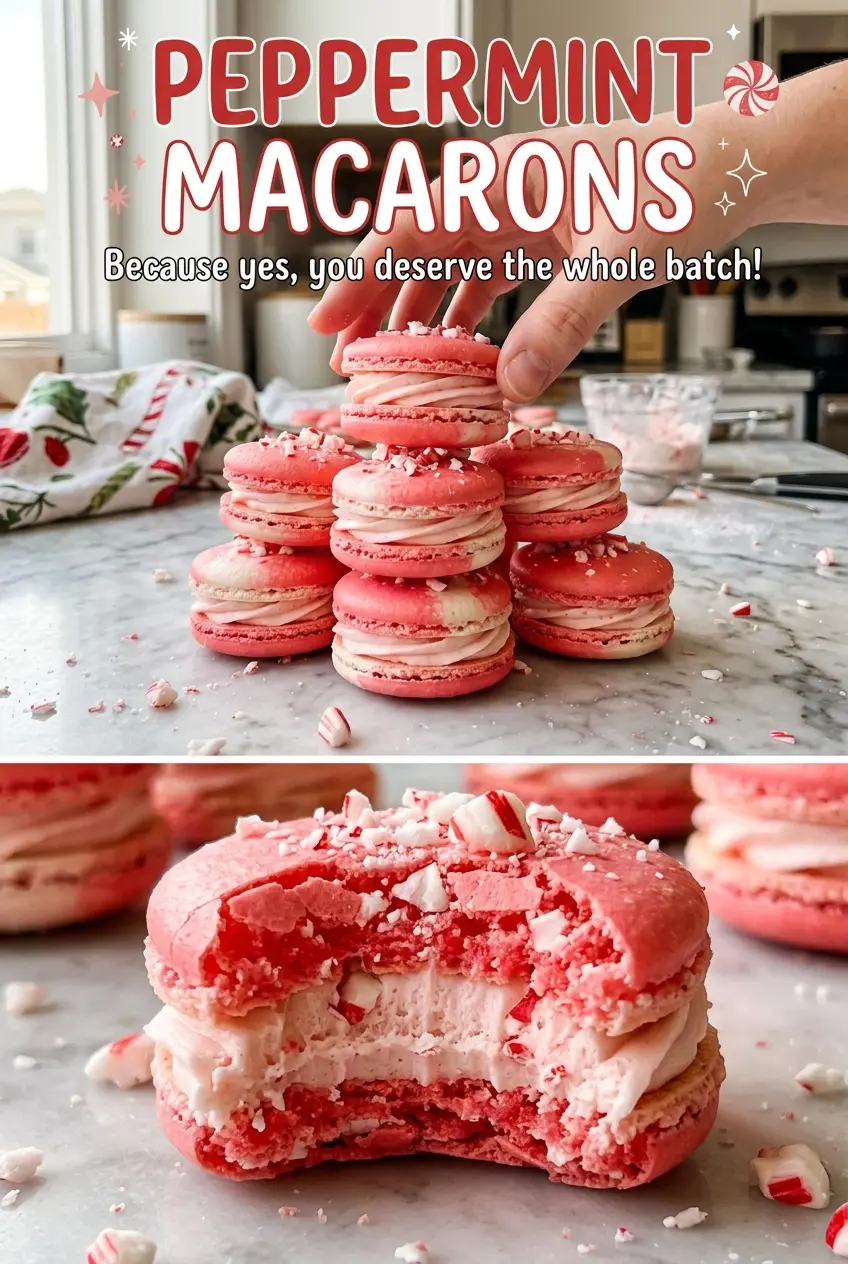
These shells start with sifted almond flour and powdered sugar folded into a glossy meringue, so the texture work happens before the tray reaches the oven. The peppermint stays in the buttercream, where it gives each sandwich a cool, clear mint flavor without changing the delicate shells. Let the shells dry until they’re no longer tacky, and the finished macarons have smooth tops, crisp edges, and a tender center around the fluffy filling.
Kitchen Note
Let the baked shells cool completely on the sheet before lifting them. If you try to peel them up while they’re still warm, the bottoms are more likely to stick or tear.
Save these peppermint macarons for a bake when you want crisp almond shells and a cool, fluffy peppermint center.
Why the Figure-Eight Test Matters More Than a Fold Count
Macaron batter can change from stiff to loose in just a few extra strokes, so counting folds doesn’t tell you when to stop. The almond flour mixture needs to become part of the meringue, but the batter also has to flow smoothly enough to pipe into rounds. That balance is what the figure-eight test checks: a thick ribbon should fall from the spatula, and the shape should settle back into the batter rather than sit on top.
If the batter still drops in clumps, fold a little longer and check again. If it runs off the spatula like a thin stream, it has gone too far; there isn’t a reliable way to fold the air back in. I stop as soon as the ribbon flows and the figure eight settles, instead of chasing a perfectly smooth-looking bowl. That keeps the piped rounds from spreading more than intended and gives the shells a more even shape.
Even a well-mixed batter needs careful piping. Keep the bag upright over the parchment and pipe 24 rounds about 1 1/2 inches wide, leaving room between them. Tapping the pan firmly helps release trapped air, and a toothpick lets you deal with any bubbles still visible on the surface.
What Almond Flour and Peppermint Extract Each Bring to These Macarons
- Super-fine blanched almond flour — Its fine texture helps the shells bake up smooth instead of speckled or rough. Sift it with the shell portion of the powdered sugar; a coarse almond meal won’t give the same delicate texture, and I don’t recommend swapping in wheat flour.
- Powdered sugar — It sweetens the shells and buttercream while keeping both mixtures smooth. Sifting the portion for the shells removes lumps before they can show up in the batter; ordinary granulated sugar isn’t a like-for-like replacement here.
- Egg whites and cream of tartar — Room-temperature whites whip more readily, while cream of tartar helps the foam hold as you build the meringue. Use a clean bowl so grease doesn’t interfere with the whites. Carton egg whites aren’t a dependable stand-in for this meringue.
- Granulated sugar — Add it gradually after the whites reach soft peaks. It helps turn the foam into a glossy meringue that can hold stiff peaks; powdered sugar won’t behave the same way in this stage.
- Unsalted butter, heavy cream, and peppermint extract — Softened butter makes a creamy base, the cream helps the filling beat smooth and fluffy, and the extract gives it the mint flavor. Choose an extract whose aroma you like, since peppermint is the defining note; very cold butter won’t cream as smoothly.
Building the Meringue, Piping Even Shells, and Filling Them
Whip a glossy meringue with stiff peaks
Heat the oven to 300°F with a rack in the center, and line an 18×13-inch baking sheet with parchment. Sift the almond flour and 1 cup powdered sugar together through a fine-mesh sieve. Beat the room-temperature egg whites in a clean bowl on medium speed until foamy, add the cream of tartar, and continue until soft peaks form.
Gradually add the granulated sugar, then beat on high for 5–7 minutes. The meringue should look glossy and hold stiff peaks when you lift the beaters. If it still slumps, keep beating until those peaks stand; don’t start folding in the dry ingredients while the foam is loose.
Fold until the batter flows, then pipe
Add the almond flour mixture to the meringue in three additions, folding gently after each one. Stop when the batter falls from the spatula in a thick ribbon and a figure eight settles back into the bowl. Transfer it to a piping bag fitted with a 1/2-inch round tip and pipe 24 rounds about 1 1/2 inches wide onto the parchment.
Tap the sheet firmly on the counter several times to bring air bubbles to the surface. Pop any visible bubbles with a toothpick rather than leaving them to mark the tops. If the batter spreads into very flat puddles as you pipe, it has become too loose.
Let the piped tops dry before baking
Leave the shells at room temperature for 30–60 minutes, until their tops feel dry and are no longer tacky when touched. The room and conditions affect how quickly that surface forms, so use the touch cue rather than choosing a time without checking. A tacky top needs more time; putting the shells into the oven before the surface dries can leave you with cracked tops.
Bake for 14–16 minutes, until the tops are set and don’t wobble when lightly nudged. Keep the sheet on the center rack, and resist moving the shells while they bake. Let them cool completely on the baking sheet, about 30 minutes, before lifting them from the parchment.
Beat the peppermint filling and mature the sandwiches
Beat the softened butter on medium-high for about 2 minutes, until creamy. Add the remaining 2 cups powdered sugar and beat on low until combined, then beat in the heavy cream and peppermint extract until the buttercream is smooth and fluffy. Pair the shells by size, pipe buttercream onto the flat side of half, and gently press the remaining shells on top.
Refrigerate the macarons in an airtight container for at least 12 hours so they can mature. Give them 20 minutes at room temperature before serving; the filling softens and the shell-and-center texture is more pleasant than when they’re refrigerator-cold.
How to Adjust the Peppermint Filling Without Losing the Macaron Texture
Make the peppermint gentler
Use less than the listed 1/2 teaspoon of peppermint extract in the buttercream. The mint will be softer and the buttery filling will come through more clearly; keep the shell mixture unchanged so its balance stays intact.
Pipe a thinner center
Use a smaller amount of the same peppermint buttercream on each shell before sandwiching. You’ll get a less sweet bite with more shell in each mouthful, without changing the meringue or adding a new ingredient.
Storage and Reheating
- Refrigerator: Keep the assembled macarons in an airtight container. They need at least 12 hours chilled to mature; for best texture, enjoy within 3 days.
- Freezer: They freeze well in an airtight container. Thaw them covered in the refrigerator to reduce condensation on the shells.
- Reheating: Don’t reheat macarons. Let them stand at room temperature for 20 minutes before serving, and avoid microwaving, which can soften the buttercream unevenly.
Questions That Come Up While Making Peppermint Macarons
Peppermint Macarons
Ingredients
Equipment
Method
- Preheat the oven to 300°F with a rack in the center, and line an 18x13-inch baking sheet with parchment paper.
- Sift the almond flour and 1 cup of the powdered sugar together through a fine-mesh sieve into a bowl.
- Beat the egg whites in a clean bowl on medium speed until foamy.
- Add the cream of tartar and beat until soft peaks form.
- Gradually add the granulated sugar and beat on high for 5–7 minutes, until the meringue is glossy and holds stiff peaks.
- Fold the almond flour mixture into the meringue in three additions, stopping when the batter flows off the spatula in a thick ribbon and a figure eight settles back into the batter.
- Transfer the batter to a piping bag fitted with a 1/2-inch round tip and pipe 24 rounds about 1 1/2 inches wide onto the prepared sheet.
- Tap the sheet firmly on the counter several times and pop any visible air bubbles with a toothpick.
- Let the piped shells stand at room temperature for 30–60 minutes, until their tops feel dry and are no longer tacky to the touch.
- Bake for 14–16 minutes, until the tops are set and do not wobble when lightly nudged.
- Cool the shells completely on the baking sheet, about 30 minutes, before lifting them from the parchment.
- Beat the softened butter in a bowl on medium-high speed for about 2 minutes, until creamy.
- Add the remaining 2 cups powdered sugar and beat on low until combined.
- Beat in the heavy cream and peppermint extract until smooth and fluffy.
- Pair the shells by size.
- Pipe peppermint buttercream onto the flat side of half of them, and gently press the remaining shells on top to make sandwiches.
- Refrigerate the macarons in an airtight container for at least 12 hours to mature.
- Let them stand at room temperature for 20 minutes before serving.