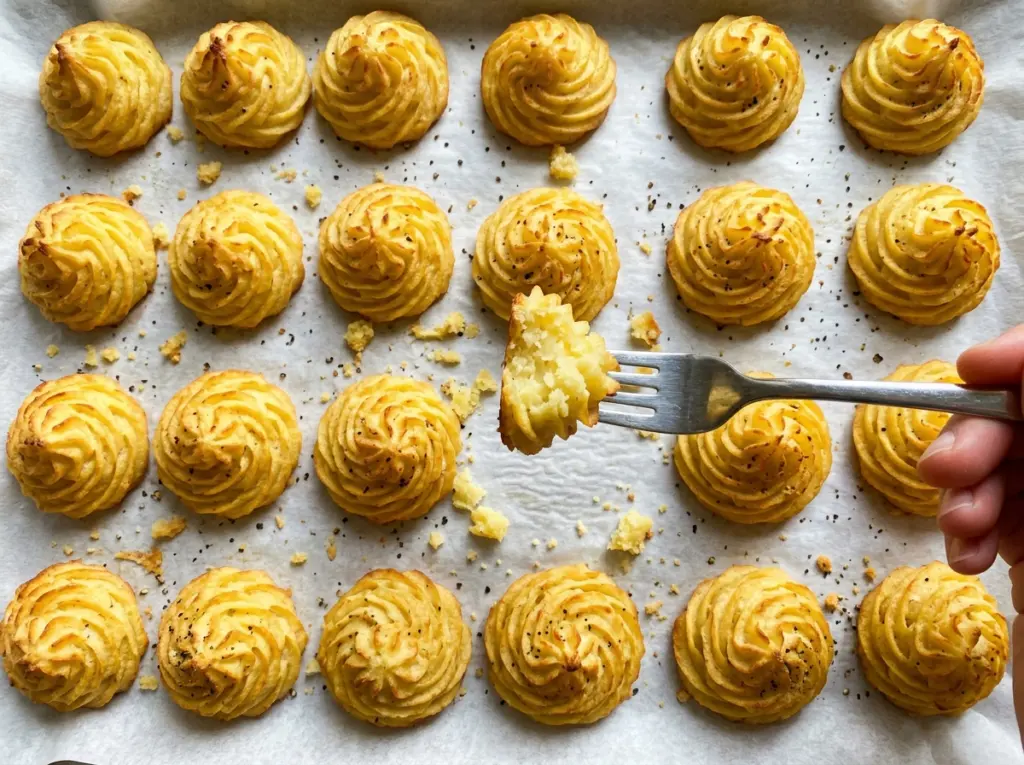
When a fork slips easily through a russet potato chunk, it’s ready to become something more polished than mashed potatoes. Duchess potatoes take that soft, buttery mash and pipe it into individual mounds, where the edges turn golden in a hot oven and the centers stay tender. I like them for a dinner side that looks special without asking for complicated shaping or extra ingredients.
The texture starts before the piping bag comes out. Russets give you a fluffy base, and pressing them through a potato ricer while they’re hot keeps the mixture smooth enough to pipe cleanly. Butter, warm cream, and egg yolks bring the potatoes together without weighing them down; a little pepper and nutmeg keep the flavor savory and gentle. The finished mounds have crisp ridges around a soft, creamy middle.
Kitchen Note
Give the baked mounds their full five-minute rest before serving. They’re delicate straight from the oven, and that brief pause helps them hold their shape when you lift them.
Save these Duchess Potatoes for a dinner side with golden ridges, a creamy center, and a little nutmeg warmth.
Those Star-Tip Ridges Are What Make Duchess Potatoes Different
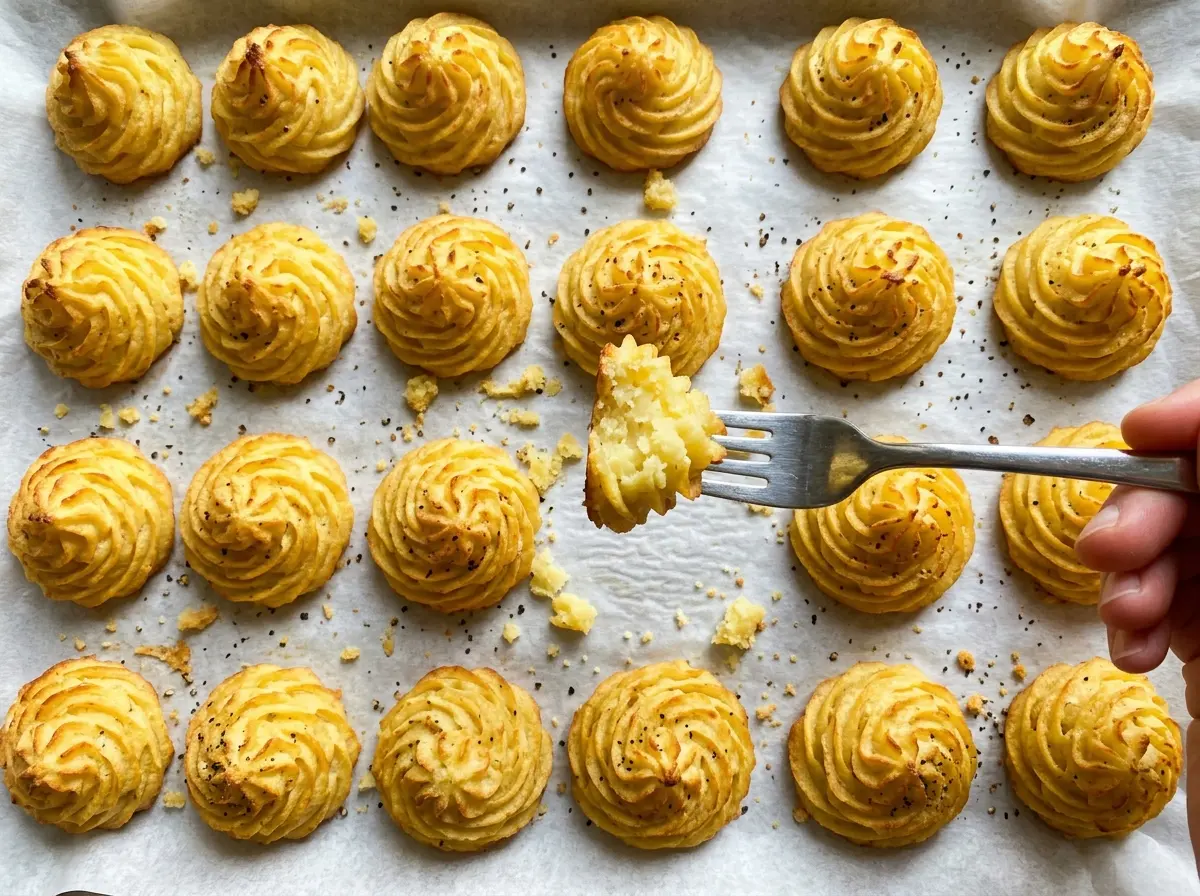
The ridges aren’t just decoration. A large star tip creates narrow folds along each mound, giving the oven more exposed edges to brown while the thicker center stays soft. That contrast is what makes these feel distinct from a scoop of mashed potatoes, and it’s why the color cue matters more than waiting for the whole mound to look uniformly browned.
Pipe 12 mounds so each portion has room to keep its shape on the baking sheet. At 425°F, the ridges and edges turn golden in 15 to 20 minutes. If you wait for the center to become firm or dry, you’ll lose the creamy texture that makes the inside worth having. Pull them when the exposed ridges have color, then let the mounds rest before serving.
A smooth potato base makes those folds easier to create. The ricer breaks the cooked potatoes down without the repeated beating that can make them sticky, and the egg yolks help the mixture hold together as it bakes. Together, those choices give you a mound that pipes neatly and keeps a tender middle beneath its browned edges.
Why Russets, Warm Cream, and Egg Yolks Belong in the Bowl

- Russet potatoes — Their starchy, fluffy texture makes a light mash that can pass through a piping tip and hold its shape. Yukon Gold potatoes can work in their place, but the result is creamier and less airy, so the piped ridges may be softer.
- Unsalted butter — Softened butter melts into the hot riced potatoes and adds richness without bringing extra salt. Unsalted butter also lets you season the mixture with the measured kosher salt rather than guessing around a salted brand.
- Heavy cream — Warm cream blends more smoothly into the potatoes than cold cream and adds a richer texture than milk. Half-and-half can stand in at the same amount for a lighter result, though the mixture won’t be quite as rich.
- Egg yolks — Yolks help bind the potato mixture and give it a richer finish as it bakes. They’re doing more than adding color, so don’t replace them with whole eggs; the whites add liquid and can loosen the mixture.
- Black pepper and nutmeg — Black pepper brings a little savory bite, while a small amount of nutmeg gives the potatoes a warm background note. Freshly ground pepper has a sharper aroma, but ordinary ground pepper works well here.
From Fork-Tender Potatoes to Golden Piped Mounds
Simmer the Chunks Until a Fork Slides Through
Heat the oven to 425°F and line a large baking sheet with parchment paper. Put the peeled, 2-inch potato chunks in a large pot, cover them with cold water by 1 inch, and stir in 1 teaspoon of kosher salt. Bring the water to a boil, then lower it to a simmer for 15 to 20 minutes. They’re ready when a fork pierces a chunk easily; a firm center will leave lumps in the finished potatoes.
Drain, Dry, and Rice While Hot
Drain the potatoes well, then return them to the pot. Stir over low heat for 1 to 2 minutes to dry them, moving the chunks gently so they don’t stick. Press the potatoes through a ricer into a large bowl while they’re hot. A thorough drain matters here: extra water makes the mixture looser and harder to pipe into defined mounds.
Mix Until the Seasoning Disappears Evenly
Stir the softened butter into the hot potatoes until it melts. Mix in the warmed cream, egg yolks, remaining kosher salt, black pepper, and nutmeg until the mixture is smooth. Scrape the bottom and sides of the bowl so you don’t leave streaks of yolk or pockets of seasoning behind. Stop once everything is evenly combined; there’s no need to beat the potatoes.
Pipe 12 Mounds and Bake for Color
Transfer the potato mixture to a piping bag fitted with a large star tip and pipe 12 mounds onto the prepared baking sheet. Keep a steady hand as you pipe so each mound has defined ridges rather than a smoothed-over top. Bake for 15 to 20 minutes, until the edges and ridges are golden brown. Let the potatoes stand for 5 minutes before serving.
Three Small Changes That Give Duchess Potatoes a Different Character
Leave Out the Nutmeg
Omit the nutmeg for a cleaner butter-and-potato flavor, while keeping the black pepper for a savory edge. The result is less warm and aromatic, but the potatoes still pipe and bake the same way.
Make Them Dairy-Free
Replace the butter with dairy-free butter and use unsweetened, unflavored oat cream in place of the heavy cream, keeping each swap one-for-one. The potatoes will be a little less buttery, and the egg yolks mean this adaptation isn’t vegan.
Try White Pepper Instead
Swap the black pepper for the same amount of ground white pepper for a quieter, earthier pepper note. It keeps the seasoning gentle and lets the butter and nutmeg come through more clearly.
Storage and Reheating
- Refrigerator: Store cooled leftovers in an airtight container for 3 to 4 days. The ridges soften as the potatoes sit.
- Freezer: Freeze the baked, cooled mounds in a single layer until firm, then transfer them to a freezer-safe container for up to 2 months for best quality. Thaw overnight in the refrigerator before reheating.
- Reheating: Warm in a 350°F oven until the centers reach 165°F. The oven helps bring back some crispness; a microwave heats them quickly but leaves the ridges soft.
Questions That Come Up While Piping and Baking Duchess Potatoes
Duchess Potatoes
Ingredients
Equipment
Method
- Heat the oven to 425°F.
- Line a large baking sheet with parchment paper.
- Put the potatoes in a large pot, cover with cold water by 1 inch, and stir in 1 teaspoon of the salt.
- Bring the potatoes to a boil, then simmer for 15–20 minutes, until the potatoes are easily pierced with a fork.
- Drain the potatoes well and return them to the pot.
- Stir the potatoes over low heat for 1–2 minutes to dry them.
- Press the potatoes through a potato ricer into a large bowl while hot.
- Stir in the butter until melted.
- Mix in the warm cream, egg yolks, remaining 1/2 teaspoon salt, pepper, and nutmeg until smooth.
- Transfer the potato mixture to a piping bag fitted with a large star tip and pipe 12 mounds onto the prepared baking sheet.
- Bake for 15–20 minutes, until the edges and ridges are golden brown.
- Let stand for 5 minutes before serving.