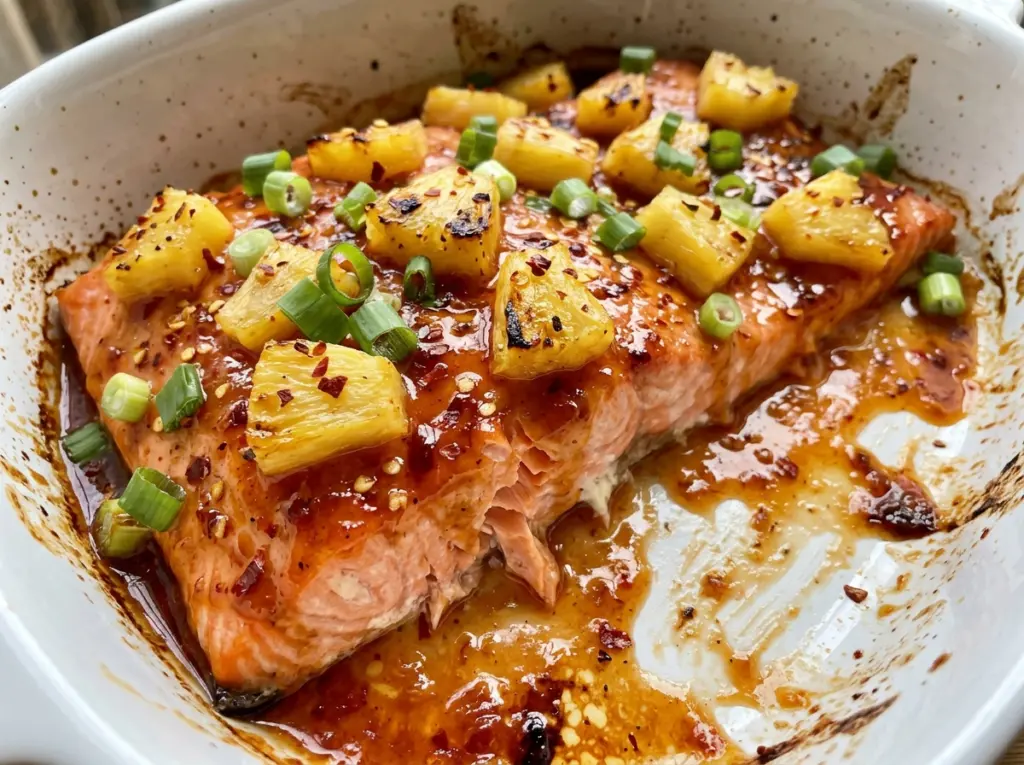
The pineapple juice looks almost too thin when it first goes into the saucepan, but a few minutes of simmering turn it into a glossy base for the glaze. I keep the fruit out of the pan at this stage; those pineapple chunks go around the salmon in the baking dish, where they soften and pick up the sweet, spicy sauce without disappearing into it.
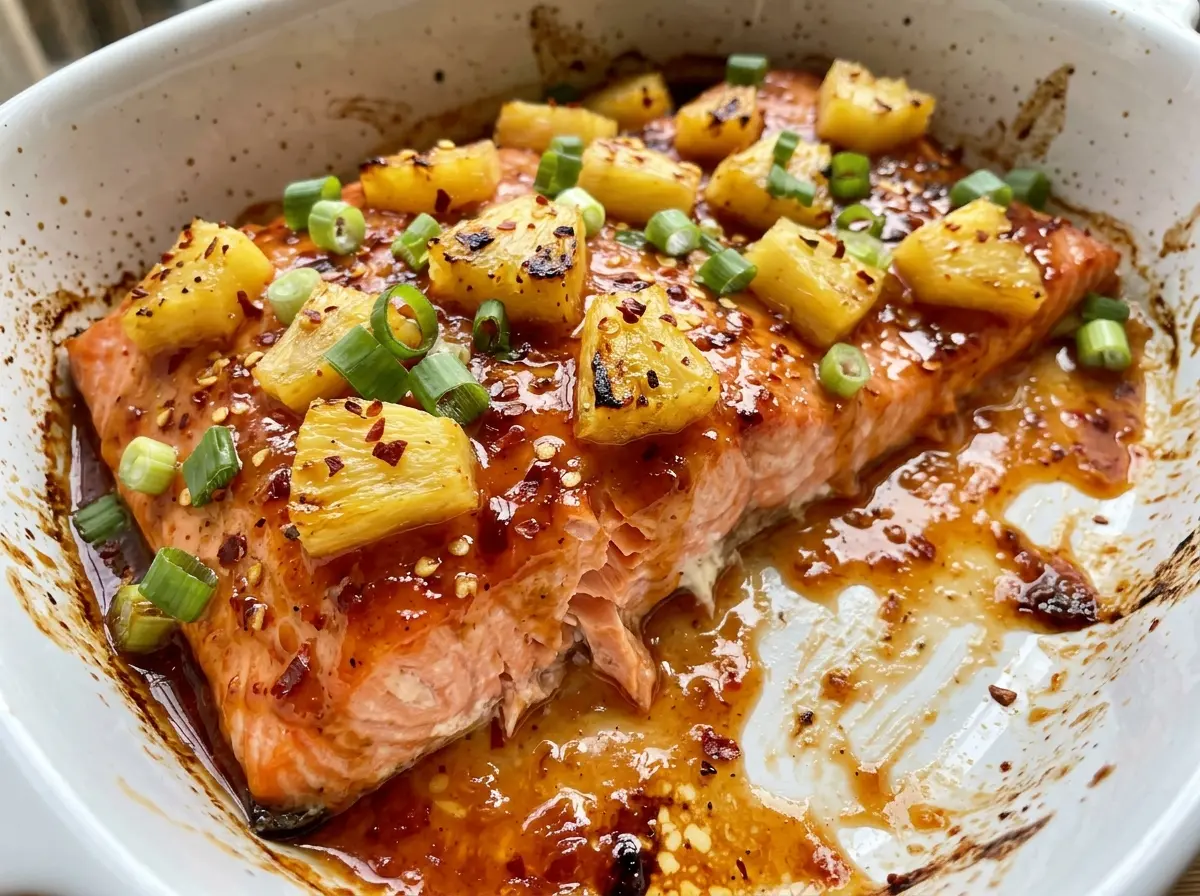
For this sweet and spicy pineapple salmon, the glaze gets brushed on before baking and served again at the table. That second spoonful matters: it lets you taste the ginger, garlic, honey, and sriracha clearly, instead of relying on the oven to do all the work. The salmon comes out tender, the fruit stays juicy, and every piece gets a bright, sticky finish.
Kitchen Note
Stir the cornstarch into cold water until the slurry is completely smooth before it goes into the simmering juice. Once it’s in the pan, keep stirring for the full minute; the glaze should turn shiny and lightly cling to a spoon.
Save this sweet and spicy pineapple salmon for a dinner that pairs tender fish with a sticky ginger-sriracha glaze and juicy baked pineapple.
Why the Pineapple Chunks Stay Out of the Glaze
The canned pineapple does two jobs, and keeping those jobs separate gives the dish its best texture. The reserved juice becomes the smooth glaze, while the chunks bake around the fish. If you simmer the fruit in the saucepan, it softens further and sheds juice into the glaze, making it harder to get that clean, glossy coating.
That separation also keeps the sweet-and-spicy balance in check. The glaze has honey and sriracha, plus savory soy sauce and aromatic ginger and garlic. The pineapple pieces bring a fresh burst of sweetness alongside the salmon instead of turning the whole dish into one uniform sauce. Scatter them over and around the fish so the fruit gets coated as the salmon bakes, then use the reserved glaze at the table to add more punch where you want it.
What the Pineapple Juice, Salmon, and Aromatics Each Bring
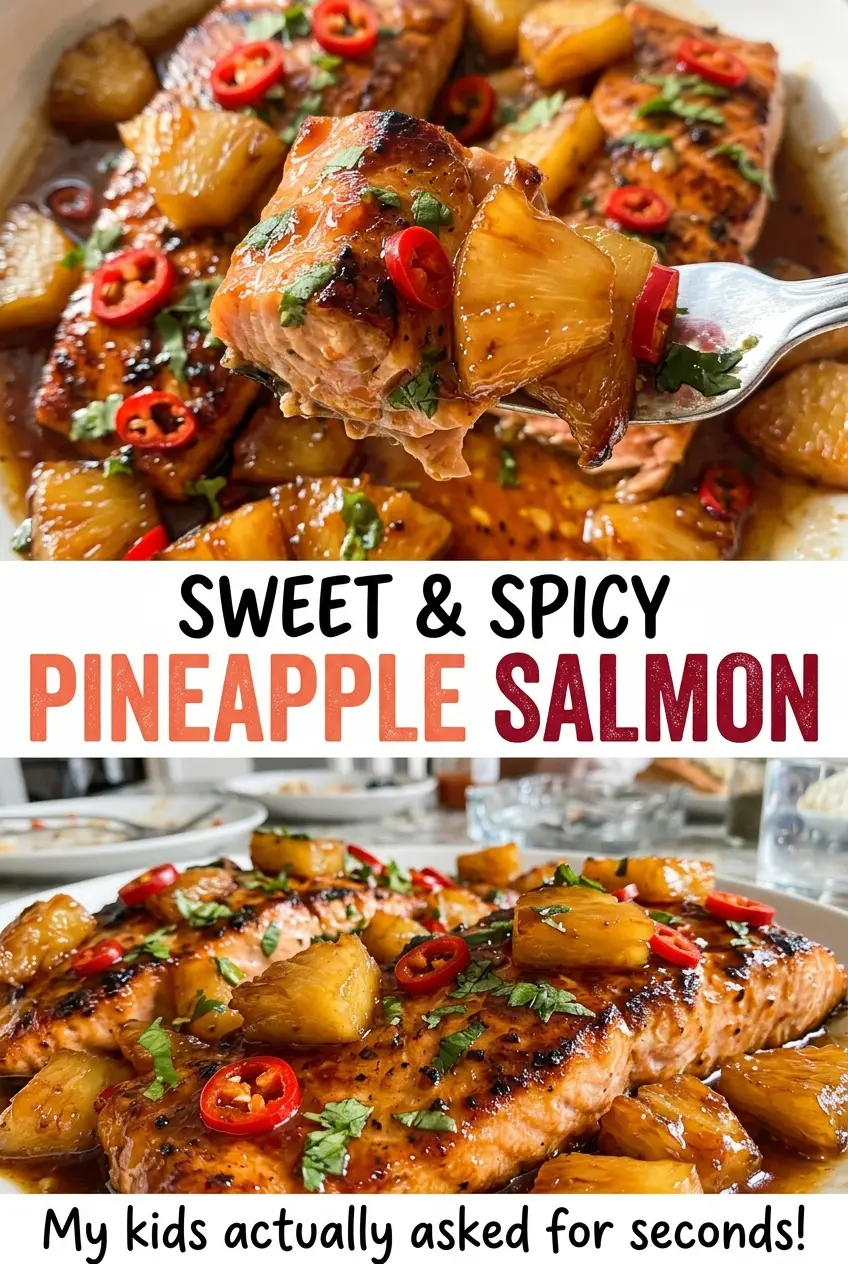
- Canned pineapple in juice — The juice gives the glaze its fruit sweetness and liquid base, while the chunks hold their shape in the baking dish. Choose pineapple packed in juice rather than syrup, which would make the glaze sweeter. Fresh pineapple isn’t a direct swap here because it won’t provide the reserved juice this glaze needs.
- Salmon fillet — A center-cut fillet tends to cook evenly when divided into four pieces. Fresh or previously frozen salmon both work; thaw frozen fish fully before baking. If you use skinless pieces, set them in the dish with the side that was closest to the skin facing down.
- Soy sauce — It brings salt and savory depth that keep the honey and pineapple from tasting one-note. For a gluten-free adaptation, use the same amount of certified gluten-free tamari; it has a similar savory quality, though it may taste a little less sharp.
- Honey and sriracha — Honey rounds out the chile heat and helps the glaze taste full-bodied. An inexpensive honey is fine because its flavor cooks with the other ingredients. Sriracha provides both heat and tang, so changing its amount shifts the balance as well as the spice level.
- Fresh ginger and garlic — Minced garlic and grated fresh ginger give the glaze a fresher, more fragrant edge than dried seasonings. If fresh ginger isn’t available, use a small pinch of ground ginger; the flavor will be warmer and less bright.
- Cornstarch — This is what turns the simmered juice into a glaze that stays on the salmon. Mix it with cold water first; sprinkling dry cornstarch straight into the hot liquid can leave stubborn lumps.
From a Thin Juice to a Glazed, Tender Fillet
Simmer the Aromatics Into the Pineapple Juice
Combine the reserved pineapple juice with the soy sauce, honey, sriracha, minced garlic, and grated ginger in a 1-quart saucepan. Bring the mixture to a simmer over medium heat and cook it for 3 minutes, stirring as it warms. The liquid will still look loose at this point, and that’s expected. Meanwhile, stir the cornstarch and cold water together until no dry pockets remain.
Brush the Salmon Before It Goes Into the Oven
Heat the oven to 400°F and lightly grease a 9×13-inch baking dish with the neutral oil. Set the salmon pieces skin-side down, season them with kosher salt and black pepper, then scatter the reserved pineapple chunks over and around the fish. Add the cornstarch mixture to the saucepan and cook the glaze for 1 minute, stirring, until it thickens; brush half of it over the salmon. Keep the rest separate for serving.
Bake Until the Thickest Part Is Done
Bake the salmon for 12 to 16 minutes, checking the thickest part of a piece with an instant-read thermometer. The center should reach 145°F; thinner pieces may be ready before thicker ones, so check each piece rather than relying only on the timer. The glaze will look shiny on top, and the pineapple will be warm and softened. If the salmon still needs time, return the dish to the oven and check again shortly.
Rest, Then Finish With the Reserved Glaze
Let the salmon rest for 3 minutes after it comes out of the oven. This brief pause gives the juices a chance to settle instead of running straight into the dish when you serve it. Spoon the remaining glaze over the salmon at the table, or pass it alongside so everyone can add as much as they like. Include some of the baked pineapple with each portion.
Simple Swaps for a Different Heat Level or Dietary Need
Use Tamari for a Gluten-Free Glaze
Replace the soy sauce with the same amount of certified gluten-free tamari. The glaze keeps its savory backbone, though tamari can taste rounder and a touch less salty, so season the salmon with the listed salt rather than adding extra soy sauce later.
Turn the Sriracha Up or Down
Use less sriracha for a gentler glaze or a little more for a stronger chile kick. Keep the honey and pineapple juice unchanged so the glaze stays balanced and the cornstarch still thickens it as intended.
Swap Maple Syrup for the Honey
Use an equal amount of pure maple syrup in place of honey. It blends smoothly into the glaze and gives it a mellow, woodsy sweetness; the pineapple and sriracha will still come through, but the finish will be less floral.
Storage and Reheating
- Refrigerator: Store leftover salmon and pineapple in an airtight container for up to 3 days. The fish will be a little firmer after chilling, and the glaze will thicken.
- Freezer: Cooked salmon can be frozen in an airtight container for up to 2 months. Freeze it with some glaze to help protect the surface; the pineapple will be softer once thawed.
- Reheating: Warm a portion in the microwave at reduced power in short bursts, spooning glaze over the fish first, until it reaches 165°F. Long, high-power heating is the quickest way to dry out salmon.
Questions That Come Up When Making Pineapple Salmon
Sweet and Spicy Pineapple Salmon
Ingredients
Equipment
Method
- In a 1-quart saucepan, combine the reserved pineapple juice, soy sauce, honey, sriracha, garlic, and ginger.
- Bring to a simmer over medium heat and cook for 3 minutes.
- Stir the cornstarch and cold water together.
- Add the cornstarch mixture to the pan and cook for 1 minute, stirring, until the glaze thickens.
- Heat the oven to 400°F and lightly grease a 9x13-inch baking dish with the oil.
- Put the salmon in the dish skin-side down and season with the salt and pepper.
- Scatter the pineapple chunks over and around the salmon.
- Brush the salmon with half of the glaze.
- Bake for 12 to 16 minutes, until the thickest part of the salmon reaches 145°F.
- Rest for 3 minutes, then serve with the remaining glaze.