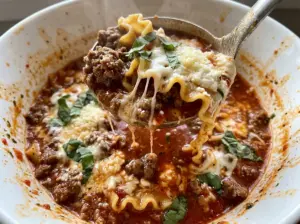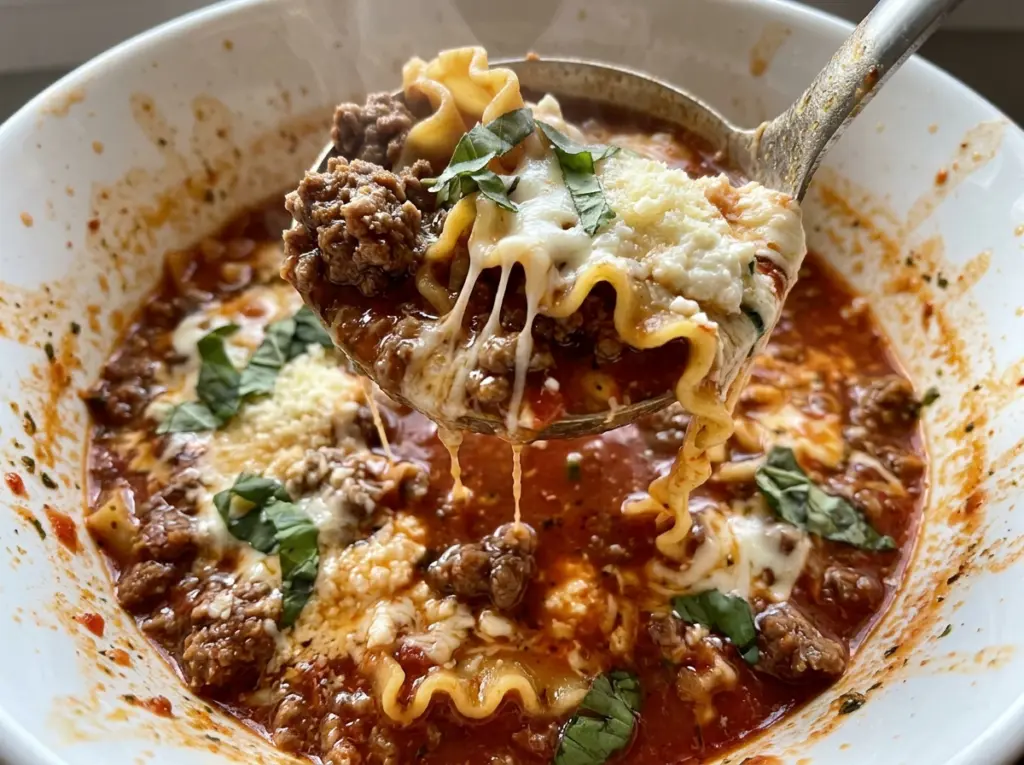
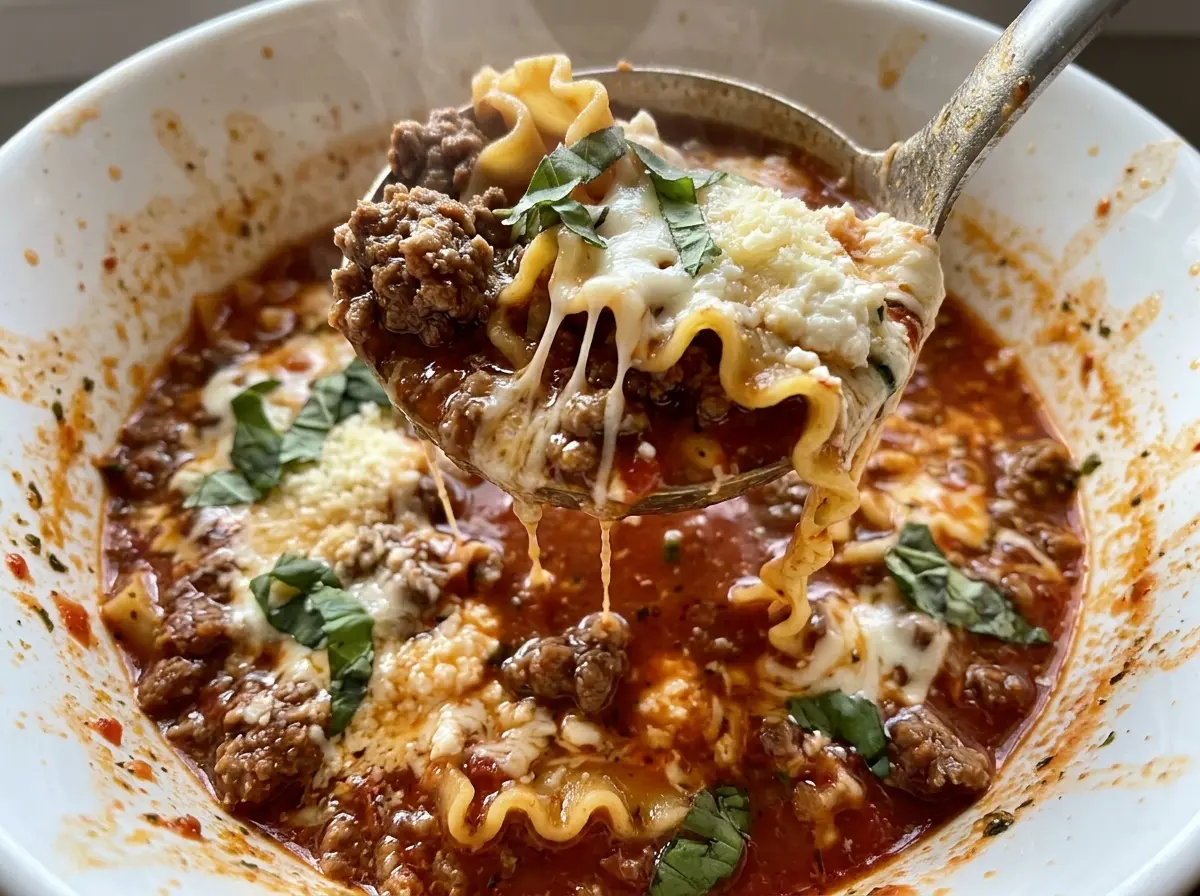
The beef browns against the bottom of the Dutch oven, and the onion softens alongside it while the first savory smell starts to build. That’s the start of this Cheesy Ground Beef Lasagna Soup: familiar lasagna flavors in a tomato-rich broth, with broken noodles cooked right in the pot.
I like that the soup doesn’t ask you to layer pasta or turn on the oven. The broth gets a short, uncovered simmer before the noodles go in, so the tomatoes and beef have time to come together first. Then the ricotta, mozzarella, and Parmesan are stirred into a separate topping instead of disappearing into the whole pot. Each bowl gets a creamy, cheesy spoonful over tender lasagna noodles.
Kitchen Note
Let the tomato-and-beef broth simmer uncovered before you add the noodles. That full 15 minutes gives the base time to settle into a richer, more rounded flavor before the pasta starts cooking in it.
Save this Cheesy Ground Beef Lasagna Soup for a cozy dinner with tender pasta and a creamy three-cheese topping in every bowl.
Why the Cheese Topping Belongs in the Bowl, Not the Pot
Ricotta, mozzarella, and Parmesan each bring a different texture, and they’re at their best when they stay together as a spoonful rather than melting into the entire soup. Stirring the topping into the Dutch oven can leave you with uneven strings of mozzarella and little pockets of ricotta throughout the broth. Keeping it separate gives every bowl a creamy center that softens into the hot soup as you eat.
The bowl-side approach also makes the leftovers easier to manage. The soup can be stored without the cheese topping, so it’s simple to portion out what you need and add a fresh spoonful when you serve it. Mix the three cheeses in a small bowl until evenly combined, then add a spoonful to each serving. Don’t try to make the topping perfectly smooth; a little texture is just right.
What the Beef, Broth, and Cheese Bring to This Lasagna Soup

- Ground beef — The 85% lean beef gives the broth a savory base without making the soup overly greasy. Choose a fresh package; there’s no need to pay extra for a specialty grind. Ground turkey works in the same amount, though it makes the soup less beefy and less rich.
- Yellow onion and garlic — The onion softens into the beef, while fresh minced garlic adds a sharper aroma. A basic yellow onion is a good buy here; there’s no need for a sweeter specialty variety. Mince the garlic before it goes into the pot so it can cook briefly without large pieces staying raw.
- Tomato paste and crushed tomatoes — Tomato paste gives the broth concentrated tomato depth, while crushed tomatoes provide its body. Standard canned crushed tomatoes are fine; a premium brand isn’t necessary. Tomato sauce can replace crushed tomatoes for a smoother, thinner soup, but it won’t have the same texture.
- Low-sodium beef broth — Beef broth reinforces the browned beef flavor, and low-sodium broth leaves room to season the finished soup. Store-brand broth works well. Vegetable broth is the practical choice for a vegetarian version, though it won’t have the same meaty depth.
- Lasagna noodles — Dried lasagna noodles give the soup broad, ruffled bites that feel closer to a lasagna layer than small pasta does. Break them into even pieces so they cook at a similar pace. If you use gluten-free lasagna noodles, choose a sturdy brand and follow the package guidance for doneness.
- Ricotta, mozzarella, and Parmesan — Whole-milk ricotta makes a creamy topping, mozzarella adds a mild stretchy quality, and Parmesan brings a salty, savory edge. Store-brand cheeses are perfectly suitable. If whole-milk ricotta isn’t available, part-skim ricotta works, but the topping will be a little less rich.
Building the Soup in the Right Order
Brown the Beef and Soften the Onion
Heat the olive oil in a 6-quart Dutch oven over medium-high heat, then add the ground beef and diced onion. Cook for 6 to 8 minutes, breaking the beef into small pieces as it browns. The onion should soften, and the beef should reach 160°F. If the beef stays in large clumps, break it apart with a spoon before moving on so the flavor is spread through the soup.
Cook the Garlic and Tomato Paste Briefly
Stir in the minced garlic and tomato paste and cook for 1 minute. Keep the mixture moving so the garlic doesn’t sit against the hot pot and scorch. The paste should coat the beef and onion, and the garlic should smell fragrant rather than raw. A brief cook gives the tomato paste a chance to mingle with the browned beef before the liquid goes in.
Simmer the Tomato-Beef Broth
Add the crushed tomatoes, beef broth, Italian seasoning, kosher salt, and black pepper. Bring the pot to a boil, then reduce the heat and simmer uncovered for 15 minutes. Look for a steady, gentle simmer rather than a vigorous boil. If the surface is bubbling hard, lower the heat; an uncovered simmer should quietly cook the broth without splashing it around.
Cook the Noodles and Finish Each Bowl
Stir in the broken lasagna noodles and simmer for 10 to 12 minutes, stirring occasionally, until the noodles are tender. Check a piece near the end of cooking; the edges should be soft, with no firm center. While they cook, stir the ricotta, mozzarella, and Parmesan together in a small bowl. Ladle the soup into bowls and finish each serving with a spoonful of the cheese topping.
Easy Changes for Different Tables and Pantries
Make It Vegetarian with Plant-Based Ground
Replace the ground beef with an equal amount of plant-based ground and use low-sodium vegetable broth instead of beef broth. Brown the plant-based ground with the onion according to its package cues, then continue with the garlic, tomato paste, and remaining soup ingredients. The result keeps the tomato-and-cheese character, with less of the deep beef flavor.
Use Gluten-Free Lasagna Noodles
Choose gluten-free lasagna noodles that hold their shape in soup, break them into pieces, and use the package’s cooking guidance as your cue. Gluten-free brands vary more in texture, so start checking for tenderness before the full simmer time has passed. The noodles may be softer than wheat pasta, but the beef, tomato broth, and cheese topping stay the same.
Give the Tomato Base a Smokier Edge
Swap the regular crushed tomatoes for the same amount of fire-roasted crushed tomatoes. They add a gentle smoky note without changing the soup’s texture or requiring a different method. Choose crushed tomatoes rather than whole fire-roasted tomatoes to keep the broth from turning unexpectedly chunky.
Storage and Reheating
- Refrigerator: Store the soup and cheese topping separately in airtight containers for 3 to 4 days. The noodles will continue to absorb broth and soften as the soup sits.
- Freezer: Freeze the soup in airtight portions for up to 2 to 3 months; the noodles will be softer after thawing. Freeze the cheese topping separately only if you’re comfortable with a slightly changed texture after thawing.
- Reheating: Warm the soup gently in a saucepan, stirring occasionally, and add a splash of beef broth if it has thickened. Heat leftovers to 165°F, and add the cheese topping to each bowl after reheating rather than stirring it into the pot.
Questions That Come Up When Making Lasagna Soup
Cheesy Ground Beef Lasagna Soup
Ingredients
Equipment
Method
- Heat the olive oil in a 6-quart Dutch oven over medium-high heat.
- Add the ground beef and onion and cook for 6 to 8 minutes, breaking up the beef, until the beef reaches 160°F and the onion softens.
- Stir in the garlic and tomato paste and cook for 1 minute.
- Add the crushed tomatoes, beef broth, Italian seasoning, salt, and black pepper.
- Bring the soup to a boil, then reduce the heat and simmer uncovered for 15 minutes.
- Stir in the broken lasagna noodles and simmer for 10 to 12 minutes, stirring occasionally, until the noodles are tender.
- Stir the ricotta, mozzarella, and Parmesan together in a small bowl.
- Ladle the soup into bowls.
- Add a spoonful of the cheese topping to each serving.