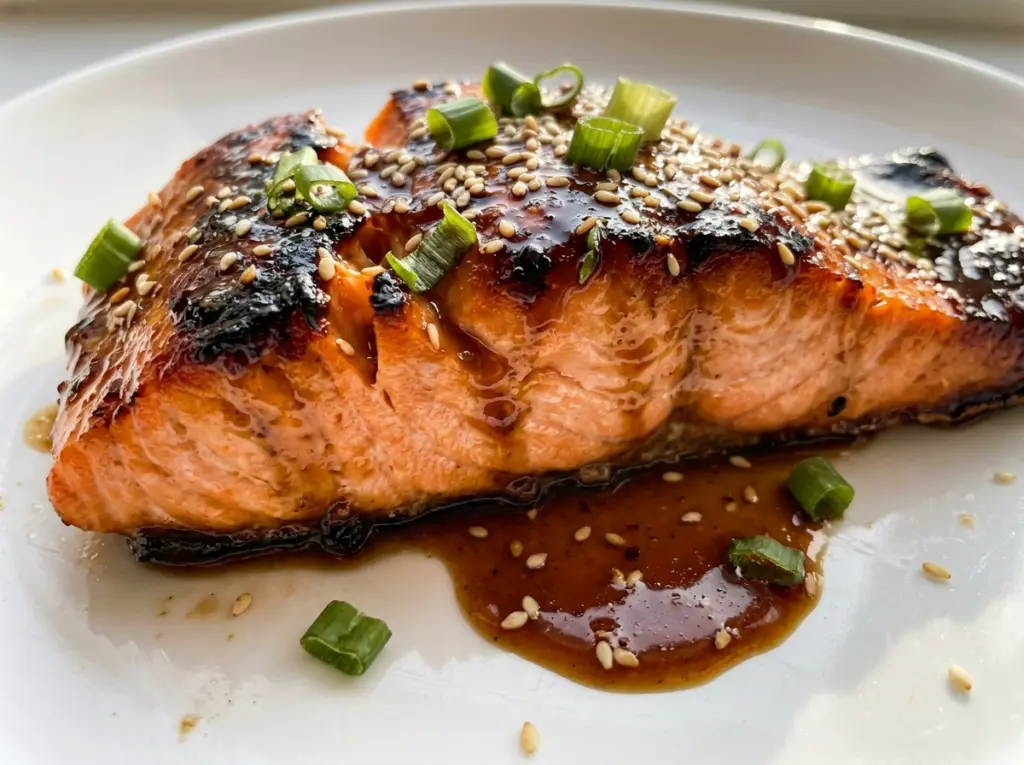
The salmon goes into the oven with almost no fuss, and while it bakes, a small saucepan turns soy sauce, honey, and aromatics into a glossy glaze. That split timing is what makes Honey Soy Sauce Glazed Salmon feel manageable: the fish cooks on its own while the sauce thickens nearby, ready to brush on at the end. I like how the skin stays underneath as the fillets bake, keeping the tender flesh supported while the tops get a light coating of oil and black pepper.
Honey can darken quickly in a hot oven, so I don’t bake the glaze on the fish. Instead, I simmer it separately with garlic and fresh ginger, then brush it over the salmon when it’s warm and thick enough to cling. Rice vinegar keeps the sweetness from feeling heavy, and a little cornstarch gives the sauce a smooth, shiny finish without a long reduction. Each piece comes out with a sweet-savory coating and soft flakes beneath it.
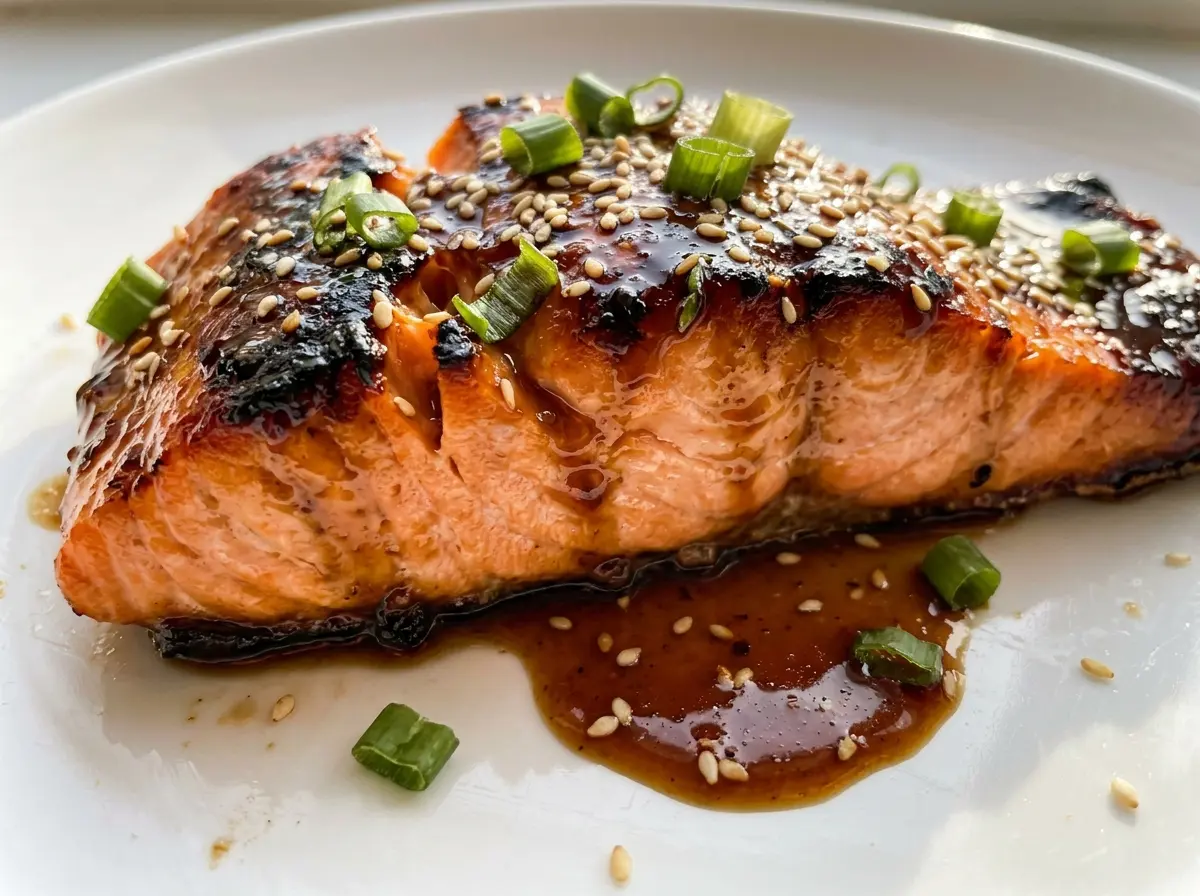
Kitchen Note
The fillets don’t always finish at the same moment, especially if one piece is thicker. Check each one separately instead of treating the whole pan as a single unit; that keeps a thinner piece from drying out while the thickest one catches up.
Save this Honey Soy Sauce Glazed Salmon for a weeknight dinner with tender flakes and a shiny sweet-savory glaze.
Why the Honey Glaze Goes on After the Salmon Bakes
Honey brings the glaze its rounded sweetness, but its sugars brown much faster than the salmon needs to cook. At 425°F, brushing it on at the start would leave the sauce exposed to the oven for the full baking time, where it could darken or turn sticky before the fish is ready. Cooking the salmon first keeps the surface simple: a little neutral oil and black pepper, with the skin beneath it.
The saucepan gives the glaze a gentler, more controlled finish. Soy sauce, honey, rice vinegar, garlic, and ginger come together over medium heat, then the cornstarch mixture thickens them into a sauce that brushes on instead of running straight off. Applying it when warm lets it coat the top without baking away its shine. Keep some back to serve at the table, where everyone can add another spoonful without putting the fish back in the oven.
How Soy, Honey, and Cornstarch Build the Glaze

- Salmon fillets — Skin-on pieces stay supported on the baking sheet, and the skin gives you a clear side to place down. Choose evenly cut pieces when you can; very different thicknesses won’t finish together. Fresh or frozen fillets both work once frozen fish has thawed fully.
- Soy sauce — It supplies the glaze’s salty, savory base. A standard bottle is fine; use tamari in its place for a gluten-free version, choosing one labeled gluten-free if that matters for your meal.
- Honey — Honey adds sweetness and helps the sauce turn glossy as it thickens. A familiar everyday honey works well here; a strongly flavored variety will make itself more noticeable in the finished glaze.
- Rice vinegar — Its mild acidity balances the honey and soy without making the sauce taste sharply sour. If you don’t have it, apple cider vinegar is a workable substitute, though its flavor is a little fruitier and more pronounced.
- Cornstarch — This is what changes the simmered mixture into a brushable glaze. Whisk it with the water until smooth before it meets the warm sauce; dry cornstarch added straight to the saucepan is much more likely to leave lumps.
- Fresh garlic and ginger — Minced garlic and finely grated fresh ginger bring a brighter, more defined aroma than dried versions. Grate the ginger finely so it blends into the glaze instead of leaving larger fibrous pieces.
- Neutral oil and black pepper — The oil coats the salmon tops lightly, while pepper adds a little warmth without competing with the sweet-savory sauce. A neutral-tasting oil is the right fit; a strongly flavored oil would change the character of the glaze.
From Oven-Baked Fillets to a Glossy Finish
Set Up the Salmon for Even Baking
Heat the oven to 425°F and line a rimmed baking sheet with foil. Arrange the pieces skin-side down, rub the tops with the neutral oil, and season them with black pepper. Leave a little room between the fillets so heat can move around them. Keep the skin underneath rather than flipping the fish during baking.
Bake Until the Thickest Part Is Ready
Bake the salmon for 10–14 minutes, checking the thickest part of each fillet with a thermometer. The finished temperature is 145°F, and the exact timing depends on the thickness of the pieces. Start checking at the shorter end of the range rather than assuming every fillet needs the same time. The fish should separate into soft flakes when it’s cooked through.
Whisk the Slurry Before It Hits the Pan
While the salmon bakes, whisk the water and cornstarch together in a small bowl until the mixture looks smooth. This little bowl gives the starch a chance to disperse evenly before it reaches the saucepan. If you see dry pockets or lumps, keep whisking until they disappear. A smooth slurry is easier to incorporate into the glaze.
Simmer, Thicken, and Brush
Combine the soy sauce, honey, rice vinegar, minced garlic, and grated ginger in a small saucepan. Bring the mixture to a simmer over medium heat, whisk in the cornstarch mixture, and cook for 1–2 minutes until the glaze looks glossy and lightly thickened. Brush the warm glaze over the baked salmon, then serve any remaining sauce on the side. It should coat the top of each fillet rather than pool like a thin liquid.
Simple Swaps for a Different Table
Make the glaze gluten-free with tamari
Replace the soy sauce with the same amount of gluten-free tamari. The glaze keeps its savory depth and glossy texture, though the salt level can differ a little by brand.
Use maple syrup instead of honey
Swap in an equal amount of pure maple syrup for the honey. The sauce still thickens with the cornstarch, but it takes on a woodsy sweetness rather than honey’s round, floral note.
Storage and Reheating
- Refrigerator: Store salmon and extra glaze in separate airtight containers for 3–4 days. The fish will be less tender after chilling, but the glaze remains spoonable.
- Freezer: Cooked salmon freezes for about 2–3 months for best quality. Wrap the portions tightly or place them in an airtight freezer container; freeze extra glaze separately.
- Reheating: Cover the salmon with foil and warm it in a 275°F oven until it reaches 165°F. Gentle heat helps limit drying; reheating uncovered or at a high temperature can make the fish tough.
Questions That Come Up With Honey Soy Salmon
Honey Soy Sauce Glazed Salmon
Ingredients
Equipment
Method
- Heat the oven to 425°F.
- Line a rimmed baking sheet with foil.
- Arrange the salmon skin-side down on the baking sheet, rub the tops with the oil, and season with the black pepper.
- Bake for 10–14 minutes, until the thickest part of each fillet reaches 145°F.
- While the salmon bakes, whisk the water and cornstarch together in a small bowl until smooth.
- Combine the soy sauce, honey, rice vinegar, garlic, and ginger in a small saucepan.
- Bring to a simmer over medium heat.
- Whisk in the cornstarch mixture and cook for 1–2 minutes, until glossy and lightly thickened.
- Brush the warm glaze over the salmon.
- Serve any remaining glaze on the side.