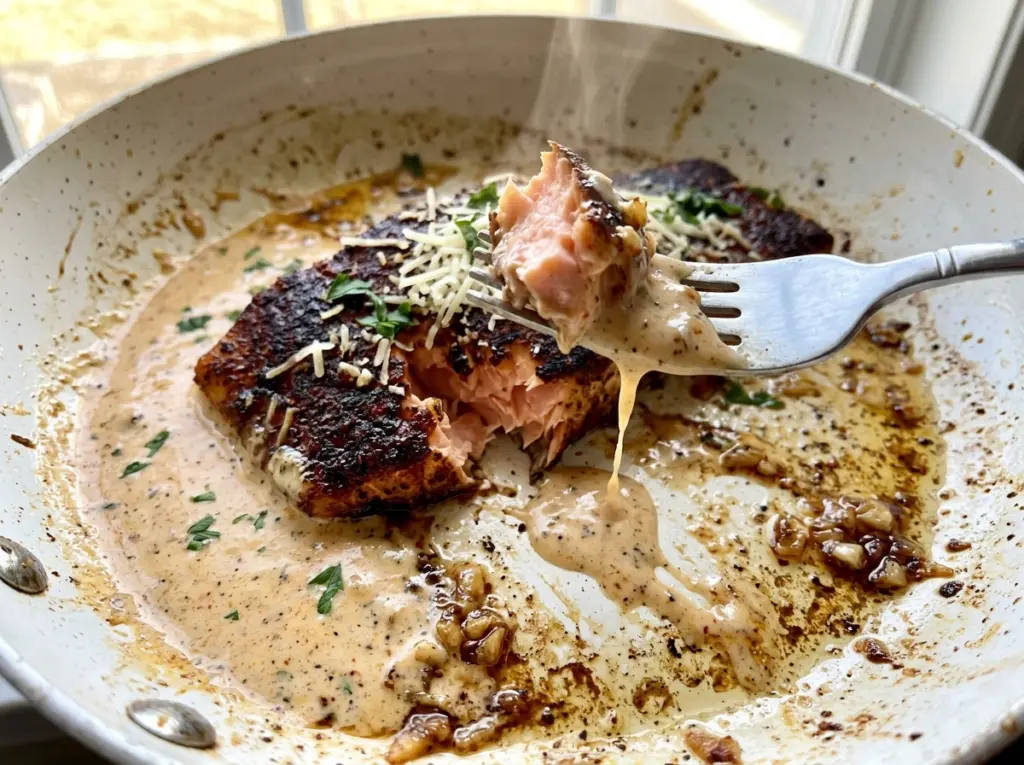
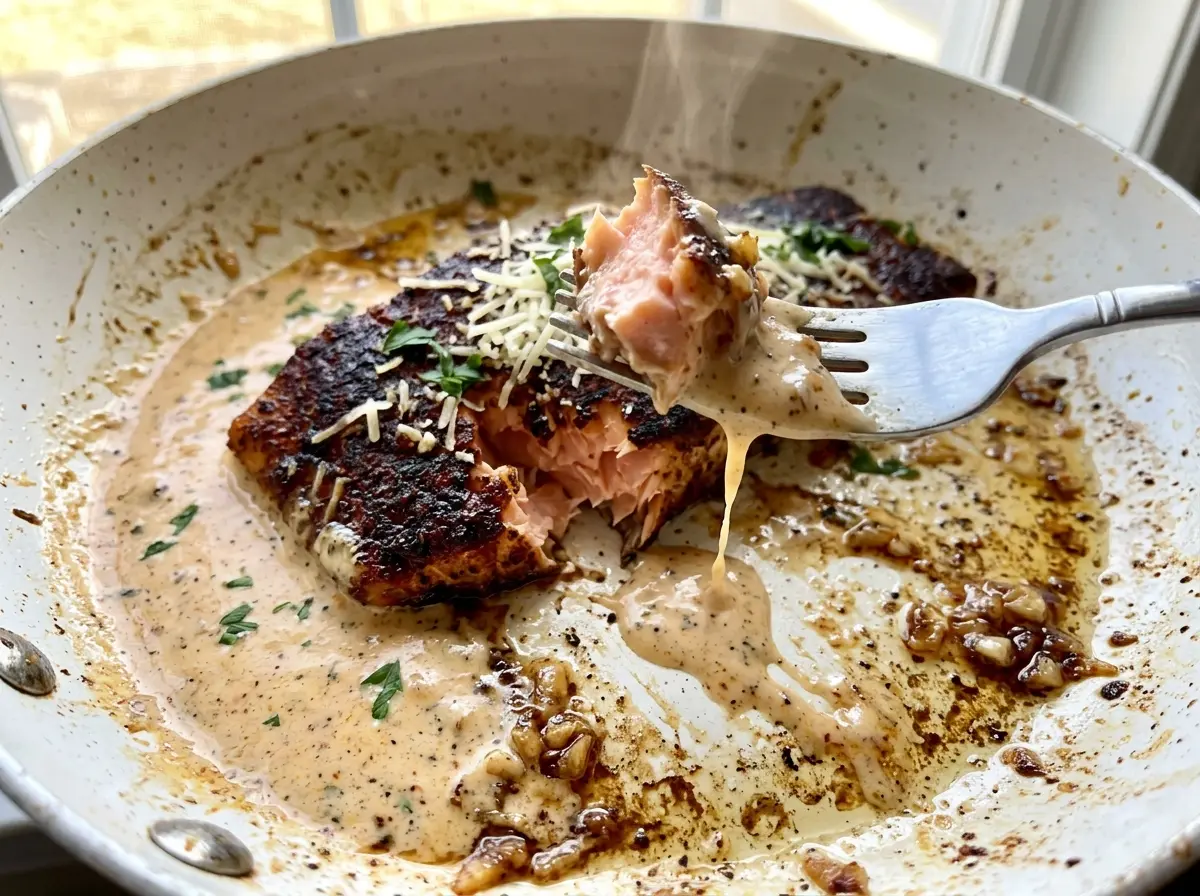
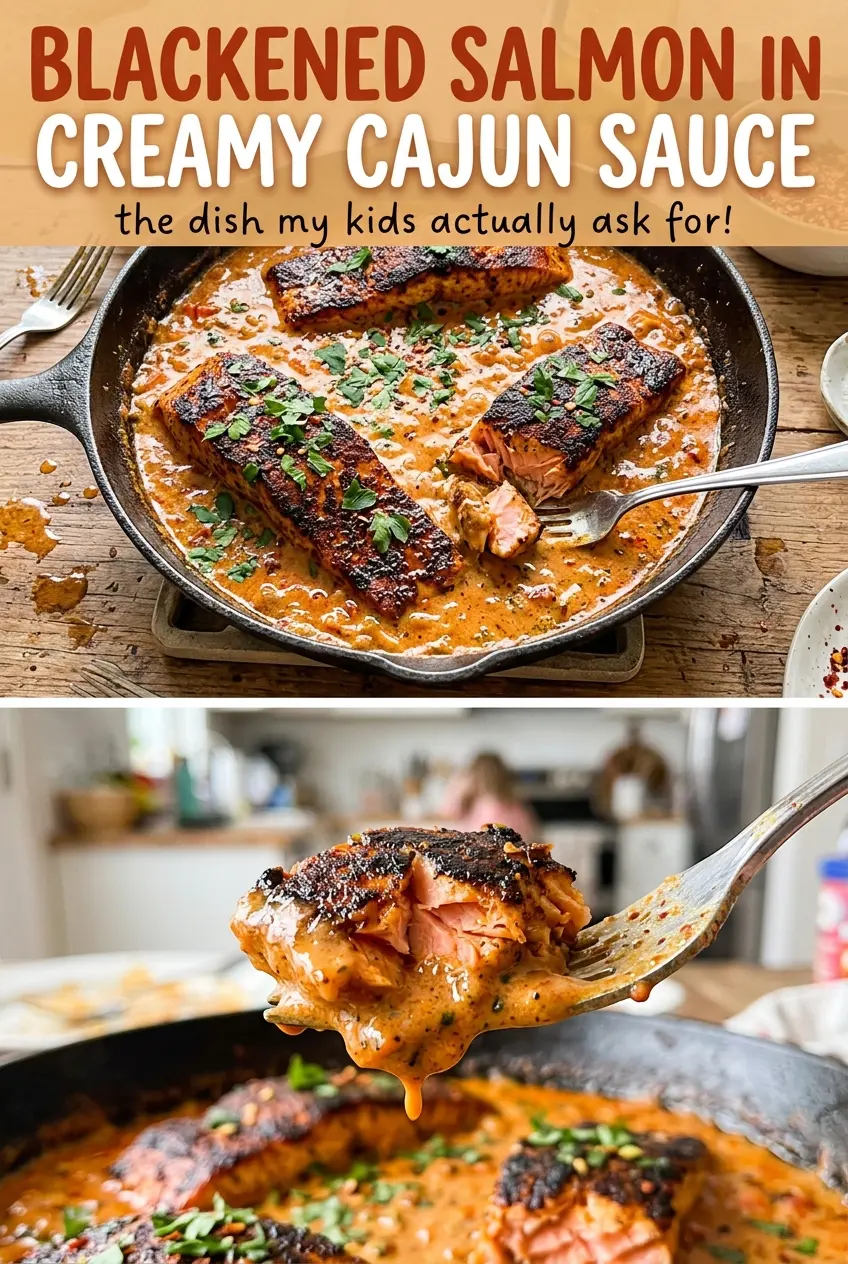
When the seasoned salmon hits a shimmering skillet, the spices toast quickly and the edges turn deep mahogany while the center stays tender. I learned not to chase a darker crust by cranking the heat; the paprika can scorch before the fish cooks through. For this blackened salmon in creamy Cajun sauce, medium-high heat and a little patience give the fillets a deeply seasoned outside without drying them out. Searing two at a time in a 12-inch skillet also leaves room for the hot surface to do its job.
The sauce comes together in that same skillet. Butter and garlic start the base, then chicken broth loosens the browned bits left by the salmon; heavy cream turns those savory pan juices into a lightly thickened sauce. Lemon juice goes in at the finish, where its brightness balances the cream and Cajun seasoning. I keep the ingredients measured before I start because once the fish is searing, the sauce follows fast. The result is a saucy dinner with crisp-edged fish and enough silky sauce to spoon over every fillet.
Kitchen Note
Pat each fillet dry before the seasoning goes on. A damp surface releases moisture into the skillet, so the spices simmer instead of forming the dry, well-seared crust you want.
Save this blackened salmon with creamy Cajun sauce for a skillet dinner with a spiced crust and a bright, silky finish.
Why This Salmon Gets Seasoned in the Skillet and in the Sauce
Seasoning the fish alone can leave the sauce tasting like plain cream, while putting all the Cajun seasoning into the sauce leaves the salmon without that direct, toasted spice crust. I divide it between the two so each part of the dish carries its share of the flavor. The seasoning on the fillets meets hot oil first, where the paprika and spices toast against the surface of the fish.
The reserved Cajun seasoning goes into the cream after the broth has lifted the browned bits from the skillet. That gives the sauce its own savory warmth instead of relying on whatever seasoning happens to fall off the fish. It also keeps the finished plate from tasting one-note: the salmon has a more concentrated, seared spice layer, and the sauce carries a softer version through every spoonful. Cajun blends vary in heat and salt, so choose one you enjoy eating on its own; the division lets its character show up in both the crust and the sauce.
What the Cajun Blend, Cream, and Lemon Each Bring
- Salmon — Skinless fillets let the spice coat both sides directly, and evenly thick pieces cook at a similar pace. Fresh or properly thawed frozen fillets both work; steelhead trout is a useful stand-in, though thicker pieces may need a little longer to reach the right doneness.
- Cajun seasoning — A store-brand blend works well; the main difference between blends is their heat and salt level. For a gentler dish, use a mild Cajun blend in place of a hotter one, keeping the same amount.
- Smoked paprika — This adds a woodsy note that plain paprika won’t quite match. Sweet paprika can replace it if that’s what you have, but the finished crust will be less smoky.
- Neutral oil — You need an oil that won’t compete with the spices as the skillet heats. Canola or refined avocado oil are practical swaps; there’s no need to reach for an expensive bottle.
- Heavy cream — Its fat gives the sauce a smooth body as it simmers. For a dairy-free version, unsweetened full-fat coconut cream works, but it brings a noticeable coconut note rather than tasting like dairy cream.
- Chicken broth, butter, garlic, and lemon — Broth loosens the flavorful bits in the skillet, while unsalted butter rounds out the sauce and fresh garlic gives it a fuller aroma than garlic powder would. Fresh lemon juice has the brightest finish; bottled juice works in a pinch, though it tastes less lively.
From a Spice Crust to a Pan Sauce in One Skillet
Season Both Sides of the Fillets
Sprinkle both sides of the salmon with 2 teaspoons of Cajun seasoning, the smoked paprika, garlic powder, and black pepper. Spread the spices over the surface so there aren’t bare patches or thick clumps. Keep the remaining Cajun seasoning back for the sauce. The fillets are ready for the skillet once the spices are distributed evenly.
Sear in Two Batches
Heat 1 1/2 teaspoons of neutral oil in a 12-inch skillet over medium-high heat until it shimmers. Sear two fillets for 3–4 minutes per side, until the surface is crusted and the thickest part reaches 145°F. If the fish resists when you try to turn it, give the crust a little more time to set rather than scraping it loose. Transfer the first pair to a plate, then repeat with the remaining oil and fillets.
Turn the Browned Bits Into Sauce
Reduce the heat to medium and melt the butter in the skillet. Add the minced garlic and cook for 30 seconds, stirring as it becomes fragrant; garlic can turn bitter if it browns too far. Pour in the chicken broth and scrape across the bottom of the skillet to loosen the browned bits. Those bits dissolve into the liquid and carry the toasted seasoning into the sauce.
Simmer the Cream, Then Add Lemon
Stir in the heavy cream and the remaining 1 teaspoon of Cajun seasoning. Simmer for 3–5 minutes, stirring occasionally, until the sauce looks lightly thickened and coats a spoon instead of running off like broth. Stir in the lemon juice, then spoon the sauce over the salmon. Keep the sauce at a gentle simmer during thickening; a hard boil isn’t needed to bring it together.
Easy Ways to Shift the Heat, Broth, or Dairy
Make the Cajun Crust Milder
Swap in a mild Cajun seasoning for a hotter blend, using the same amount on the salmon and in the sauce. You’ll keep the savory, spiced character while dialing back the cayenne heat; the crust and sauce will still be well seasoned.
Use Seafood Broth for a More Seafood-Forward Sauce
Replace the chicken broth with seafood broth in the same amount. It makes the sauce taste more distinctly of the sea and pairs naturally with salmon, though the broth’s saltiness can vary by brand.
Make It Dairy-Free
Use dairy-free butter and unsweetened full-fat coconut cream in place of the butter and heavy cream, and use vegetable broth instead of chicken broth. Simmer the coconut cream until lightly thickened as you would the dairy version. The sauce stays creamy, with a gentle coconut flavor alongside the Cajun spices.
Storage and Reheating
- Refrigerator: Store the salmon and sauce together in an airtight container within 2 hours, and eat within 3–4 days. The sauce may thicken as it chills.
- Freezer: Freeze in an airtight freezer-safe container for up to 2 months. The salmon will be safe, but the cream sauce may separate or turn slightly grainy after thawing.
- Reheating: Warm gently in a covered skillet over low heat, turning the salmon carefully, until leftovers reach 165°F. Avoid a hard boil, which can make the fish dry and the sauce less smooth.
Questions That Come Up While Cooking Cajun Salmon
Blackened Salmon in Creamy Cajun Sauce
Ingredients
Equipment
Method
- Sprinkle the salmon on both sides with 2 teaspoons of the Cajun seasoning, the smoked paprika, garlic powder, and black pepper.
- Heat 1 1/2 teaspoons oil in a 12-inch skillet over medium-high heat until shimmering.
- Sear 2 fillets for 3–4 minutes per side, until crusted and 145°F at the thickest part, then transfer to a plate.
- Repeat with the remaining oil and fillets.
- Reduce the heat to medium and melt the butter in the skillet.
- Add the garlic and cook for 30 seconds.
- Pour in the broth and scrape up the browned bits.
- Stir in the heavy cream and remaining 1 teaspoon Cajun seasoning.
- Simmer for 3–5 minutes, stirring occasionally, until the sauce is lightly thickened.
- Stir in the lemon juice and spoon the sauce over the salmon.