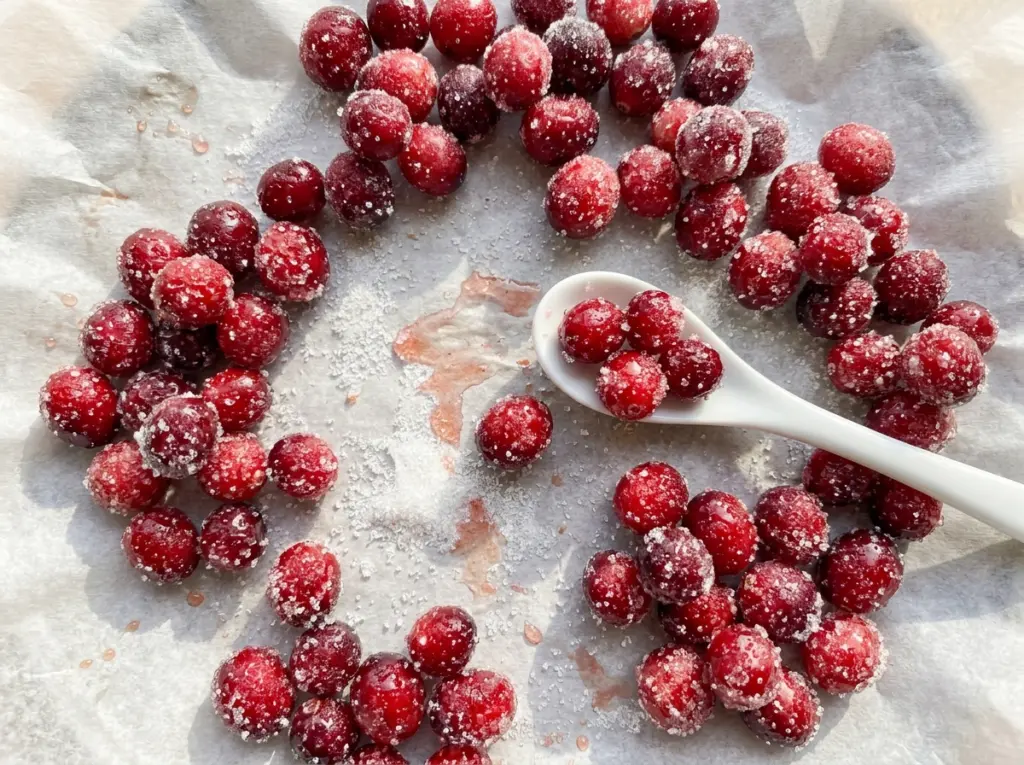
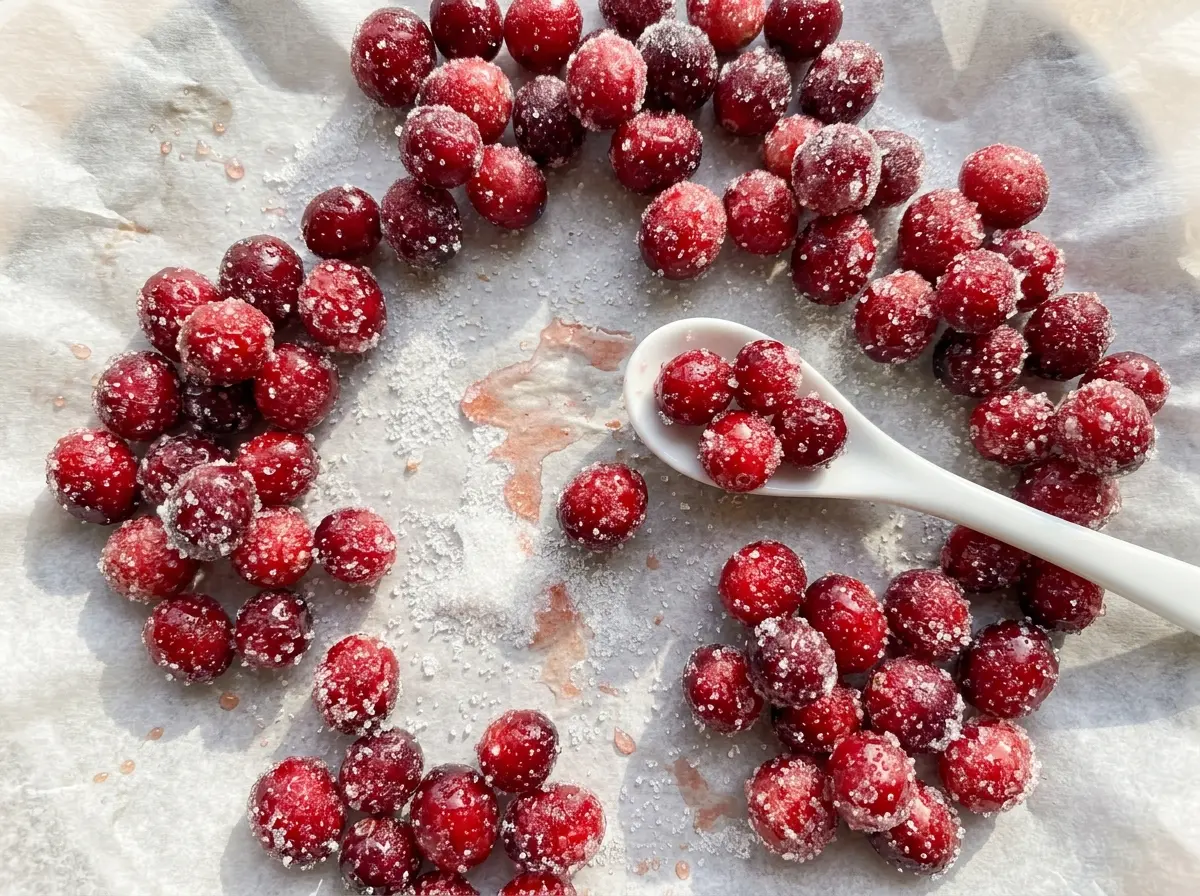
The syrup looks almost too thin to matter when it first comes off the stove, but that’s exactly what helps these berries stay plump instead of turning into cranberry jam. I stir the sugar and water until the grains disappear, then take the pan off the heat before the cranberries go in. After their short soak, they get a sparkling shell of sugar that makes these Candied Cranberries look frosted while the centers stay tart.
The drying time is the part that asks for a little patience. The berries need to feel tacky before they go into the superfine sugar; too wet, and the coating turns into a sticky layer instead of a fine, even sparkle. Once the sugar sets, each cranberry has a crisp outside and a juicy pop inside, a lovely contrast for a cool dessert table or a simple seasonal garnish.
Kitchen Note
Don’t rush the rack time. The cranberries should feel tacky, not wet, before they meet the superfine sugar; that little wait is what gives the coating a dry, even finish.
Save these Candied Cranberries for their crisp superfine-sugar shell and bright, tart centers—a pretty little finish for a dessert table.
Why the Syrup Comes Off the Heat Before the Cranberries Go In
Cranberries have taut skins, and they don’t need a rolling boil to take on sweetness. Letting the sugar syrup reach a gentle simmer first dissolves the granules; taking it off the burner before adding the fruit keeps the berries out of that active heat. They sit in the warm syrup for 10 minutes, long enough to be coated without cooking them like a sauce.
That order also makes the job easier to control. If the berries go into a bubbling pan, the skins can split and the syrup can thicken as water evaporates. Broken berries still taste good, but their juice makes a messier coating and can leave the finished sugar patchy. Here, the syrup’s job is to cling to the outside, not to reduce around the fruit.
Look for the syrup to just begin simmering, not for a thick, sticky consistency. Once the sugar has dissolved, there’s no advantage to cooking it longer. The finished cranberries should remain recognizable as whole berries, with enough syrup on their skins to give the superfine sugar something to catch.
Why Fresh Cranberries and Superfine Sugar Matter

- Fresh cranberries — Firm berries hold their shape through the warm syrup soak and have the tart bite that balances the sweet shell. A standard bag of fresh cranberries is fine; there’s no need to seek out a specialty variety. Pick over the berries before rinsing, and don’t swap in dried cranberries: they won’t give you the same juicy center or fresh-fruit surface.
- Granulated sugar — This dissolves into the simple syrup, so ordinary granulated sugar works well; a premium or extra-fine brand won’t improve the syrup. The useful detail is giving it time to dissolve before the cranberries go in. There isn’t a straightforward sweetener swap here that behaves exactly the same way in the syrup.
- Superfine sugar — The smaller crystals cling in a thinner, more even layer than standard granulated sugar. This is where texture matters more than brand, so choose a plain superfine sugar rather than powdered sugar, which can make the coating dusty. Regular granulated sugar is not a one-for-one coating substitute if you want that delicate, frosted finish.
From Clear Syrup to a Dry, Sparkling Shell
Dissolve the Sugar Before It Simmer
Combine the granulated sugar and water in a small saucepan over medium heat, stirring as the mixture warms. It should take 2 to 3 minutes for the sugar to dissolve and the syrup to just begin simmering. Look for a clear liquid without visible grains at the bottom of the pan. If you still see undissolved sugar, keep stirring over the heat rather than moving on early.
Coat the Berries Off the Heat
Remove the saucepan from the heat before adding the picked-over, rinsed cranberries. Stir gently so the syrup coats the berries without roughing them up. Let them sit in the syrup for 10 minutes; don’t put the pan back over the burner during this soak. Gentle handling helps keep the berries whole and gives the syrup time to cover their skins.
Drain and Let the Surfaces Turn Tacky
Drain the cranberries, then spread them in a single layer on a wire rack set over a rimmed baking sheet. Leave space between them so the sticky surfaces aren’t pressed together. Let them dry for about 1 hour, checking for a tacky feel rather than a wet, syrupy one. If they still look glossy with loose syrup, give them more time on the rack before coating.
Roll and Set the Sugar Coating
Roll the tacky cranberries in the superfine sugar until they’re coated. Work gently so the berries stay intact and the crystals cover the whole surface. Return them to the rack and let the coating dry for about 30 minutes. When the sugar looks dry rather than shiny or damp, they’re ready to serve.
Two Small Changes That Still Let the Cranberries Shine
Add a cinnamon note to the coating
For a warmer finish, stir 1/2 teaspoon ground cinnamon into the superfine sugar before rolling the cranberries. The cinnamon gives the sugar shell a gentle spice without changing the syrup or the cranberry’s tart center. Keep the mixture well combined so each berry gets an even dusting.
Make a half batch for a smaller platter
Cut each ingredient in half, including the fresh cranberries and both sugars, and follow the same sequence of syrup, soak, drying, and coating. The smaller quantity is handy when you only need a modest garnish. Use the visual cues—the dissolved sugar, a just-simmering syrup, and tacky berries—rather than assuming a smaller batch will finish sooner at every stage.
Making Ahead and Keeping the Coating
- Make ahead: Finish them on the day you plan to serve them so the sugar shell stays dry and crisp.
- Refrigerator: Refrigerate leftovers promptly in a covered container and use within 2 days. The coating may soften as the berries release moisture.
- Freezer: Freezing isn’t recommended; moisture released as the berries thaw will spoil the dry sugar coating.
- Reheating: These are served cold or at room temperature, so don’t reheat them. Heat will melt the sugar shell.
Questions That Come Up With Candied Cranberries
Candied Cranberries
Ingredients
Equipment
Method
- Combine the granulated sugar and water in a small saucepan and heat over medium, stirring, until the sugar dissolves and the syrup just begins to simmer, 2 to 3 minutes.
- Remove the pan from the heat, add the cranberries, and stir gently to coat; let them sit in the syrup for 10 minutes.
- Drain the cranberries, then spread them in a single layer on a wire rack set over a rimmed baking sheet and let them dry until tacky, about 1 hour.
- Roll the cranberries in the superfine sugar until coated, then let them stand on the rack until the coating is dry, about 30 minutes.