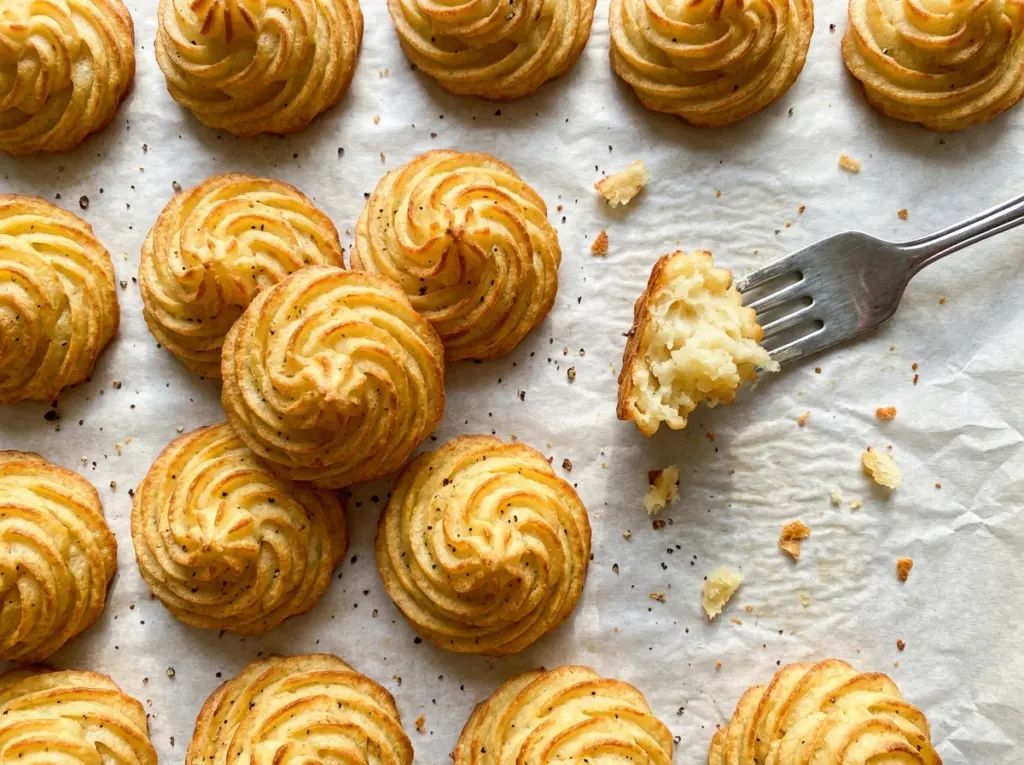
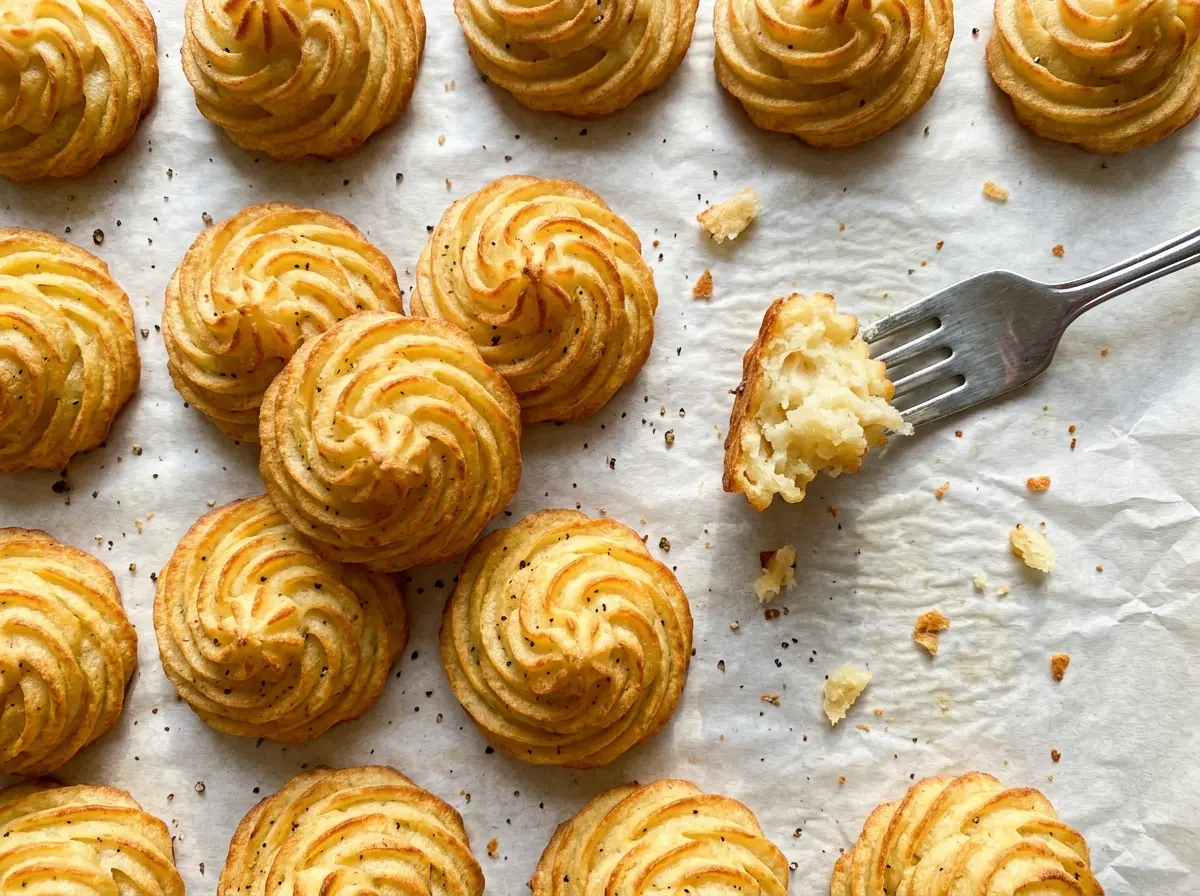
The edges are what tell you these potatoes are turning out right: those piped ridges should go from pale to golden while the centers stay soft. Duchess potatoes look fancy on the plate, but the method is mostly about getting the potatoes smooth enough to pipe and dry enough to hold their shape. I like them when mashed potatoes feel a little too ordinary, but I still want a side dish that can be made from familiar ingredients.
Russets give the mixture a fluffy base, and egg yolks help the piped mounds set as they bake. A potato ricer makes the smoothest mash, though a hand masher works if you take your time and break up every lump. Pipe 12 mounds onto parchment, then let the oven brown the ridges. They come out with crisp edges and tender middles.
Kitchen Note
After draining, return the potatoes to the hot pot and let them steam for a full minute before mashing. That short pause lets surface moisture escape, so the mixture is less likely to turn loose in the piping bag.
Save these Duchess Potatoes for a dinner that deserves golden ridges and soft, buttery centers.
Why the Egg Yolks Matter More Than a Fancy Piping Tip
The star tip gives Duchess potatoes their familiar ridges, but it can’t make a loose potato mixture hold a clean shape. Egg yolks do the structural work: they enrich the mash and set in the oven, helping each mound keep its outline as the exposed ridges brown. That means a simple star tip is enough; you don’t need elaborate piping skills to get an attractive result.
The yolks also make the inside more tender than a plain baked mound of mashed potatoes. Mix them in thoroughly with the warm cream, butter, and seasonings so the mixture is even from edge to center. If streaks of yolk remain, the baked texture won’t be consistent. Once combined, move the mixture to the piping bag and work while it’s still easy to press through the tip. A large star tip gives the ridges room to show, and the golden edges make the finished potatoes look finished without extra garnish.
Russets, Warm Cream, and Yolks: What Gives These Potatoes Their Shape

- Russet potatoes — Their dry, starchy texture makes a fluffy mash that pipes more readily than a waxier potato. Peel them and cut them into even chunks so they cook at a similar pace. For this shape, russets are the dependable choice rather than a place to economize on a substitute.
- Unsalted butter — Butter brings richness without adding salt you can’t control. Cut it into pieces so it melts readily into the hot potatoes. If you use salted butter, the finished potatoes will be saltier than this version.
- Heavy cream — Warm cream blends smoothly into the potatoes and keeps the mixture from cooling abruptly. Cold cream can make the mash feel heavier as you stir it in. Heavy cream gives a richer result than a lower-fat milk, which can make the mixture looser.
- Egg yolks — Yolks help the mounds set while baking and contribute to their tender, rich center. Separate them cleanly and stir them in until no streaks remain; there isn’t a direct egg-free swap that gives the same structure.
- White pepper and nutmeg — White pepper seasons the potatoes without visible black flecks, while a pinch of nutmeg adds a gentle savory warmth. Ground white pepper is worth using here for the smooth, pale appearance; omit the nutmeg if you don’t care for its distinct aroma.
From Pot of Water to Golden Ridges: The Stages That Matter
Cook the potatoes until a fork slips in easily
Heat the oven to 425°F and line a rimmed baking sheet with parchment. Put the potato chunks in a large pot, cover them with cold water by 1 inch, add 1 tablespoon of the kosher salt, and bring the water to a boil over high heat. Reduce the heat to a steady simmer and cook for 15 to 20 minutes. A fork should pass easily through a chunk; if the centers still resist, keep simmering so you don’t end up with hard bits in the mash.
Drain, steam, and make the mash smooth
Drain the potatoes well and return them to the hot pot for 1 minute of steaming. Pass them through a potato ricer or mash until smooth. If you see lumps, work them out before adding the other ingredients; once the butter and cream are mixed in, stubborn lumps are harder to fix. Keep the mashing gentle rather than beating the potatoes for a long time.
Enrich the potatoes and pipe 12 mounds
Stir the butter into the hot potatoes until it has melted. Mix in the warm cream, egg yolks, remaining kosher salt, white pepper, and nutmeg until combined. Spoon the mixture into a piping bag fitted with a large star tip, then pipe 12 mounds onto the parchment-lined sheet. If the mixture is too firm to press through comfortably, don’t force it; check that the potatoes are smooth and that the cream was warmed before it went in.
Bake until the edges turn golden
Bake the mounds for 15 to 20 minutes, watching for golden color along the ridges and edges. The color is your best cue: pale ridges need more time, while deeply browned edges can dry out. Give the potatoes room on the baking sheet so the hot air can reach their sides. Serve them while the outside is crisp and the middle is soft.
Three Small Changes That Give Duchess Potatoes a Different Feel
Leave out the nutmeg
Omit the pinch of nutmeg and keep the white pepper. The potatoes taste cleaner and more buttery, which suits anyone who finds nutmeg too noticeable in savory food.
Make a dairy-free batch
Replace the butter with dairy-free plant butter and the heavy cream with unsweetened oat cream, keeping the egg yolks. The potatoes will be less buttery and may have a subtle oat flavor, but the yolks still help them set. Check that the oat cream is unsweetened so the mash stays savory.
Spoon them instead of piping
If you don’t have a piping bag, spoon 12 mounds onto the prepared parchment and shape the tops with the back of the spoon. You’ll lose the crisp star-tip ridges, but the edges can still brown in the oven and the centers stay tender.
Storage and Reheating
- Refrigerator: Store baked potatoes in an airtight container for 3 to 4 days. The ridges soften once chilled.
- Freezer: Freeze the baked potatoes in a single layer until firm, then transfer them to an airtight freezer container for up to 1 month. Thaw overnight in the refrigerator for the best texture.
- Reheating: Warm in a 350°F oven until hot throughout, aiming for 165°F in the center. A microwave heats them, but it also softens the edges instead of restoring their crispness.
Questions That Come Up When Making Duchess Potatoes
Duchess Potatoes
Ingredients
Equipment
Method
- Heat the oven to 425°F.
- Line a rimmed baking sheet with parchment paper.
- Put the potatoes in a large pot and cover with cold water by 1 inch.
- Add 1 tablespoon of the salt and bring to a boil over high heat.
- Reduce the heat to maintain a steady simmer and cook for 15 to 20 minutes, until the potatoes are easily pierced with a fork.
- Drain the potatoes well and return them to the hot pot.
- Let the potatoes steam for 1 minute.
- Pass the potatoes through a potato ricer or mash until smooth.
- Stir in the butter until melted.
- Mix in the warm cream, egg yolks, remaining 3/4 teaspoon salt, white pepper, and nutmeg until combined.
- Transfer the potato mixture to a piping bag fitted with a large star tip.
- Pipe 12 mounds onto the prepared baking sheet.
- Bake for 15 to 20 minutes, until the ridges and edges are golden brown.