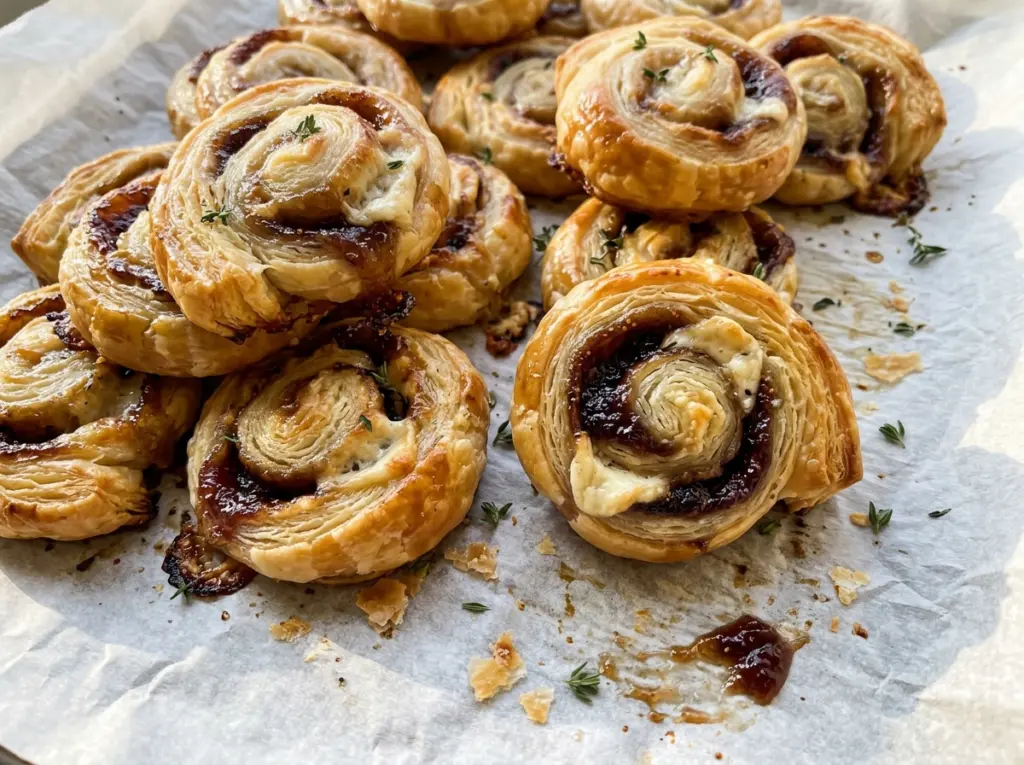
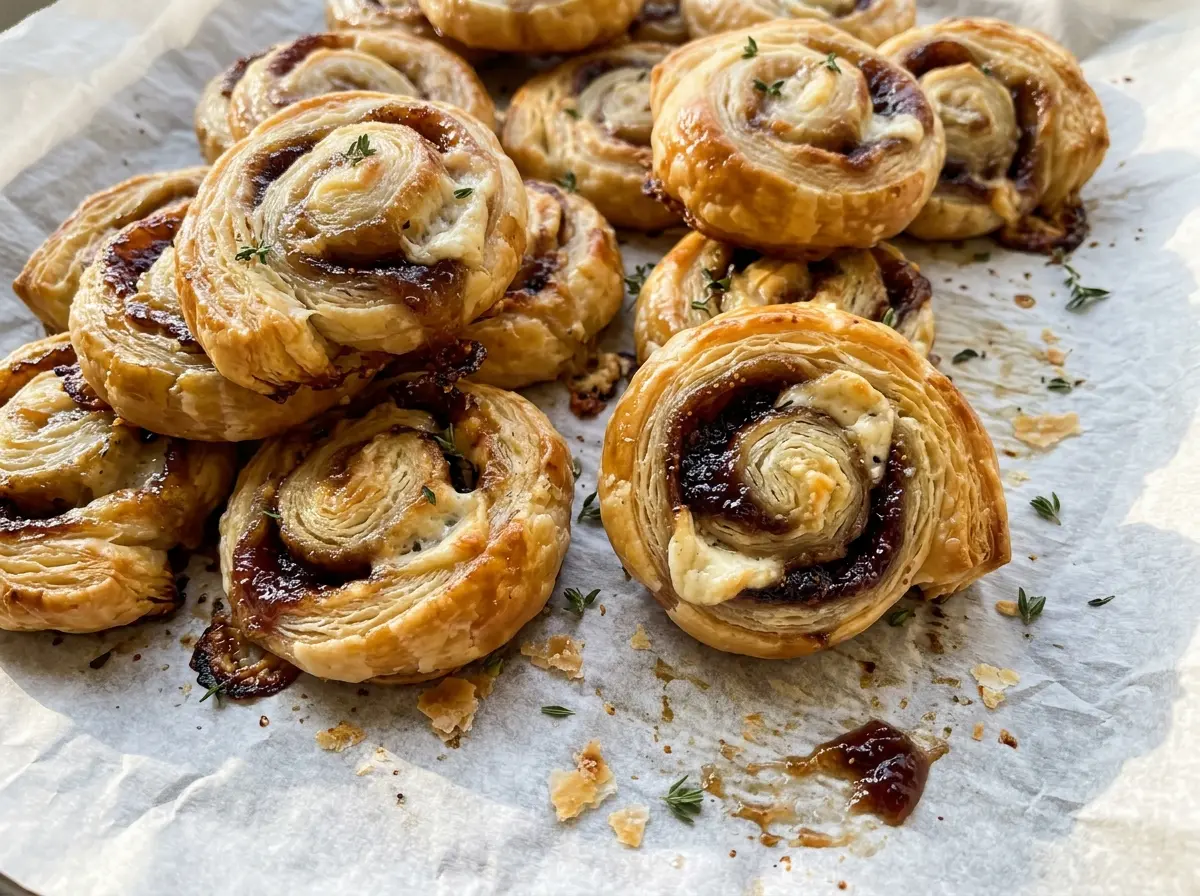
A puff pastry log can look neatly sealed on the counter and still open in the oven if its edge isn’t secured. I brush that bare strip with egg wash before rolling, then set the log seam-side down so the spiral stays tucked together. These fig and goat cheese pinwheels bring sweet fig jam and tangy cheese into crisp, golden pastry, with fresh thyme to keep each bite savory.
The pastry should be cold but flexible when you work with it. If it’s too warm, the sheets get floppy and harder to roll neatly; if it’s still stiff, it can crack. I spread the filling in separate layers rather than mixing it all together, so the jam and herbed cheese stay distinct as you roll and slice. The result is a tidy spiral with flaky edges and a soft, savory-sweet center.
Kitchen Note
The logs need a short rest in the refrigerator before slicing. That chill firms the pastry and filling together, so a sharp knife cuts clean rounds instead of squashing the spiral.
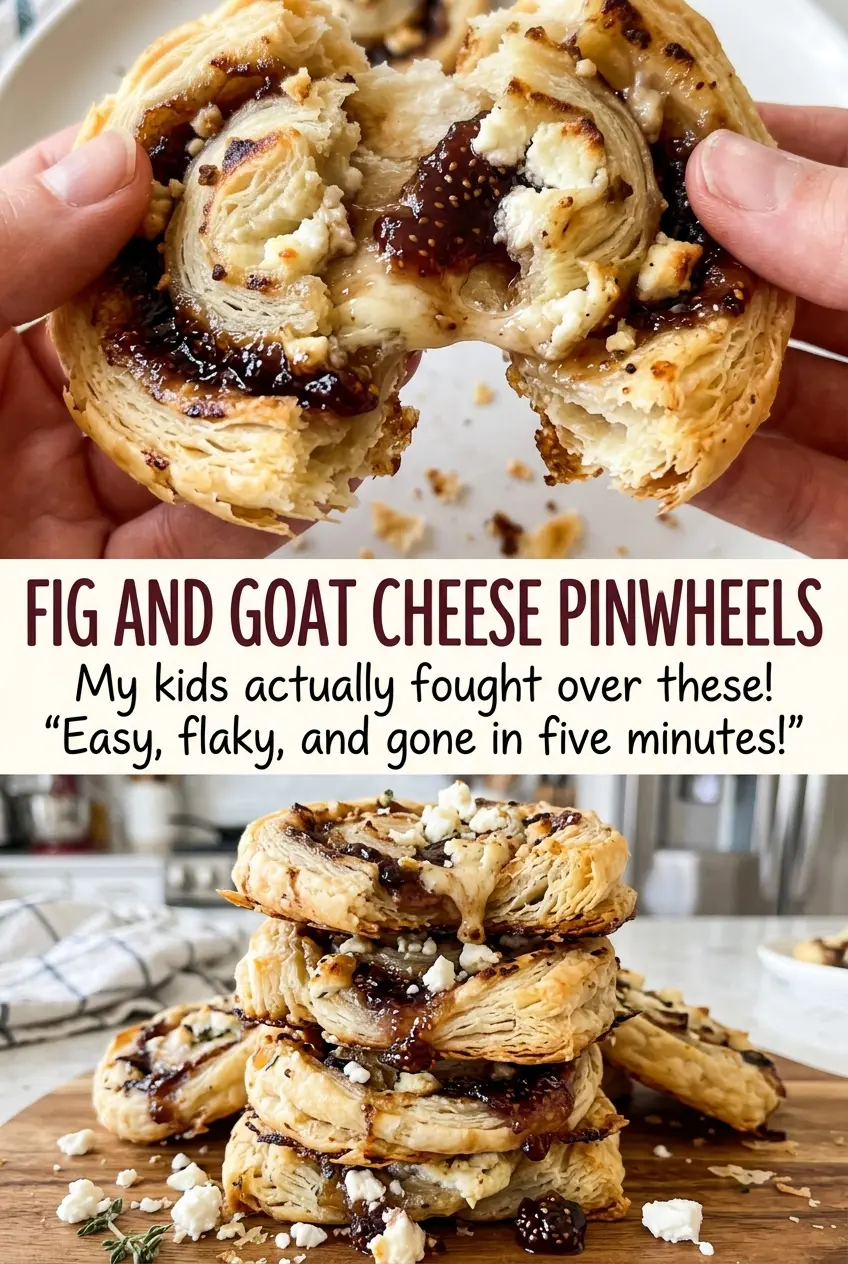
Save these fig and goat cheese pinwheels for an appetizer with crisp pastry, tangy cheese, and a sweet fig center.
Why That Bare Pastry Edge Keeps the Spirals Closed
The filling needs a stopping point. Leaving a narrow strip bare along one long edge gives the roll a clean place to seal, rather than pushing jam and cheese all the way to the outside. Brushing that edge with egg wash helps the pastry adhere when you finish rolling. It’s a small detail, but it gives each log a better chance of holding its shape from the counter to the oven.
Rolling toward the bare edge also keeps the filling enclosed instead of smearing it across the outside of the pastry. Roll firmly enough to make a compact log, but don’t pull so hard that the sheet stretches or tears. Once the log is seam-side down, the sealed edge stays underneath while the pinwheels bake. You’ll still see the layers through the cut sides, with fig jam and goat cheese winding through the pastry instead of blending into one filling.
What Each Ingredient Brings to the Fig-and-Goat-Cheese Spiral
- Puff pastry — Frozen pastry makes the flaky layers practical and consistent. Choose a package with two sheets, and thaw them until flexible without letting them get warm and limp. A gluten-free version can work if it comes in sheets you can roll and slice in the same way; expect a more delicate dough.
- Fig jam — A thick jam spreads in an even layer and brings concentrated fruit sweetness that pairs well with tangy goat cheese. A good-quality jam has a clearer fig flavor, but a store-brand option is fine if it’s thick enough to stay put. A thick fruit preserve can stand in; larger fruit pieces may make the layer less even.
- Goat cheese — Its tang keeps the sweet filling from tasting one-note. Let it soften so it stirs smoothly with the thyme and pepper and spreads without dragging the pastry. Cream cheese can replace it, but the pinwheels will taste milder and less tangy.
- Fresh thyme and black pepper — Fresh thyme gives the cheese a fragrant, savory edge, while pepper adds a gentle bite. If fresh thyme isn’t available, use dried thyme sparingly and crush it between your fingers before stirring it in; dried herbs taste more concentrated and won’t have the same fresh aroma.
- Egg and water — Beating them together makes the wash easy to brush over the pastry. It helps the open edge stick and gives the tops a glossy golden finish. The inexpensive carton of eggs works just as well as a specialty brand here.
From Soft Sheets to Crisp, Golden Pinwheels
Thaw the Pastry and Stir the Cheese Filling
Thaw the puff pastry according to the package directions, usually 30–40 minutes at room temperature, until it’s cold but pliable. Heat the oven to 400°F and line two baking sheets with parchment paper. Stir the softened goat cheese with the chopped thyme and black pepper until the mixture is combined. Beat the egg with the water in a small bowl for the wash.
Layer the Jam and Cheese
Work with one pastry sheet at a time and spread fig jam over it, leaving a 1/2-inch border along one long edge. Spread half of the goat cheese mixture over the jam, keeping the layers even so each slice gets both fillings. Brush the bare edge with egg wash, then roll the pastry tightly toward that edge. Set the finished log seam-side down and repeat with the second sheet.
Chill, Then Slice the Logs
Refrigerate the logs for 20–30 minutes, until they feel firm enough to slice cleanly. Use a sharp knife to cut each log into 1/2-inch rounds. If the knife drags through the layers, wipe it clean before continuing rather than pressing harder. Arrange the slices about 1 inch apart on the prepared baking sheets so the pastry has room to puff.
Bake Until the Pastry Is Golden
Brush the tops with egg wash, then bake for 15–18 minutes, swapping the baking sheets between oven racks halfway through. Watch for puffed pastry with a golden-brown surface; pale pastry needs the remaining bake time. Let the pinwheels cool on the baking sheets for 5 minutes before serving. The centers are hot when they first come out, and the brief rest lets the pastry settle.
Simple Ways to Shift the Flavor or Fit a Dietary Need
Use Gluten-Free Puff Pastry
For a gluten-free version, replace the regular puff pastry with two gluten-free pastry sheets. Follow that package’s thawing guidance and handle the dough gently, since some gluten-free sheets are more fragile when rolled. The filling remains the same, though the pastry may not puff into quite the same delicate layers.
Trade Thyme for Rosemary
Finely chopped fresh rosemary gives the cheese a more piney, assertive flavor. Use less than the thyme because rosemary is stronger, and chop it especially finely so its firm leaves don’t interrupt the soft filling. The fig still brings sweetness, but the overall bite leans more savory.
Make One Log More Fig-Forward
Keep the total filling the same, but divide the jam and goat cheese unevenly between the two pastry sheets. Put more jam on one log for a sweeter, fruitier bite, then use more of the cheese mixture on the other for a tangier balance. You’ll get two slightly different batches without changing the ingredients.
Storage and Reheating
- Refrigerator: Store leftovers in an airtight container for 3–4 days. The pastry softens as it sits.
- Freezer: I don’t recommend freezing the baked pinwheels; thawing softens the pastry and takes away some of its crisp, flaky texture.
- Reheating: They’re best freshly baked. Leftovers can be eaten cold rather than reheated, which avoids further softening the pastry.
Questions That Come Up When Making These Pinwheels
Fig and Goat Cheese Pinwheels
Ingredients
Equipment
Method
- Thaw the puff pastry according to package directions until cold but pliable, usually 30–40 minutes at room temperature.
- Heat the oven to 400°F and line two baking sheets with parchment paper.
- In a small bowl, stir together the goat cheese, thyme, and black pepper until combined.
- Beat the egg with the water in a small bowl.
- Working with one pastry sheet at a time, spread 1/4 cup fig jam over the pastry, leaving a 1/2-inch border along one long edge, then spread half the goat cheese mixture over the jam. Brush the bare edge with egg wash, roll the pastry tightly toward that edge, and place the log seam-side down; repeat with the second sheet.
- Refrigerate the logs for 20–30 minutes, until firm enough to slice cleanly.
- Cut each log into 1/2-inch slices with a sharp knife and arrange them about 1 inch apart on the prepared baking sheets.
- Brush the tops with egg wash and bake for 15–18 minutes, swapping the sheets between oven racks halfway through, until the pastry is puffed and golden brown.
- Cool the pinwheels on the baking sheets for 5 minutes before serving.