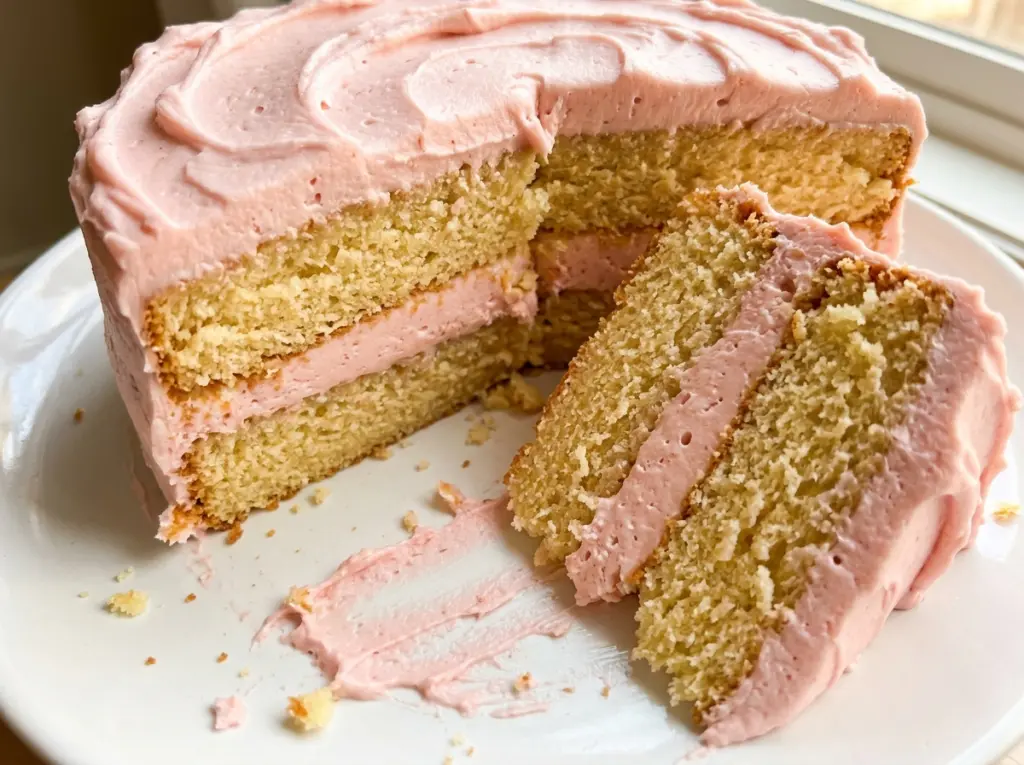
When pink batter goes into the oven, it’s hard not to wonder whether that soft color will hold. This cake keeps its delicate blush, and the layers bake up tender rather than heavy. Pink Champagne Cake gets its color from a small amount of pink gel food coloring, while champagne replaces the liquid you’d otherwise expect in the batter. The result is a celebration cake with a gentle champagne note and a classic vanilla buttercream finish.
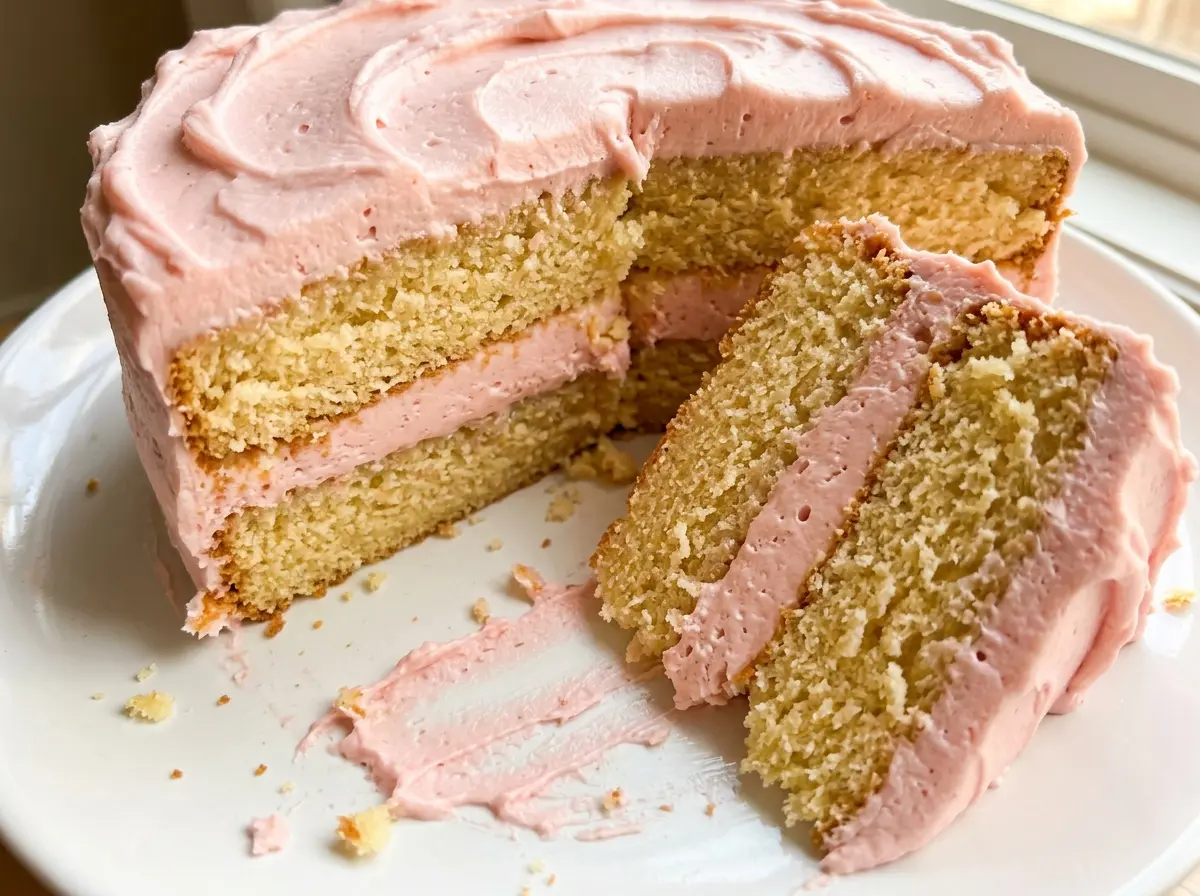
I like that the batter comes together without creaming butter and sugar, but it still needs a light hand once the flour is involved. Mix the wet and dry ingredients on low just until they come together, then give the batter only 30 seconds on medium. That short finish helps bring it together without turning the layers tough. Once the cool cakes are stacked with buttercream, the pink crumb and creamy frosting make each slice look special.
Kitchen Note
Let the layers cool completely before frosting. Even a slightly warm center softens the buttercream and can make the top layer slide when you stack it.
Save Pink Champagne Cake for your next celebration: tender blush layers with a generous vanilla buttercream finish.
Champagne Brings the Name, but Baking Powder Makes the Cake Rise
It’s easy to assume the bubbles in champagne are what make a champagne cake light, but they aren’t the dependable lift here. The batter is mixed before baking, and the champagne’s fizz doesn’t replace a measured leavener. Baking powder does that job, so it matters that yours is fresh and that you don’t leave it out. The champagne contributes liquid and a mild flavor; it’s part of the cake’s character, not a shortcut to a lofty crumb.
That distinction is useful when choosing a bottle. You don’t need an expensive champagne for baking, and there’s no reason to hunt for the most aggressively fizzy one. Choose a champagne whose flavor you enjoy, since a little of its character carries into the cake. The sweetness of the buttercream remains prominent, so the finished slice reads as cake first, with a subtle champagne note rather than a glass of sparkling wine in dessert form.
What Gives the Pink Layers Their Tender Crumb
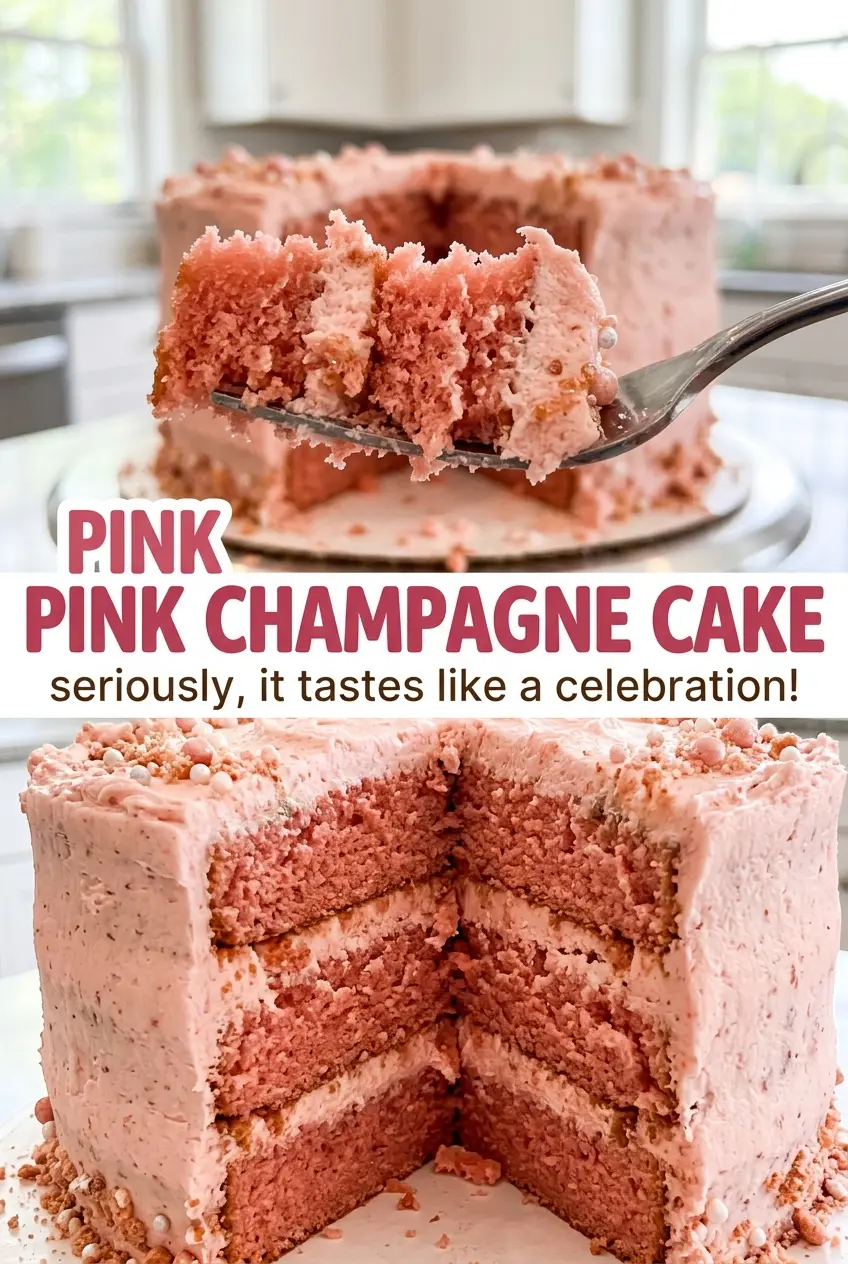
- All-purpose flour — It gives the layers enough structure to hold their shape beneath the buttercream. Measure carefully; packing extra flour into a cup can leave the crumb dry and heavy. There isn’t a tested flour swap here that keeps the same texture.
- Egg whites — Whites help keep the crumb pale, so the pink color stays visible instead of being warmed by yolks. Bring them to room temperature as listed; they blend more readily into the other liquids. Whole eggs aren’t a one-for-one substitute because the yolks add fat and color.
- Neutral vegetable oil — Oil supplies richness without adding a strong flavor of its own, letting the champagne and vanilla come through. A neutral everyday vegetable oil works well; strongly flavored oils would change the taste. Butter isn’t an identical swap in this batter.
- Champagne — It provides the batter’s liquid and a light wine-like note. A costly bottle isn’t necessary, but use champagne you’d be happy to drink. Having it at room temperature helps it combine smoothly with the other liquids.
- Pink gel food coloring — Gel gives the batter color without adding much extra liquid. Use gel rather than assuming the same amount of liquid coloring will create the same shade; liquid coloring is less concentrated and can affect the batter’s balance.
- Unsalted butter and powdered sugar — These form the body of the vanilla buttercream. Softened butter should yield when pressed but shouldn’t look oily or melted, which helps it beat creamy before the sugar goes in.
- Vanilla and heavy cream — Vanilla rounds out the frosting, while cream helps it beat fluffy. Keep both for the intended buttercream; changing their balance can make the frosting too loose or too stiff to spread comfortably.
From Two Pans to a Smoothly Frosted Layer Cake
Prepare the pans and mix the batter
Heat the oven to 350°F and lightly coat two 9-inch round cake pans with nonstick cooking spray. Line the bottoms with parchment so the baked layers release cleanly. Whisk the flour, granulated sugar, baking powder, and salt in a large bowl; in another bowl, whisk together the oil, room-temperature egg whites, champagne, and pink gel coloring. Add the wet mixture to the dry ingredients, beat on low just until combined, then beat on medium for 30 seconds.
Divide and bake until the tops spring back
Divide the batter evenly between the prepared pans so the layers finish baking at about the same time. Bake for 25–30 minutes. The tops should spring back lightly when touched, and a toothpick should come out with a few moist crumbs rather than wet batter. If the toothpick is completely clean, the cakes may have gone a little farther than needed, so begin checking at the earlier end of the baking window.
Cool the layers before stacking
Leave the cakes in their pans for 10 minutes after baking, then turn them out onto wire racks. Remove the parchment from the bottoms and let the layers cool completely. Handle them gently as you turn them out; warm cake is more delicate and can break when lifted or stacked. Don’t start frosting while the centers are still warm, or the buttercream will soften and the layers can shift.
Beat the buttercream and assemble
Beat the softened butter in a large bowl on medium speed for about 2 minutes, until creamy. Add the powdered sugar in several additions, beating on low until it’s incorporated; then add the vanilla and heavy cream and beat on medium until fluffy. Set one completely cooled layer on a serving plate and spread buttercream over its top. Add the second layer, then frost the top and sides, smoothing the frosting as you go.
Two Ways to Adapt the Cake Without Losing Its Character
An alcohol-free sparkling version
For an alcohol-free adaptation, replace the champagne with the same amount of nonalcoholic sparkling wine, at room temperature. The cake will keep the celebratory sparkling-wine character, though the flavor depends on the bottle you choose. The pink gel coloring and vanilla buttercream stay as they are.
A semi-naked finish
For a less formal look, stack the layers with buttercream between them and frost the top as usual, then leave the sides bare or spread on only a thin coat. The pink crumb shows around the edge, and the cake feels a little less frosting-forward without changing the batter or frosting ingredients.
Storage and Serving
- Refrigerator: Keep the frosted cake covered for up to 4 days. The buttercream firms when cold, and the cake’s texture is best after it softens a little at room temperature.
- Freezer: Freeze slices wrapped airtight for up to 2 months. Thaw them in the refrigerator, still wrapped, to keep the cake from drying out.
- Serving: Let refrigerated slices sit at room temperature until the buttercream is soft enough to cut cleanly. Don’t microwave the frosted cake; the buttercream can melt before the center softens.
Questions That Come Up When Baking Pink Champagne Cake
Pink Champagne Cake
Ingredients
Equipment
Method
- Heat the oven to 350°F. Lightly coat two 9-inch round cake pans with nonstick cooking spray and line the bottoms with parchment paper.
- Whisk the all-purpose flour, granulated sugar, baking powder, and table salt in a large bowl.
- In a separate bowl, whisk the vegetable oil, egg whites, champagne, and pink gel food coloring until combined.
- Add the wet mixture to the dry mixture and beat on low just until combined, then beat on medium for 30 seconds.
- Divide the batter evenly between the pans and bake for 25–30 minutes, until the tops spring back lightly when touched and a toothpick comes out with a few moist crumbs.
- Cool the cakes in the pans for 10 minutes.
- Turn the cakes out onto wire racks, remove the parchment, and cool completely.
- Beat the softened unsalted butter in a large bowl on medium speed until creamy, about 2 minutes.
- Add the powdered sugar in several additions, beating on low until incorporated.
- Add the vanilla extract and heavy cream and beat on medium until fluffy.
- Set one cake layer on a serving plate and spread buttercream over the top.
- Add the second layer and frost the top and sides with the remaining buttercream.