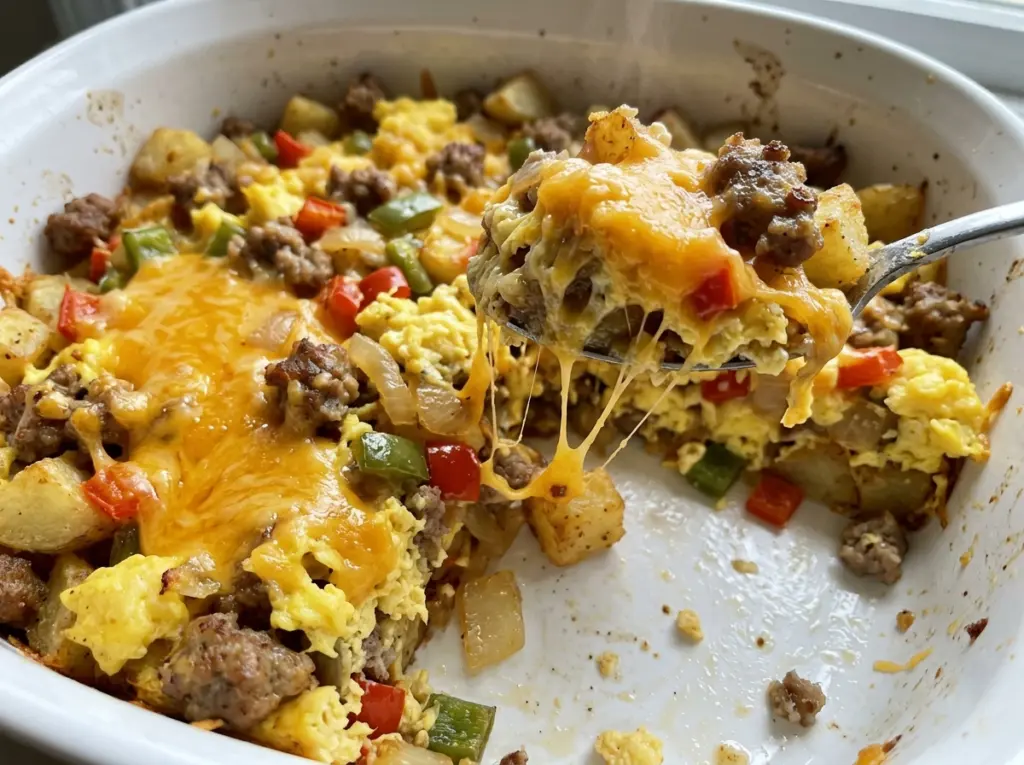
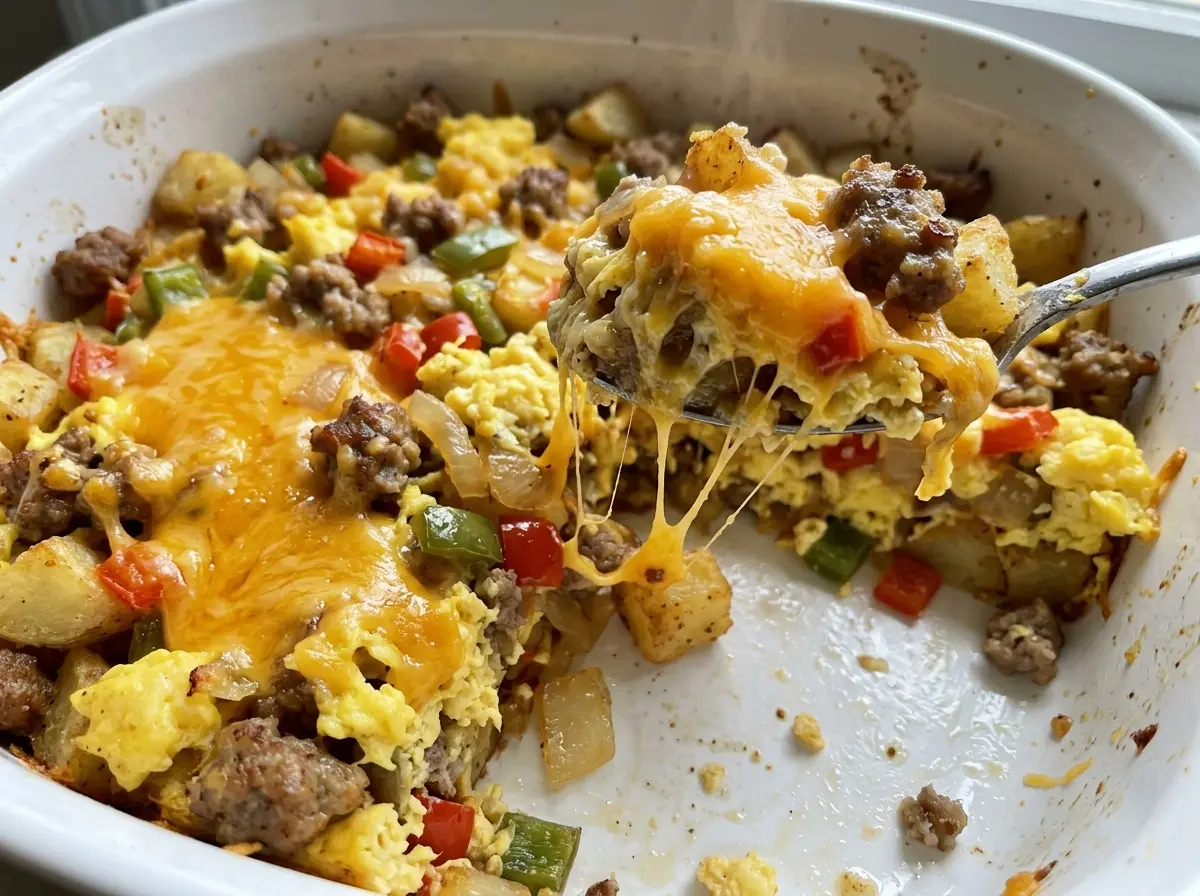
When the pork sausage browns in the skillet, the little crumbles leave savory bits behind that make this casserole taste like more than eggs and potatoes. Potatoes O’Brien Breakfast Casserole brings that browned sausage together with a generous layer of potatoes, a soft egg custard, and sharp cheddar on top. It’s the kind of breakfast that feeds eight from one baking dish, without asking you to stand over the stove once the casserole is assembled.
I like the order of the layers here: potatoes and sausage go into the dish first, then the egg mixture flows around them, and the cheese sits on top. That keeps the ingredients easy to portion and gives the cheddar time to melt while the eggs set underneath. The hands-on cooking is simple, but a couple of small details make the difference between a casserole that slices neatly and one that feels loose in the middle. Each serving comes out savory, cheesy, and filling.
Kitchen Note
Break the sausage into small pieces as it cooks, rather than waiting until it’s done to crumble it. Those smaller browned bits spread through the casserole more evenly, and draining the skillet keeps excess grease out of the bottom of the dish.
Save Potatoes O’Brien Breakfast Casserole for a make-ahead breakfast with browned sausage, tender potatoes, and a sharp cheddar top.
Why Thawed O’Brien Potatoes Need to Be Patted Dry
Frozen potatoes carry moisture with them, and thawing releases more of it. If that water goes straight into the baking dish, it collects around the eggs as the casserole cooks. The edges can look set while the center stays soft and wet, which makes a clean slice harder to get. Thawing the potatoes in the refrigerator and patting them dry helps the egg mixture set around the potatoes instead of turning watery.
This step also gives you a better read on how the casserole is baking. Once excess surface moisture is gone, the eggs can cook evenly through the potato layer, and the cheese can melt on top without having to wait for a pool of liquid to cook off. The potatoes don’t need to be pressed or squeezed; pat them dry and spread them in an even layer. A little care before assembly does more here than extending the bake and risking dry eggs.
What the Sausage, Eggs, and Cheddar Each Bring

- Frozen potatoes O’Brien — They give the casserole its potato base in a convenient, ready-to-use format. Choose a bag with pieces you like the look of; there’s no need for a specialty brand. The useful prep detail is to thaw them fully and pat away surface moisture before they go in the dish.
- Pork breakfast sausage — This is the savory, browned part of each bite, and a standard pork breakfast sausage works well here. The browning matters more than seeking out a premium brand, because it builds the cooked flavor before the meat meets the eggs. Drain the excess grease so it doesn’t pool beneath the casserole.
- Large eggs — The eggs provide the structure that holds the potatoes and sausage together once baked. Using large eggs keeps the custard ratio consistent; smaller eggs would give the casserole less egg mixture to bind the filling.
- Whole milk — Milk loosens the eggs into a pourable custard and gives the finished center a tender texture. Whole milk keeps the casserole richer than a lower-fat choice, so it’s the best pick when you want the intended result.
- Shredded sharp cheddar — Sharp cheddar brings a noticeable savory tang and melts into the top layer. A familiar grocery-store cheddar is fine; the sharpness is what gives it character, not a specialty label.
- Unsalted butter — The softened butter is for greasing the baking dish, helping portions release cleanly after resting. Spread it into the corners as well as across the flat bottom, where eggs are most likely to cling.
Building the Layers So the Eggs Set Through the Center
Thaw the Potatoes and Prepare the Dish
If the potatoes are still frozen, thaw them overnight in the refrigerator and pat them dry. Heat the oven to 350°F, then grease a 9×13-inch baking dish with the softened butter. An even coating, especially into the corners, helps keep the egg mixture from sticking as it bakes.
Brown the Sausage in Small Pieces
Cook the pork breakfast sausage in a 12-inch skillet over medium heat for 8 to 10 minutes, breaking it into small pieces as it cooks. Look for browned crumbles with no pink remaining, and check that the sausage reaches 160°F. Drain off excess grease before it goes into the casserole; leaving a layer of fat behind can make the finished bottom greasy.
Pour the Custard Evenly Over the Filling
Spread the thawed potatoes and cooked sausage in the prepared dish, keeping the filling reasonably level. Whisk the eggs, milk, kosher salt, and black pepper together in a large bowl until the yolks and whites are blended. Pour the mixture evenly over the potatoes and sausage so no area is left with a dry pocket of filling. Sprinkle the shredded cheddar across the top.
Bake Uncovered Until the Middle Is Set
Bake uncovered for 50 to 60 minutes, watching for a center that no longer looks liquid or wobbly. Check the middle of the casserole, not just the browned edges; it should reach 160°F. If the center is still loose, give it more time rather than pulling it out because the top looks ready. Rest the casserole for 10 minutes before serving so it can settle and cut more neatly.
When You Want the Sausage or Cheddar Out
A vegetarian version without sausage
Leave out the pork breakfast sausage and use the potatoes, egg mixture, and cheddar for a vegetarian casserole. It will be less savory and have less filling bulk than the original, but the eggs still bind the potato layer. Bake until the center is set rather than relying on the sausage browning as a cue.
A casserole without the cheddar top
Leave off the sharp cheddar for a simpler egg-and-sausage bake. You’ll lose the melted cheese layer and some of the sharp, salty contrast, but the egg mixture will still set around the potatoes and sausage. The top will look paler, so judge doneness by the center rather than by color.
Storage and Reheating
- Refrigerator: Cover leftovers and refrigerate for 3 to 4 days. The potatoes soften as they sit, but the casserole remains easy to portion.
- Freezer: Freeze individual portions in airtight containers for up to 2 to 3 months. Thaw them in the refrigerator; the eggs may be a little firmer and the potatoes softer after freezing.
- Reheating: Warm covered portions in a 325°F oven, or heat an individual serving in the microwave until hot throughout. Reheating uncovered for too long can dry out the egg; for food safety, leftovers should reach 165°F.
Questions That Come Up Before This Casserole Goes in the Oven
Potatoes OBrien Breakfast Casserole
Ingredients
Equipment
Method
- If the potatoes are still frozen, thaw them overnight in the refrigerator and pat dry.
- Heat the oven to 350°F.
- Grease a 9x13-inch baking dish with the softened butter.
- Cook the pork breakfast sausage in a 12-inch skillet over medium heat for 8 to 10 minutes, breaking it into small pieces, until browned and it reaches 160°F; drain excess grease.
- Spread the thawed potatoes and cooked sausage in the prepared baking dish.
- Whisk the eggs, whole milk, kosher salt, and black pepper in a large bowl.
- Pour the egg mixture evenly over the potato mixture.
- Sprinkle the shredded sharp cheddar cheese on top.
- Bake uncovered for 50 to 60 minutes, until the center is set and reaches 160°F.
- Rest for 10 minutes before serving.