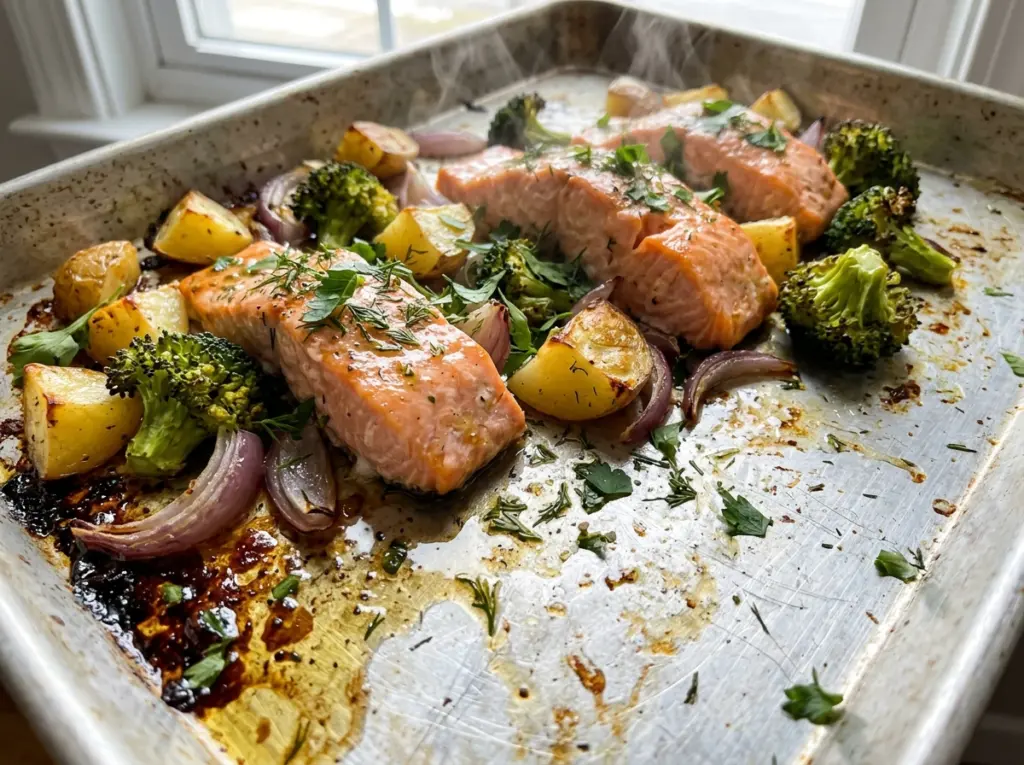
The potatoes are the first thing I watch on a sheet pan like this: if they go in with the salmon, they don’t get enough time to turn tender before the fish is ready. Staggering the ingredients solves that mismatch, and it’s what makes this Sheet Pan Salmon and Potatoes with Veggies feel like one simple dinner instead of a juggling act.
I give the potatoes a head start, then add the broccoli and bell pepper when the salmon goes on. The vegetables get enough time to soften and pick up roasted edges without leaving the fish in the oven too long. Cutting the baby potatoes in half and placing them cut side down gives them steady contact with the hot pan. At the table, lemon squeezed over the salmon and vegetables brightens every bite, while the potatoes stay tender underneath their browned sides.
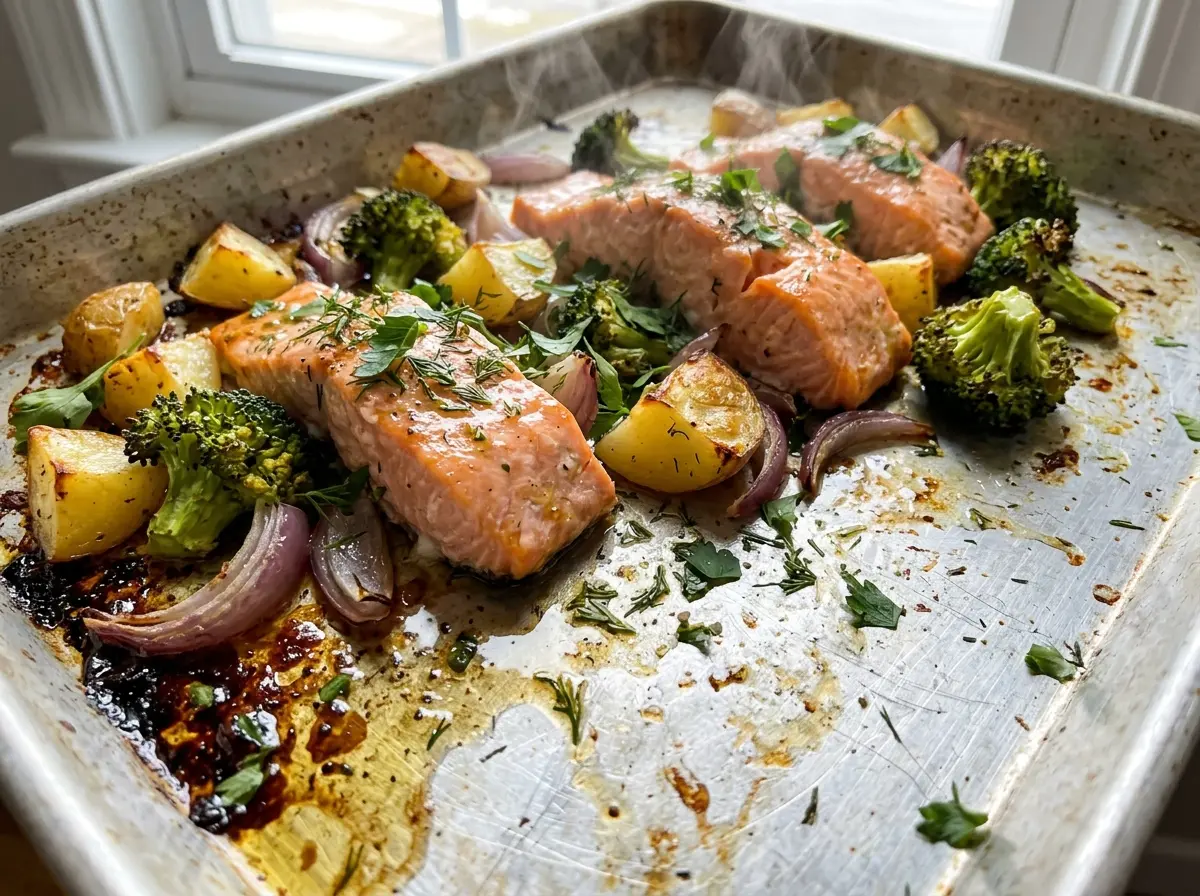
Kitchen Note
I put the lemon wedges beside the plates while the pan rests. That short pause is just enough time to get them ready, so the salmon and vegetables are served with fresh lemon right away.
Save this sheet pan salmon dinner for the nights you want crisp-edged potatoes, tender fish, and vegetables all from one pan.
Why the potatoes need a head start, but the salmon doesn’t
Potatoes are dense, and a halved baby potato needs more oven time than a salmon fillet. Put everything on the pan together and you have to choose between potatoes that are still firm and fish that’s been roasting too long. Giving the potatoes their own first stretch in the oven solves the timing problem without dirtying another pan.
The vegetables join later for a reason, too. Broccoli florets and sliced bell pepper need less time than the potatoes, and they roast alongside the salmon during its shorter bake. The order lets each ingredient get the heat it needs, rather than asking one long roast to work for everything. Keep the potatoes in a single layer with their cut sides against the pan, then arrange the other ingredients around them when it’s time. The staged start is what brings the whole dinner to the table together.
The ingredients that decide whether this pan roasts or steams
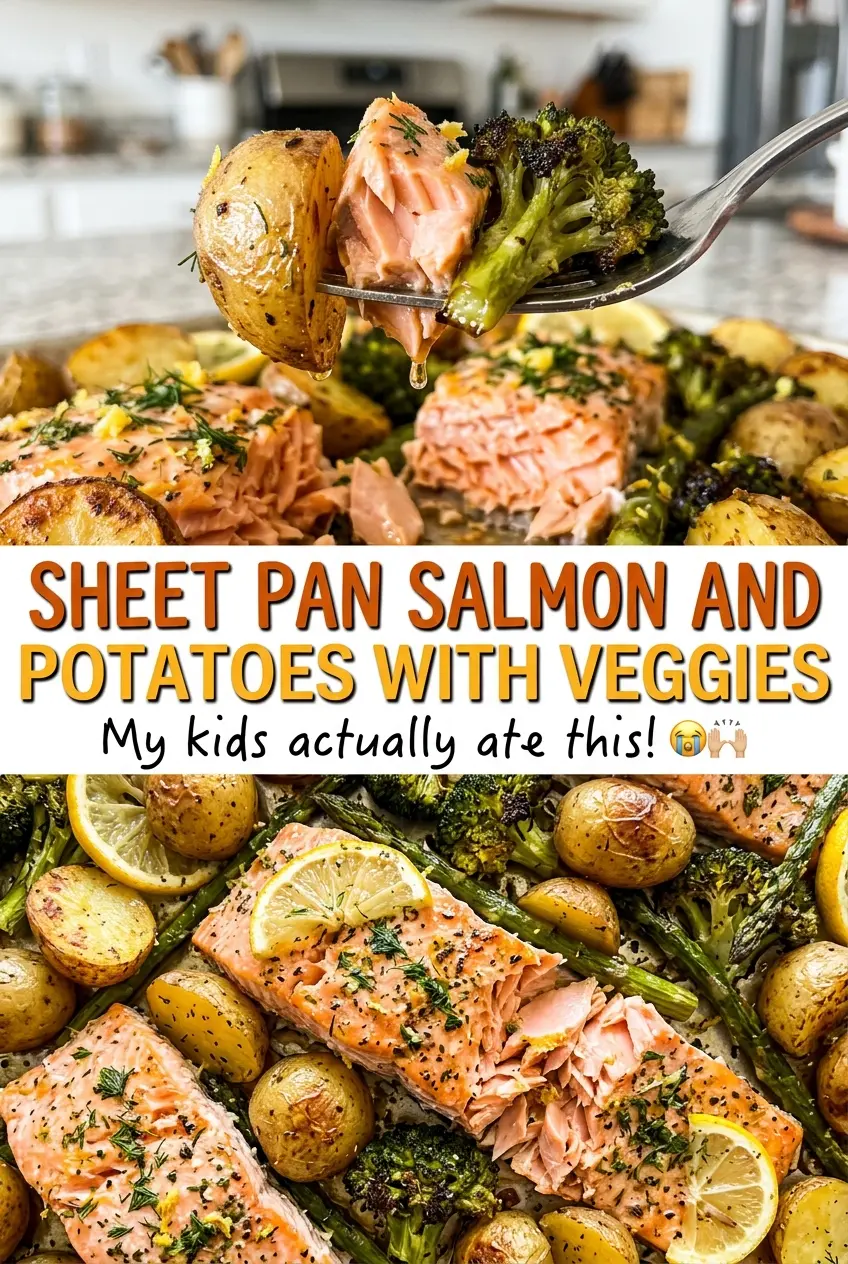
- Baby potatoes — Their thin skins and small size make them easy to halve, and the cut sides brown as they roast. If baby potatoes aren’t available, use the same weight of regular potatoes cut into pieces about the size of halved baby potatoes; larger chunks won’t follow the same timing as closely.
- Olive oil and dry seasonings — Oil helps the garlic powder, paprika, salt, and pepper cling to the potatoes and vegetables instead of falling to the pan. Everyday olive oil works well here; save a more expensive finishing oil for a dish where its flavor stays prominent. Garlic powder and paprika give the potatoes a savory, warm coating without adding moisture.
- Broccoli and red bell pepper — Fresh broccoli florets roast with browned tips, while the pepper softens and adds a sweet note. Choose florets that are reasonably similar in size so the smaller pieces don’t finish much earlier than the larger ones. The pepper’s shape and sweetness are distinctive, so leaving it out makes the pan less colorful and less sweet.
- Salmon fillets — Similar-sized fillets are helpful because they roast at a similar pace. The skin gives you a clear side to place against the pan and helps the fillet hold together as you serve it. A thinner fish won’t necessarily match the same oven timing, so use the doneness cue rather than relying on appearance alone.
- Lemon — Fresh wedges let everyone squeeze bright, tart juice over the rich salmon and roasted vegetables at the table. Bottled juice won’t bring quite the same fresh aroma; cut the lemon into wedges before cooking so it’s ready to serve.
The timing that gets tender potatoes and properly cooked salmon
Start with cut-side-down potatoes
Heat the oven to 425°F and line an 18×13-inch rimmed baking sheet with parchment paper. Toss the halved potatoes with 2 tablespoons of olive oil, 1/2 teaspoon kosher salt, 1/4 teaspoon black pepper, garlic powder, and paprika. Spread them cut side down in a single layer and roast for 20 minutes. If they overlap, the covered surfaces won’t brown as evenly.
Add the broccoli and pepper around the potatoes
Toss the broccoli and sliced red bell pepper with the remaining 1 tablespoon olive oil, 1/2 teaspoon kosher salt, and 1/4 teaspoon black pepper. Arrange them around the potatoes on the same baking sheet. Keep the vegetables in a fairly even layer so the hot oven can roast them rather than leave crowded patches soft. The pan will be busy, but the potatoes should still have their original cut-side contact with the sheet.
Set the salmon skin side down
Season the salmon fillets with the remaining 1/2 teaspoon kosher salt and 1/4 teaspoon black pepper. Place them skin side down among the vegetables, then return the pan to the oven. Roast for 12 to 15 minutes, until the thickest part of the salmon reaches 145°F and the potatoes are tender. Check a thick fillet in its center, and test the potatoes with a fork rather than judging the whole pan by color.
Rest briefly and finish with lemon
Take the pan from the oven and let everything rest for 3 minutes. This gives you a moment to bring the plates over without leaving the fish in the oven longer than needed. Serve with lemon wedges for squeezing over the salmon and vegetables.
Simple changes for different potatoes and plates
Use regular potatoes instead of baby potatoes
Cut regular potatoes into pieces close in size to halved baby potatoes and use the same weight. Keeping the pieces small and even helps them roast on the same schedule; larger pieces take longer and can leave the other ingredients waiting.
Make a broccoli-forward pan
Leave out the red bell pepper and roast the broccoli with the potatoes and salmon. The finished pan will be less sweet and colorful, but you’ll still get the savory potatoes, crisp-edged broccoli, and lemon-finished fish.
Make a vegetarian potato-and-vegetable pan
Leave off the salmon and its portion of seasoning, then roast the potatoes and vegetables together using their listed seasonings. The result is a vegetarian pan of potatoes, broccoli, and bell pepper; it won’t have the salmon’s richness or protein.
Storage and Reheating
- Refrigerator: Store leftovers in an airtight container for 3 to 4 days. The potatoes soften, and the broccoli loses some of its crisp edges.
- Freezer: Freeze cooked portions in airtight freezer-safe containers for up to 2 to 3 months. The salmon will thaw and reheat, but the potatoes and broccoli will be softer than when freshly roasted.
- Reheating: Warm portions in a 325°F oven until the center reaches 165°F; cover loosely with foil if the salmon is drying out. Avoid leaving the fish in the oven while waiting for a large portion of cold potatoes to heat through.
Questions that come up while this pan is in the oven
Sheet Pan Salmon and Potatoes with Veggies
Ingredients
Equipment
Method
- Heat the oven to 425°F.
- Line an 18x13-inch rimmed baking sheet with parchment paper.
- Toss the potatoes with 2 tablespoons olive oil, 1/2 teaspoon kosher salt, 1/4 teaspoon black pepper, garlic powder, and paprika.
- Spread the potatoes cut side down on the baking sheet.
- Roast the potatoes for 20 minutes.
- Toss the broccoli and bell pepper with the remaining 1 tablespoon olive oil, 1/2 teaspoon kosher salt, and 1/4 teaspoon black pepper.
- Arrange the broccoli and bell pepper around the potatoes.
- Season the salmon with the remaining 1/2 teaspoon kosher salt and 1/4 teaspoon black pepper.
- Place the salmon skin side down among the vegetables.
- Roast for 12 to 15 minutes, until the salmon reaches 145°F in the thickest part and the potatoes are tender.
- Rest for 3 minutes.
- Serve with lemon wedges to squeeze over the salmon and vegetables.