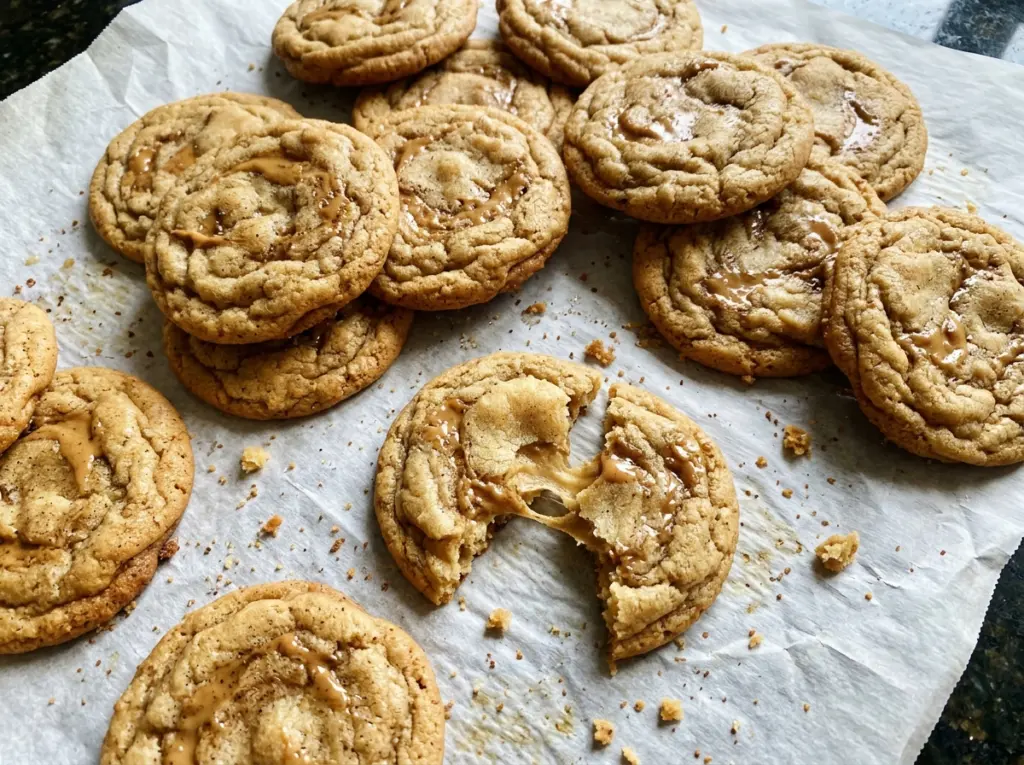
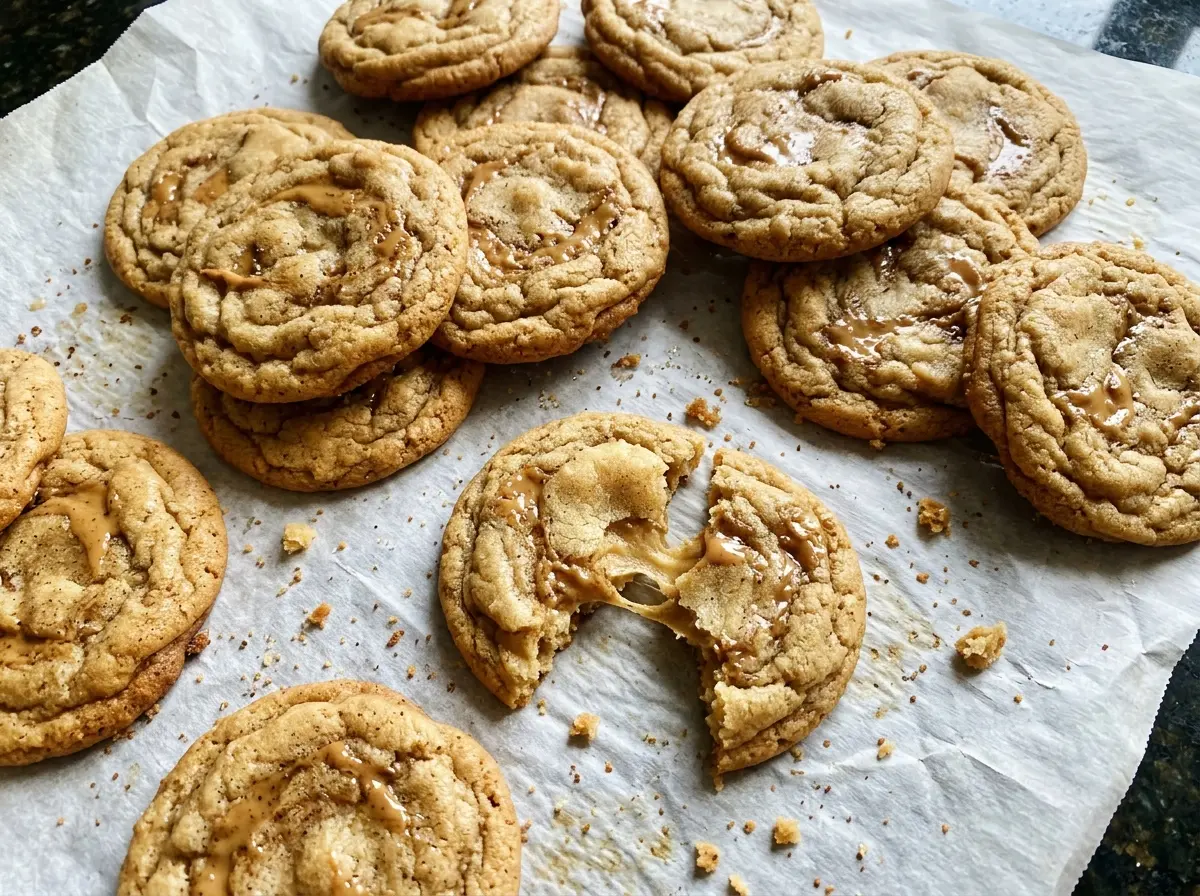
The edges can look ready while the centers still seem a little too soft to call a cookie. That’s exactly the point with these Softbatch Cookie Butter Brown Sugar Cookies: they finish setting as they cool, leaving the middle tender instead of crisp all the way through.
Cookie butter gives the dough a warm, spiced-cookie flavor, while light brown sugar keeps the cookies soft and adds a gentle molasses note. I use both a whole egg and an extra yolk, which helps give the centers a rich, soft texture without making the cookies cakey.
They’re generous, scoop-and-bake cookies with a familiar brown sugar base and a distinct cookie butter finish. A short rest in the refrigerator makes the dough easier to portion, and the finished cookies have set edges with centers that stay soft.
Kitchen Note
Take the cookies out when the edges are set but the centers still look soft. Leaving them on the hot baking sheet for 5 minutes lets them finish setting without losing that soft middle.
Save these softbatch cookie butter brown sugar cookies for a bake with tender centers and warm cookie butter flavor.
Why the Extra Egg Yolk Makes These Softbatch Cookies Different
A whole egg brings structure to cookie dough, but the extra yolk changes the balance. Yolks add richness without bringing in another egg white, so the centers bake up tender rather than airy or cakey. That matters in a softbatch cookie, where you want a substantial bite that still gives way easily.
The brown sugar supports that texture, too. Its moisture helps keep the cookies soft, while its mild molasses character rounds out the spiced taste of the cookie butter. Together, those ingredients give the dough a more tender result than a crisp, lean cookie dough would.
That doesn’t mean the cookies should look raw when they come out of the oven. The useful distinction is between a soft-looking center and a wet, unset cookie. The edges should look set; the centers will look softer and settle as the cookies cool. That contrast is what gives each cookie its soft middle and lightly firm edge.
What the Cookie Butter and Brown Sugar Bring to the Dough
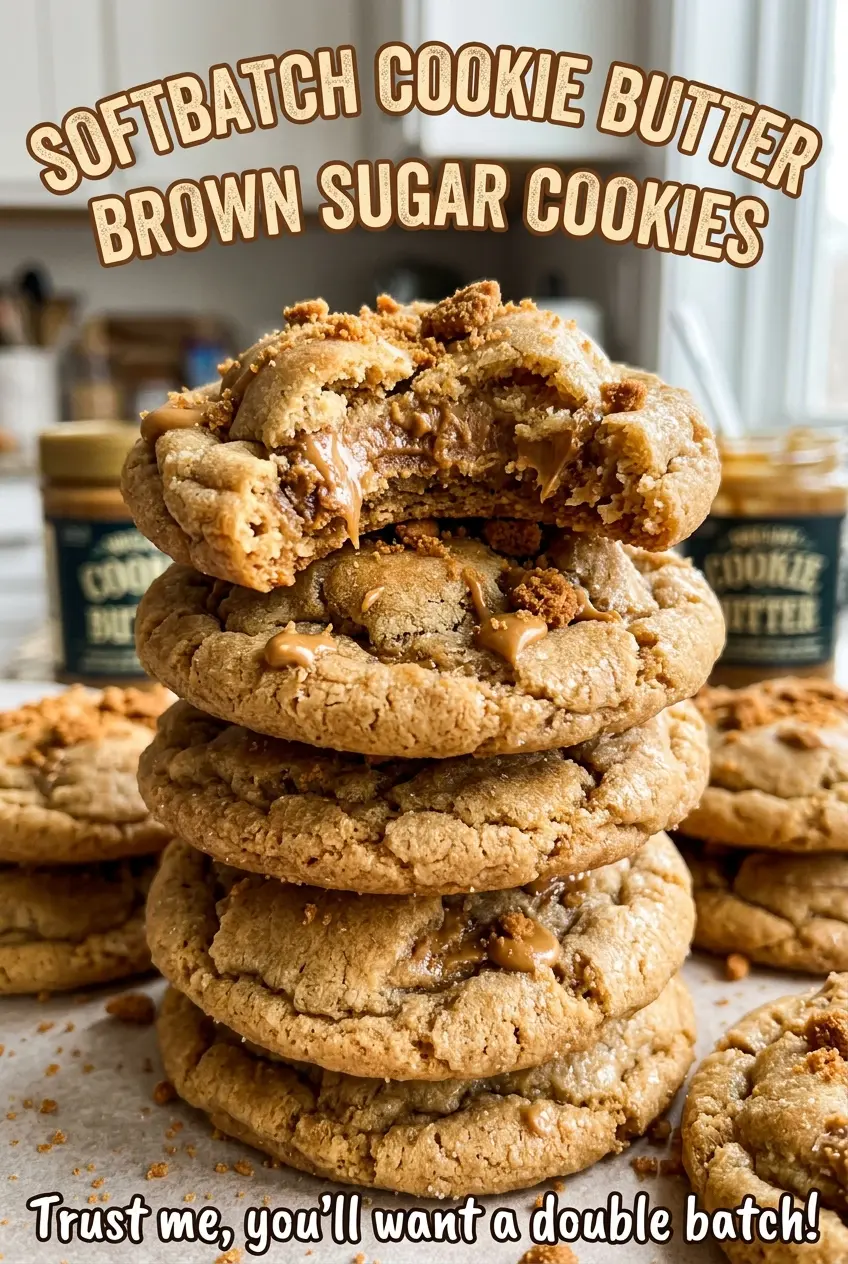
- Cookie butter — This is the source of the cookies’ distinctive spiced-cookie flavor as well as part of their fat and sweetness. A smooth cookie butter blends easily into the creamed base; a crunchy version gives the finished cookies little crisp bits. Use a spread you enjoy eating on its own, since its flavor comes through clearly here.
- Light brown sugar — Packed brown sugar dissolves into the dough and contributes moisture and a mild molasses note. Fresh, soft brown sugar is easiest to mix evenly; if yours is hard and clumpy, break it up before adding it so you don’t leave dense pockets in the dough.
- Unsalted butter — Softened butter creams smoothly with the cookie butter and sugar. Let it soften until it yields when pressed but isn’t oily or partly melted; melted butter won’t cream the same way and can change the dough’s texture.
- Egg and egg yolk — Use a large egg and a separate large yolk for the intended richness and structure. Separating the yolk cleanly keeps extra egg white from changing the dough’s balance.
- All-purpose flour — It gives the cookies enough structure to hold their shape. Spoon flour into the measuring cup and level it rather than packing the cup, since too much flour can make the cookies dry and firm.
- Vanilla extract — Vanilla fills out the brown sugar and cookie butter notes. Pure or imitation vanilla both work; there’s no need to use an expensive bottle for this dough.
From Creamed Base to Soft Centers: The Cookie Method
Cream the Butter, Cookie Butter, and Sugar
Beat the softened butter, cookie butter, and packed brown sugar with a hand mixer on medium speed until creamy, about 2 minutes. Scrape down the bowl if the mixture climbs the sides, so the ingredients combine evenly. The mixture should look cohesive rather than like separate streaks of butter and spread. If the butter is still cold and firm, it won’t blend as smoothly.
Mix in the Egg, Yolk, and Vanilla
Beat in the large egg, egg yolk, and vanilla until combined. The mixture may look a little looser after the eggs go in, which is expected; keep mixing until there are no obvious streaks of egg. Don’t add the flour while egg is still pooled at the bottom of the bowl. An even base helps the dry ingredients distribute without extra mixing later.
Add the Dry Ingredients and Chill
Add the flour, baking soda, and kosher salt, then mix on low just until no dry flour remains. Stop as soon as the flour disappears; mixing longer than needed can make cookies tougher. Cover the dough and refrigerate it for 30 minutes, until it’s firm enough to scoop. If it still feels sticky and loose, give it a little more time in the refrigerator rather than adding extra flour.
Scoop, Bake, and Let the Cookies Set
Heat the oven to 350°F and line two baking sheets with parchment paper. Scoop the dough into 2-tablespoon portions and arrange them about 2 inches apart so the cookies have room to bake. Bake for 9 to 11 minutes, looking for set edges and centers that still appear soft. Cool the cookies on the sheets for 5 minutes, then move them to a wire rack to finish cooling.
Easy Ways to Change the Cookie Butter Cookie
Use Crunchy Cookie Butter for Little Crisp Bits
Swap smooth cookie butter for crunchy cookie butter in the same amount. The spiced flavor stays familiar, but the cookies pick up small crisp pieces that contrast with their soft centers.
Choose Dark Brown Sugar for a Deeper Note
Replace the light brown sugar with packed dark brown sugar in the same amount. Its stronger molasses taste makes the cookies more robust and a little less delicate beside the cookie butter.
Make a Dairy-Free Batch
Use dairy-free baking sticks in place of the butter and a dairy-free cookie butter in place of the regular spread, keeping the same measures. Choose baking sticks rather than soft tub margarine for a firmer dough; the flavor and spread may vary a little by brand.
Storage and Reheating
- Room temperature: Store cooled cookies in an airtight container for up to 4 days. They’ll soften a little as they sit.
- Freezer: Freeze cooled cookies in an airtight container, with parchment between layers, for up to 2 months. Thaw at room temperature before serving.
- Reheating: Warm a cookie in a 300°F oven for 3 to 4 minutes. Avoid leaving it in too long, which can dry out the soft center.
Questions That Come Up While Baking These Cookies
Softbatch Cookie Butter Brown Sugar Cookies
Ingredients
Equipment
Method
- In a large bowl, beat the butter, cookie butter, and brown sugar with a hand mixer on medium speed until creamy, about 2 minutes.
- Beat in the egg, egg yolk, and vanilla until combined.
- Add the flour, baking soda, and salt, and mix on low just until no dry flour remains.
- Cover the dough and refrigerate for 30 minutes, until firm enough to scoop.
- Heat the oven to 350°F.
- Line two baking sheets with parchment paper.
- Scoop the dough into 2-tablespoon portions and arrange them about 2 inches apart on the prepared sheets.
- Bake for 9 to 11 minutes, until the edges are set and the centers still look soft.
- Let the cookies cool on the sheets for 5 minutes.
- Transfer the cookies to a wire rack.